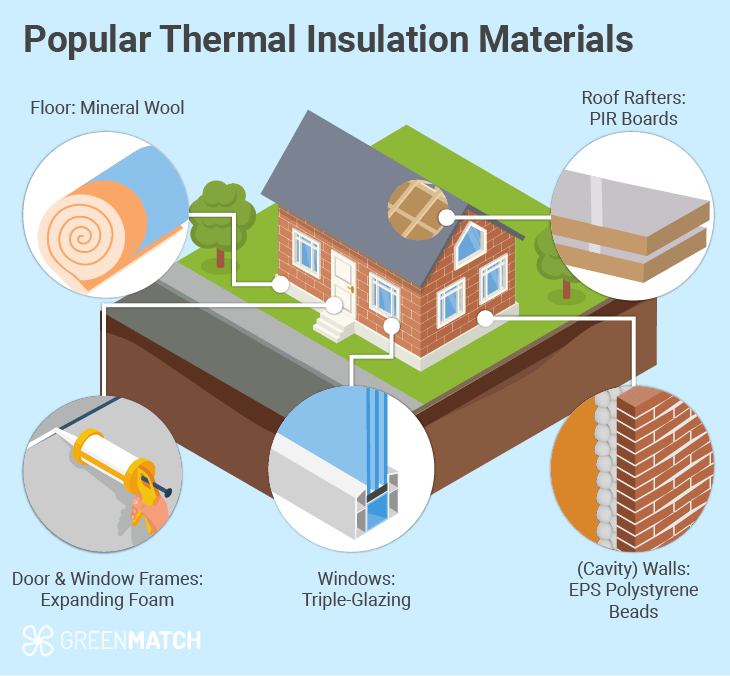
Keep your home energy-efficient with our premium Thermocol Products in Pakistan such as Thermocol InsulationSheets. Reliable Heat Insulation Solutions, tailored for Pakistan’s climate.
With rising temperatures and increasing energy costs, external wall insulation has become an essential solution for buildings across Pakistan. It helps maintain indoor comfort, reduces electricity consumption, and protects structures from harsh weather conditions.
Whether you are constructing a new building or upgrading an existing one, investing in external wall insulation in Pakistan is a smart long-term decision for energy efficiency and durability.
What is External Wall Insulation?
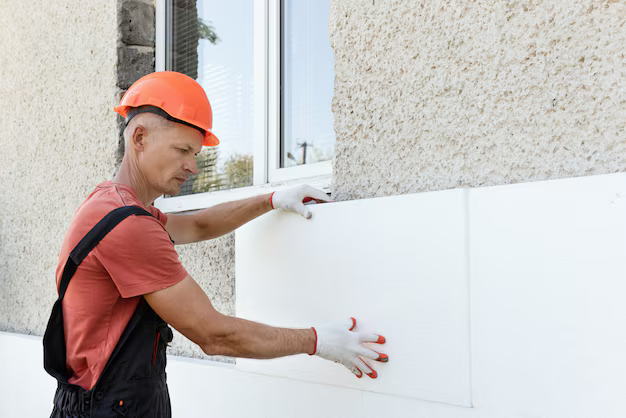
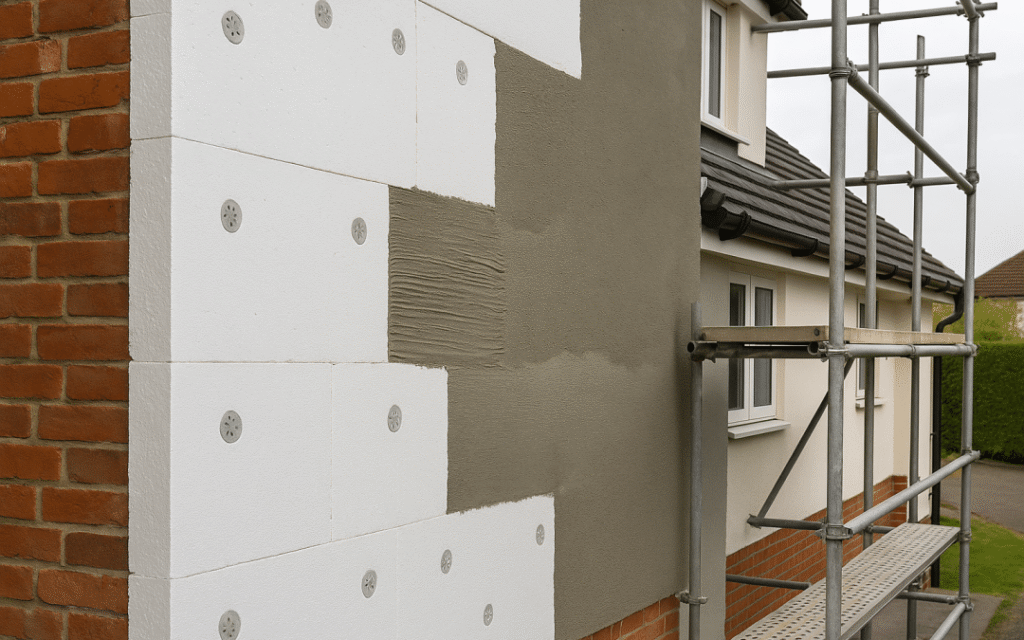
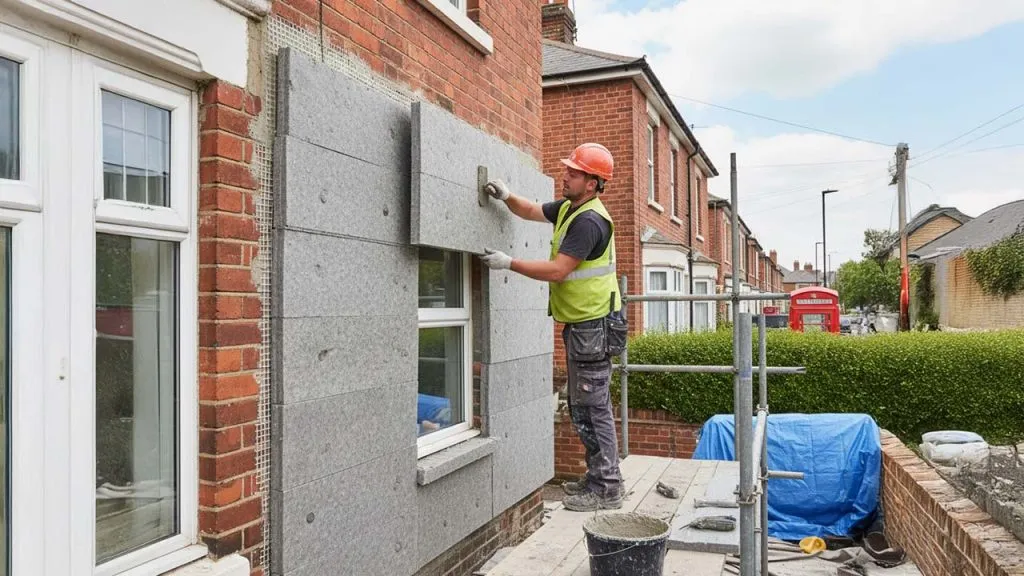
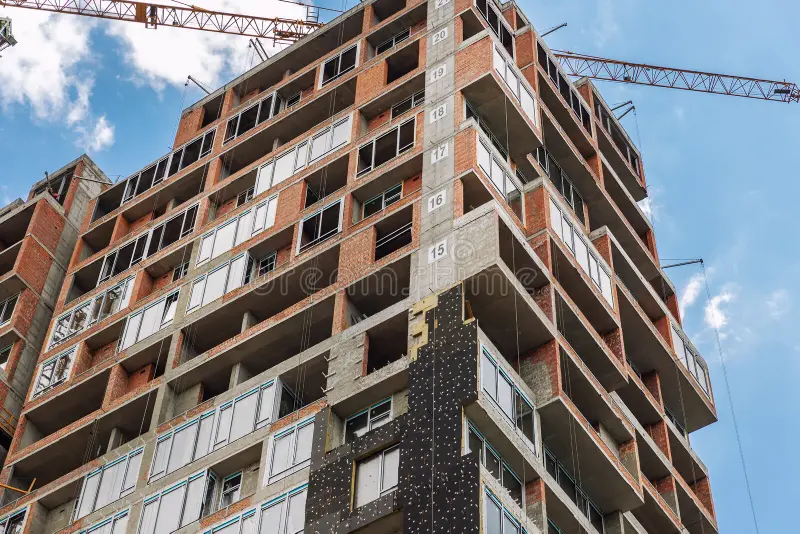
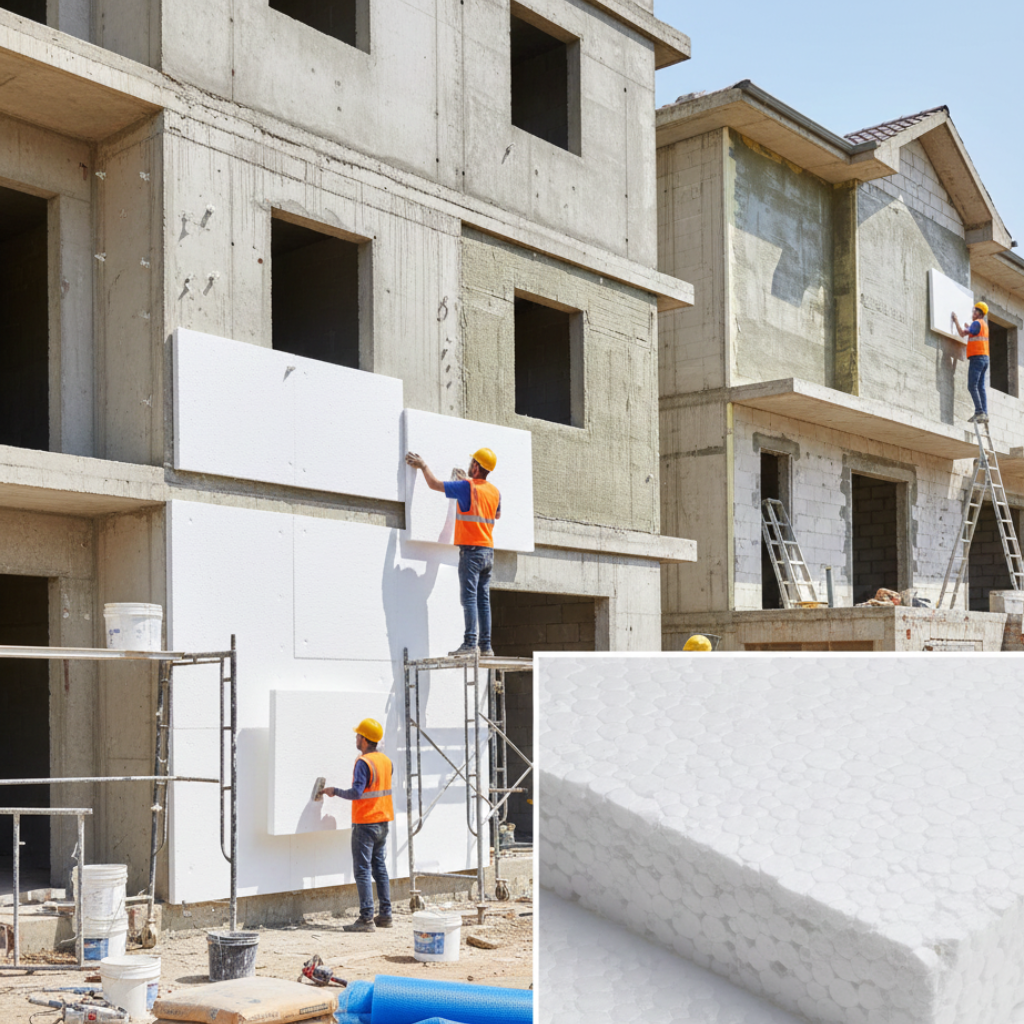
External wall insulation (EWI) is a system where insulating material is applied to the outer walls of a building and then covered with a protective finish such as plaster or cladding.
This system:
Reduces heat transfer
Improves thermal performance
Enhances building appearance
Protects walls from moisture and cracks
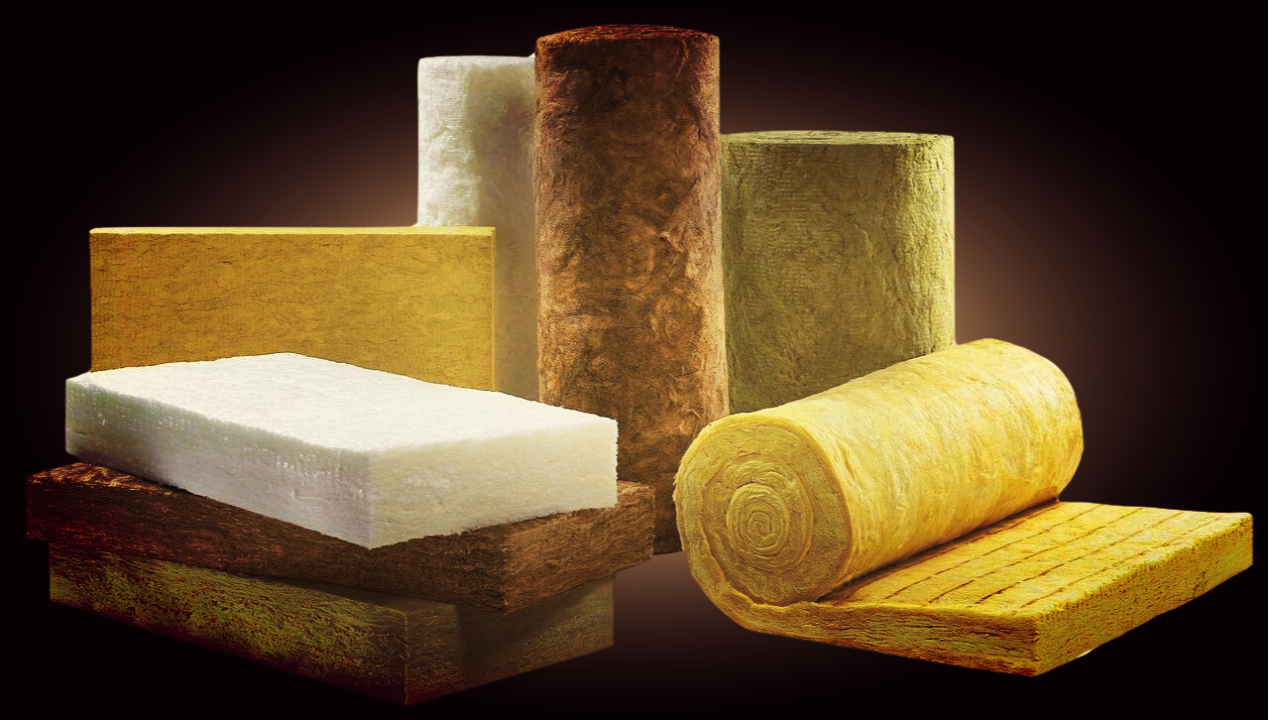
Types of External Wall Insulation Materials
1. Expanded Polystyrene (EPS)
Lightweight and cost-effective
Common for residential buildings
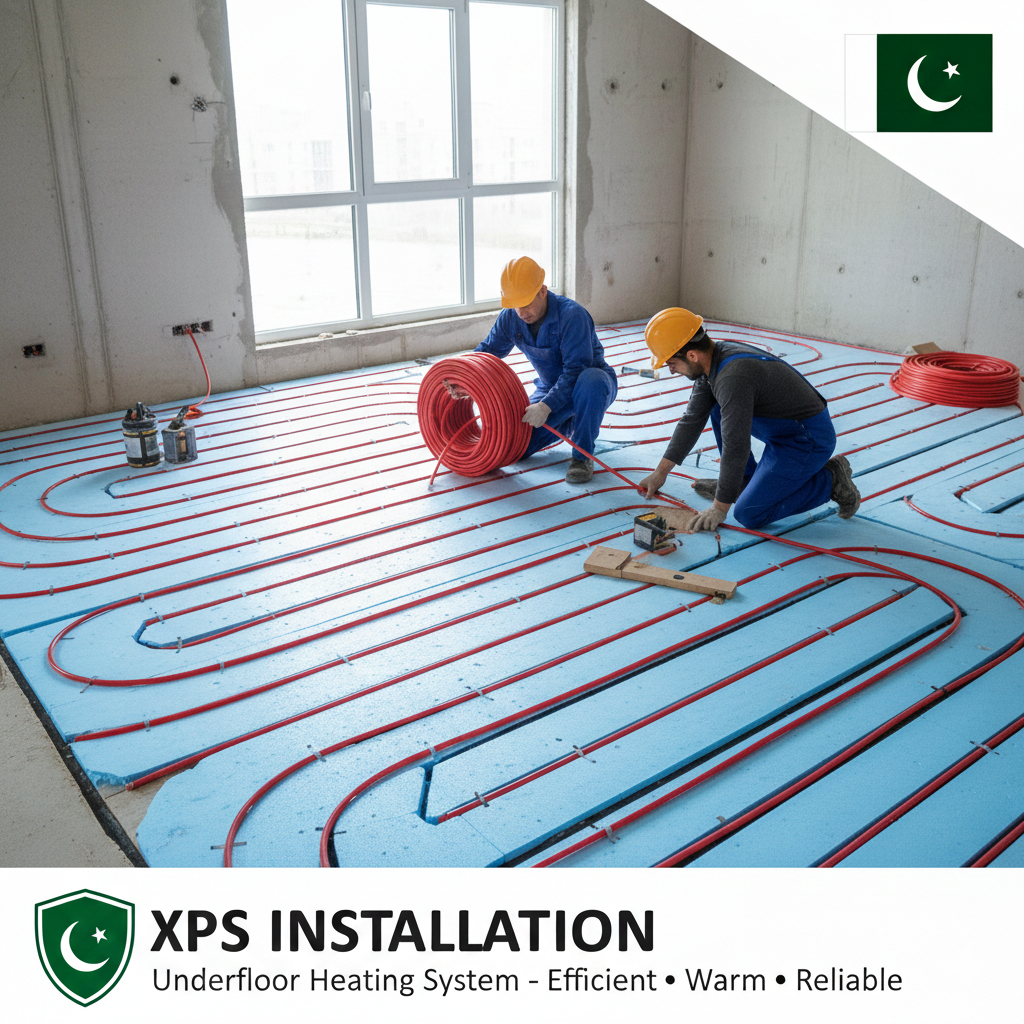
2. Extruded Polystyrene (XPS)
Higher strength and moisture resistance
Ideal for humid climates
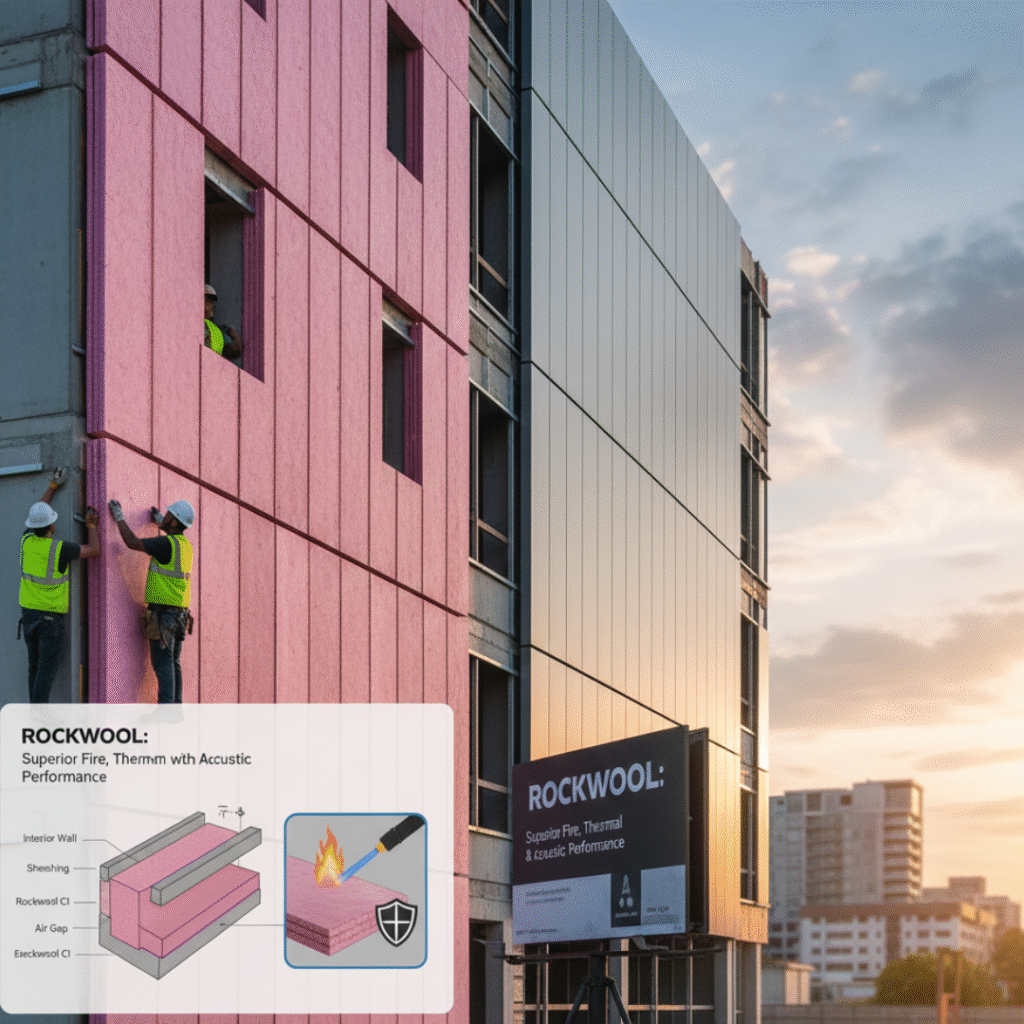
3. Mineral Wool (Rock Wool)
Fire-resistant and breathable
Used in commercial and industrial buildings
4. Polyurethane (PU) Panels
High insulation performance
Suitable for modern construction projects
Choosing the best external wall insulation in Pakistan depends on climate, budget, and building type.
Benefits of External Wall Insulation
Reduces energy bills significantly
Improves indoor temperature stability
Protects structure from weather damage
Minimizes condensation and dampness
Enhances property value
This makes it one of the top external wall insulation in Pakistan solutions for modern construction.
External Wall Insulation Price in Pakistan
The external wall insulation price in Pakistan varies based on material, thickness, and labor.
Estimated Price Table
Material Type
Price Range (PKR per sq. ft)
EPS Insulation
150 – 250
XPS Insulation
250 – 400
Mineral Wool
300 – 500
PU Panels
400 – 700
The overall external wall insulation in Pakistan price may change depending on project size and location.
City-Wise External Wall Insulation Services
External Wall Insulation in Lahore
The construction sector in Lahore активно adopts energy-efficient solutions. Many contractors provide external wall insulation in Lahore for homes and commercial buildings.
External Wall Insulation in Islamabad
In Islamabad, modern architecture demands high-performance insulation systems. Reliable companies offer external wall insulation in Islamabad for villas and offices.
External Wall Insulation in Faisalabad
Industrial and residential projects increasingly use external wall insulation in Faisalabad to control indoor temperatures and reduce costs.
External Wall Insulation in Multan
Due to extreme heat, external wall insulation in Multan is widely used to improve cooling efficiency in homes and warehouses.
External Wall Insulation Material in Karachi
Karachi’s coastal climate requires moisture-resistant insulation. High-quality external wall insulation material in Karachi is available for residential and industrial applications.
External Wall Insulation Manufacturers and Wholesalers in Pakistan
Pakistan has a growing insulation market with both local and imported solutions.
Manufacturers
Local companies now operate as external wall insulation manufacturer in Pakistan
Provide EPS sheets, PU panels, and insulation systems
Wholesalers
Bulk suppliers act as external wall insulation wholeseller in Pakistan
Offer discounted rates for large projects
Working with a top external wall insulation wholeseller in Pakistan ensures cost efficiency and consistent supply.
Cheap External Wall Insulation in Pakistan – Should You Consider It?
Many builders look for cheap external wall insulation in Pakistan to reduce initial costs. While budget options are available, always consider:
Durability
Thermal performance
Installation quality
Low-cost insulation may result in higher maintenance costs in the long run.
Applications of External Wall Insulation
Residential houses
Commercial buildings
Offices and plazas
Factories and warehouses
Cold storage facilities
How to Choose the Right External Wall Insulation
Consider these factors:
Climate conditions (heat, humidity)
Building type
Budget
Fire resistance requirements
Moisture protection
Selecting the top external wall insulation in Pakistan ensures long-term performance and savings.
Conclusion
External insulation is no longer optional—it’s a necessity in Pakistan’s climate. From external wall insulation in Lahore to external wall insulation in Islamabad, and across cities like Faisalabad and Multan, demand continues to grow.
Whether you source from an external wall insulation manufacturer in Pakistan or a trusted external wall insulation wholeseller in Pakistan, investing in the right system will improve comfort, reduce costs, and protect your building for years to come.
FAQ’S
External wall insulation is a system where insulating material is applied to the outer surface of walls and covered with a protective layer. It reduces heat transfer, keeping buildings cooler in summer and warmer in winter.
The external wall insulation price in Pakistan typically ranges from PKR 150 to PKR 700 per sq. ft, depending on the material type, thickness, and installation requirements.
The best external wall insulation in Pakistan includes EPS, XPS, mineral wool, and PU panels. The right choice depends on your budget, climate conditions, and building type.
You can find external wall insulation services in Lahore, Islamabad, Karachi, Faisalabad, and Multan through local contractors, construction companies, and insulation material suppliers.
Thermal insulation plays a critical role in modern construction across Pakistan, where extreme temperatures—both hot and cold—can significantly impact energy consumption and indoor comfort. Whether it’s residential buildings, commercial projects, or industrial facilities, choosing the right thermal insulation material in Pakistan can help reduce electricity bills, improve energy efficiency, and enhance durability.
In this detailed guide, we’ll explore types, benefits, applications, and thermal insulation material price in Pakistan, along with insights into suppliers and wholesalers across major cities.
What is Thermal Insulation Material?
Thermal insulation materials are specially designed products that reduce heat transfer between surfaces. They help maintain indoor temperatures by preventing heat loss in winter and heat gain in summer.
These materials are widely used in:
Roof insulation
Wall insulation
HVAC systems
Industrial pipelines
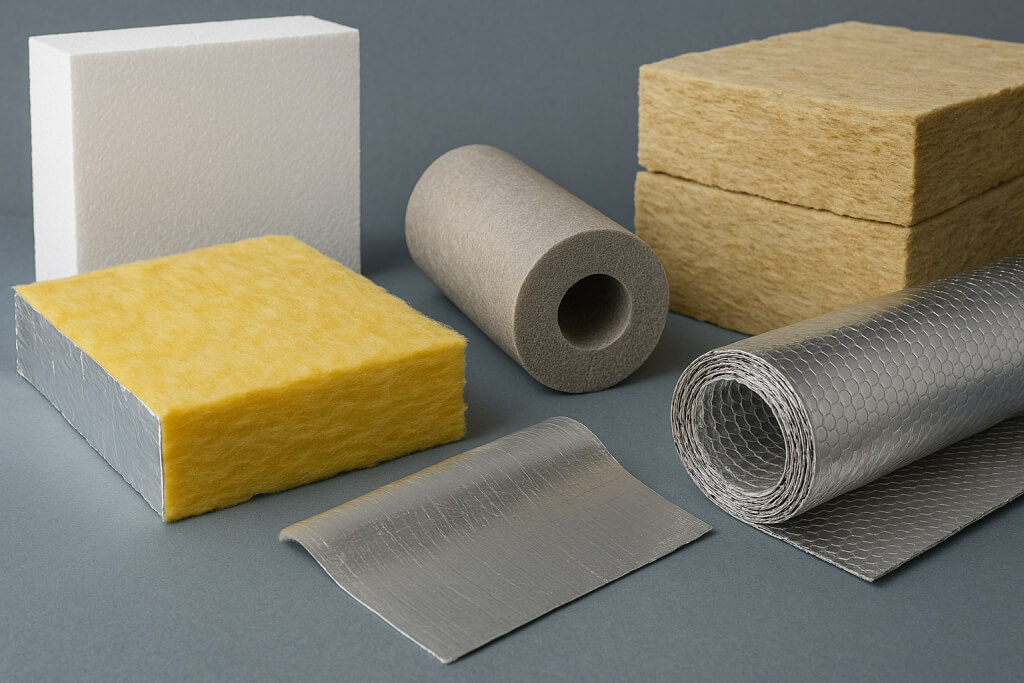
Types of Thermal Insulation Materials in Pakistan
1. Fiberglass Insulation
Lightweight and cost-effective
Commonly used in ceilings and walls
Ideal for residential projects
2. Polystyrene (EPS & XPS)
Moisture-resistant
High thermal performance
Used in walls and floors
3. Polyurethane Foam (PU Foam)
Excellent insulation efficiency
Used in roofs and cold storage
Slightly higher cost but long-lasting
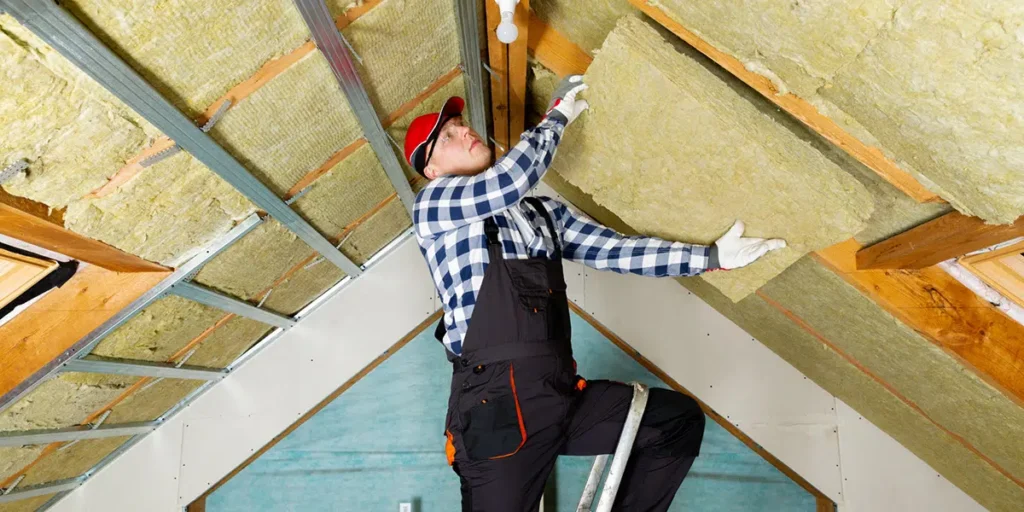
4. Rock Wool / Mineral Wool
Fire-resistant material
Suitable for industrial applications
Also provides sound insulation
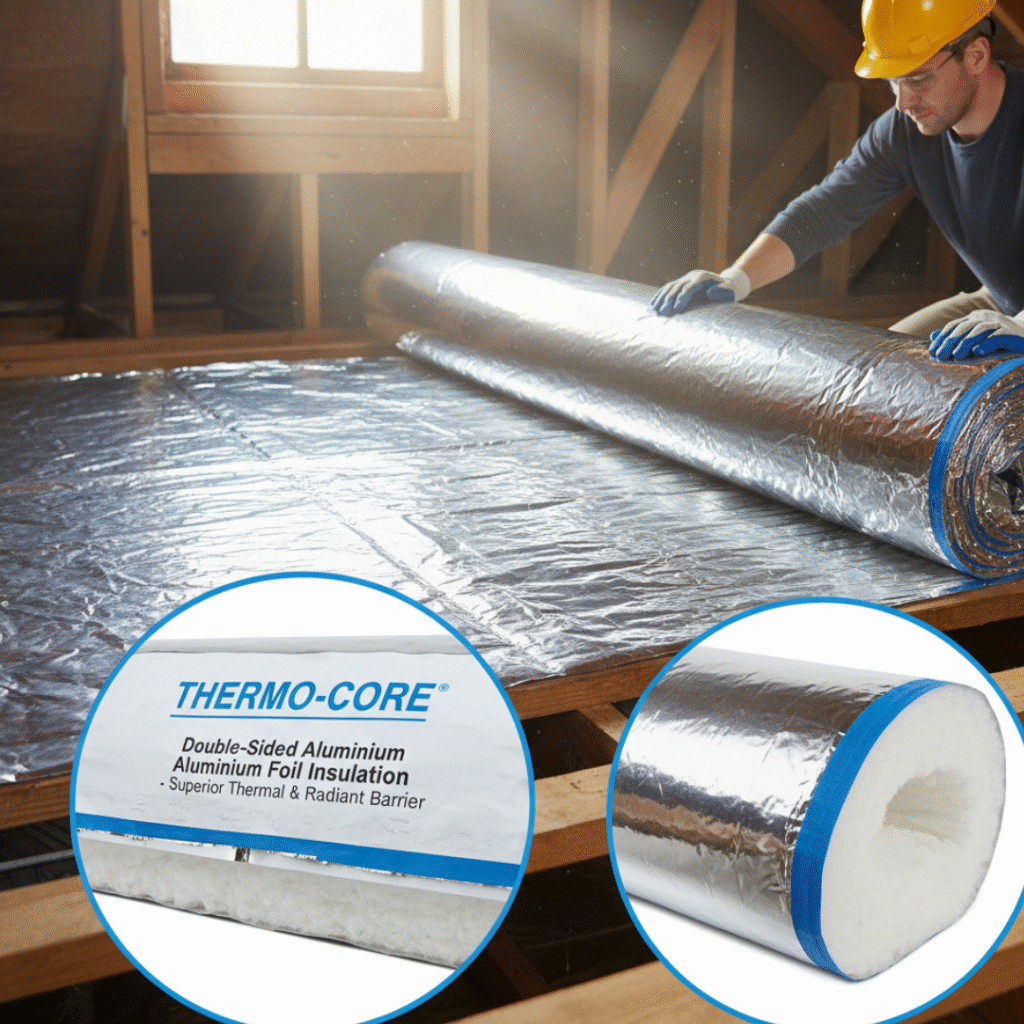
5. Reflective Insulation
Reflects heat instead of absorbing
Perfect for hot climates like Pakistan
Benefits of Using Thermal Insulation
Reduces electricity consumption
Improves indoor comfort
Minimizes environmental impact
Increases building lifespan
Reduces HVAC load
Using the best thermal insulation material in Pakistan ensures long-term savings and better performance.
Thermal Insulation Material Price in Pakistan
Prices vary depending on type, thickness, and quality. Below is a general estimate:
Material Type
Price Range (PKR per sq. ft)
Fiberglass Insulation
80 – 150
EPS (Expanded Polystyrene)
100 – 200
XPS Insulation
180 – 350
PU Foam
250 – 500
Rock Wool
200 – 400
The thermal insulation material in Pakistan price may vary depending on city and supplier.
City-Wise Availability in Pakistan
Thermal Insulation Material in Lahore
Lahore has a growing construction industry, making it easy to find thermal insulation material in Lahore through local distributors and construction suppliers.
Thermal Insulation Material in Islamabad
In the capital city, demand is increasing for energy-efficient buildings. You can find premium quality thermal insulation material in Islamabad for both residential and commercial projects.
Thermal Insulation Material in Faisalabad
Industrial growth in Faisalabad has boosted the demand for insulation solutions. Many factories rely on thermal insulation material in Faisalabad for temperature control.
Thermal Insulation Material in Multan
Due to extreme heat, thermal insulation material in Multan is essential for homes and warehouses to maintain indoor comfort.
Thermal Insulation Material in Karachi
Karachi’s humid climate increases the need for insulation. Reliable suppliers provide thermal insulation material in Karachi for roofing and industrial use.
Top Thermal Insulation Material Wholesellers in Pakistan
Finding a reliable supplier is key to ensuring quality and affordability. Many companies operate as:
Thermal insulation material wholeseller in Pakistan
Bulk suppliers for construction companies
Distributors for imported insulation products
If you’re buying in large quantities, choosing a top thermal insulation material wholeseller in Pakistan can significantly reduce costs.
Thermal Insulation Material Manufacturers in Pakistan
Local production has improved over the years, and several companies now operate as:
Thermal insulation material manufacturer in Pakistan
Producers of EPS, PU foam, and fiberglass
Suppliers for both local and export markets
Working directly with a thermal insulation material wholeseller in Pakistan or manufacturer ensures better pricing and consistent quality.
How to Choose the Best Thermal Insulation Material
When selecting insulation, consider:
Climate conditions
Budget constraints
Application (roof, wall, industrial)
Fire resistance requirements
Moisture resistance
Choosing the top thermal insulation material in Pakistan depends on your specific project needs.
Cheap Thermal Insulation Material in Pakistan – Is It Worth It?
While many options are available as cheap thermal insulation material in Pakistan, it’s important to balance cost with quality.
Low-cost materials may:
Have shorter lifespan
Provide less insulation efficiency
Require frequent replacement
Always evaluate performance before choosing based on price alone.
Applications of Thermal Insulation in Pakistan
Residential homes
Commercial buildings
Cold storage facilities
Factories and warehouses
HVAC duct insulation
Conclusion
Investing in high-quality thermal insulation material in Pakistan is essential for energy efficiency, cost savings, and long-term building performance. Whether you’re sourcing from a thermal insulation material wholeseller in Pakistan or working with a thermal insulation material manufacturer in Pakistan, choosing the right material can make a significant difference.
From thermal insulation material in Lahore to thermal insulation material in Karachi, the availability across cities ensures you can find the right solution for your needs.
FAQ’S
The best thermal insulation material in Pakistan depends on your application. PU foam and XPS are ideal for roofs and walls due to high efficiency, while fiberglass and rock wool are suitable for budget-friendly and industrial uses.
The thermal insulation material price in Pakistan typically ranges from PKR 80 to PKR 500 per sq. ft, depending on the type, thickness, and quality of the material.
You can purchase thermal insulation material in Lahore, Karachi, Islamabad, Faisalabad, and Multan from local construction markets, wholesalers, and specialized insulation suppliers across these cities.
Cheap thermal insulation material in Pakistan can be suitable for small projects, but it may offer lower durability and efficiency. For long-term performance, it’s better to invest in high-quality insulation materials.
Choosing the correct Jumbolon insulation thickness is the most critical factor in maximizing your building’s energy efficiency and achieving long-term comfort. Jumbolon, which is a brand of Extruded Polystyrene (XPS) foam, is a premium choice for roof assemblies due to its superior moisture resistance and high compressive strength.
However, thermal performance is directly proportional to thickness. Too thin, and you waste energy; too thick, and you overspend on materials. This guide will help you determine the best thickness for your roof insulation project based on performance requirements and climate.
The Core Metric: R-Value and Thickness
The insulating power of any material is measured by its R-value, which denotes thermal resistance to heat flow. The higher the R-value, the better the insulation performance.
1. Jumbolon’s Thermal Advantage
Jumbolon (XPS) typically provides an R-value per inch ranging from R-5.0 to R-5.3. This high R-value means it can achieve significant thermal protection with less material compared to traditional insulation types.
2. Required R-Value by Climate
The ideal total R-value for your roof assembly is dictated by your geographical climate zone. In regions with very hot summers or cold winters, higher resistance is necessary to maintain a comfortable interior temperature and reduce utility costs.
Hot Climates (Cooling Dominated): To prevent heat ingress, a minimum roof R-value of R-20 to R-30 is often required, depending on local building codes and the intensity of solar heat.
Moderate/Mixed Climates: R-values in the range of R-30 to R-40 provide a good balance for both heating and cooling seasons.
Cold Climates (Heating Dominated): These zones demand the highest levels of protection, typically requiring R-49 to R-60 or more to minimize heat loss.
Determining the Best Thickness for Roof Insulation
Moreover, based on Jumbolon’s average R-value of R-5.0 per inch, here is a breakdown of the thickness required to achieve common target R-values:
Target R-Value
Jumbolon Thickness (Inches)
Primary Application
R-10
2 inches (2 * 5.0)
Minimal requirement; often used in light-commercial or shed roofs.
R-20
4 inches (4 * 5.0)
Recommended minimum for residential roof insulation in moderate climates or for commercial buildings needing adequate heat proofing.
R-25
5 inches (5 * 5.0)
Ideal mid-range thickness, providing high energy efficiency in hot climates where solar load is severe.
R-30
6 inches (6 * 5.0)
Excellent for high-performance residential homes or in areas with stringent thermal protection standards.
Furthermore, for most residential and commercial flat roof insulation projects in hot to moderate climates. However, a thickness between 4 to 5 inches (100mm to 125mm) is considered the best thickness for balancing material cost and long-term thermal performance.
Factors Influencing Your Final Decision
While R-value is paramount, other factors specific to Jumbolon and its application should guide your final purchase:
1. Application Type: Inverted vs. Conventional Roof
Inverted Roof (Most Common with XPS): In this system, the Jumbolon (XPS) boards are laid above the waterproofing membrane. This is ideal because the insulation shields the membrane from temperature extremes and UV damage, greatly extending its lifespan. Since the XPS is exposed to water from rain and snow, its excellent moisture resistance is critical.
Conventional Roof: The insulation is placed below the waterproofing membrane.
2. Load-Bearing Requirements
Jumbolon is known for its high compressive strength, making it suitable for rooftops that see pedestrian traffic, heavy equipment, or support green roof assemblies. If your roof will be a walkable terrace or support air conditioning units, ensure you select a high-density Jumbolon board, regardless of the thickness required for thermal efficiency.
3. Moisture Resistance and Long-Term Value
The closed-cell structure of Jumbolon ensures negligible water absorption, meaning its R-value is maintained even if the roof assembly gets wet. Investing in sufficient thickness ensures long-lasting insulation. That will continue to deliver performance for decades, offering better lifetime value and maximizing your potential energy savings.
Conclusion: Optimal Thickness
For a comprehensive and effective roofing system, the sweet spot for Jumbolon insulation thickness is generally 4 inches (100mm) for adequate thermal protection in most average climates, or 5 to 6 inches (125mm to 150mm) if you are aiming for superior energy efficiency in an extreme climate zone or seeking to meet high-end green building standards. Always verify the required total R-value with your local building code before making a final decision.
FAQ’S
The total R-value (or thermal resistance) of your Jumbolon insulation is calculated linearly based on its thickness. Since Jumbolon (Extruded Polystyrene – XPS) typically offers an R-value per inch of around R-5.0, a 4-inch board provides an R-20, and a 6-inch board provides an R-30. To achieve high energy efficiency and the required thermal protection. However, you must select the best thickness that meets or exceeds the local code’s minimum R-value requirement for your specific climate zone.
In both very cold and very hot climate zones, a higher total R-value is required to ensure thermal protection and maximize efficiency. Cold climates, a thicker layer provides better resistance against heat escaping (heat loss). In hot climates, the insulation must resist the intense solar load (heat gain). However, choosing a sufficient Jumbolon insulation thickness (often 5 to 6 inches) minimizes the work required by your HVAC system, translating directly to lower utility bills.
While moisture resistance doesn’t directly dictate the thermal thickness, it is a key factor in ensuring long-lasting insulation. The closed-cell structure of Jumbolon prevents water absorption, which means the installed R-value is maintained over decades, even in challenging environments like a flat roof insulation system. Furthermore, this long-term stability ensures the thickness you select for your target R-value. Which continues to perform reliably throughout the building’s life.
For a standard residential roof insulation project in a moderate to mixed climate. While the best thickness of Jumbolon is typically 4 inches (providing R-20) to 5 inches (providing R-25). This range offers an excellent balance between the material cost and achieving very good thermal performance. However, you should always consult local building codes as many jurisdictions now require R-30 or higher for superior heat proofing and long-term energy savings.
Choosing the right insulation material is a critical decision for any construction project. It impacts everything from long-term energy costs to the structural integrity and comfort of the building. Two common choices in the rigid foam insulation market are Jumbolon sheets vs EPS (Expanded Polystyrene) sheets. While both are lightweight, foam-based materials, they are fundamentally different in composition, properties, and overall performance.
This comprehensive guide breaks down the key differences to help you determine which material—Jumbolon or EPS sheet—is the superior option for your specific application.
Understanding the Materials: Jumbolon vs EPSSheet
The core difference lies in their manufacturing process and material classification.
1. Jumbolon (Extruded Polystyrene – XPS)
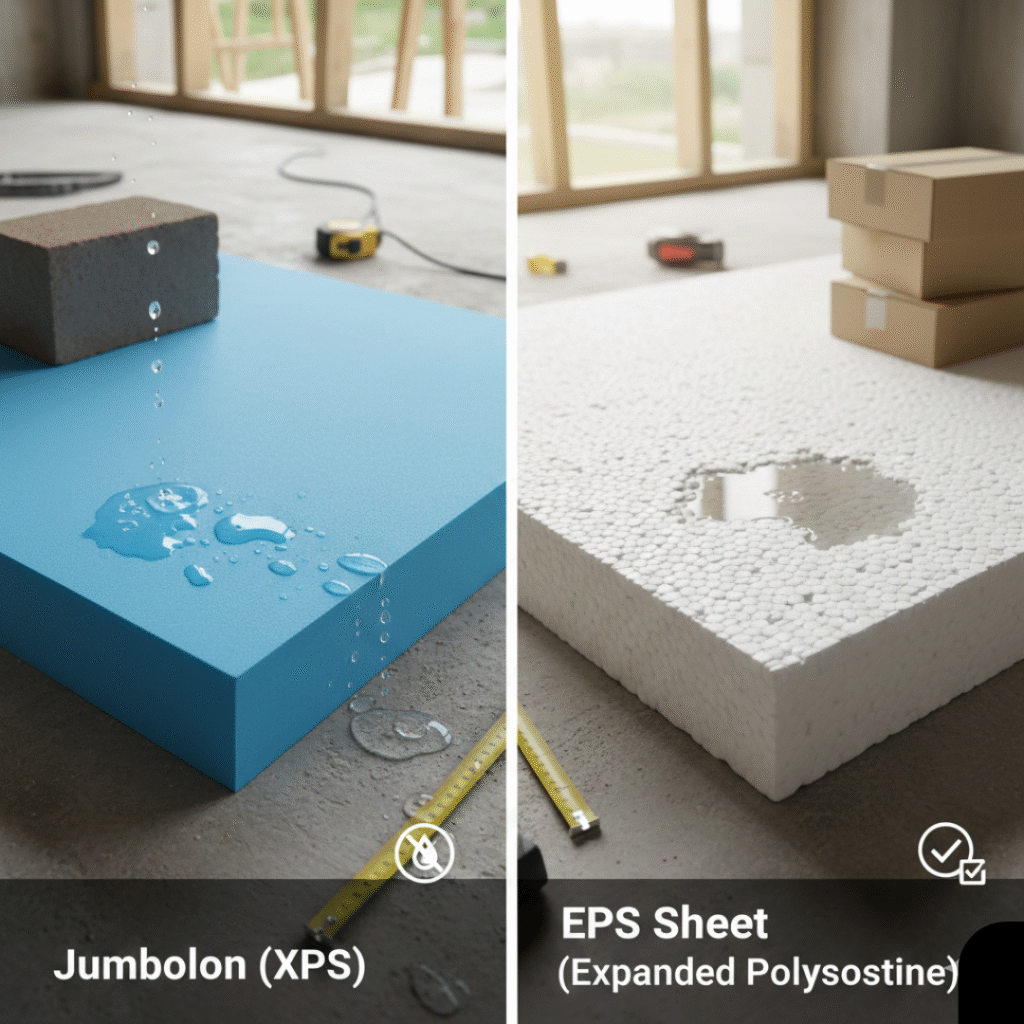
Jumbolon is a popular brand name for Extruded Polystyrene (XPS) foam insulation. It is manufactured through a continuous extrusion process that results in a unique structure.
Structure: Closed-cell, homogenous, and uniform. This tight, non-interconnected cell structure is key to its superior properties.
Key Advantage: The closed-cell structure makes it an extremely effective moisture-resistant foam and accounts for its high compressive strength.
2. EPS Sheet (Expanded Polystyrene)
Expanded Polystyrene (EPS) sheets, sometimes colloquially referred to as Thermopore or Thermocol, are made by expanding polystyrene beads with steam, fusing them into a solid block, and then cutting the block into sheets.
Key Advantage: It is highly cost-effective and lightweight.
Structure: Closed-cell, but the cells are not completely interconnected; there are tiny voids between the fused beads.
Performance Comparison: Jumbolon vs. EPS Sheet
The performance of an insulating material is measured by several key criteria, including thermal efficiency, resistance to moisture, and long-term durability.
1. Thermal Insulation (R-Value)
The R-value measures a material’s resistance to heat flow. A higher R-value indicates better thermal resistance and insulating capability.
Feature
Jumbolon (XPS)
EPS Sheet (Expanded Polystyrene)
Verdict
R-Value per Inch
Generally $\approx 5$
Generally $\approx 3.6 – 4.2$
Jumbolon (XPS) offers a significantly higher R-value per inch, providing superior thermal performance in thinner applications.
Long-Term Performance
Maintains R-value exceptionally well over time.
Can see a slight drop in R-value if exposed to moisture over the long term.
Jumbolon (XPS) maintains efficiency better.
2. Moisture Resistance and Water Absorption
Water absorption is critical, as a wet insulator loses its R-value rapidly.
Jumbolon (XPS): Due to its fine, uniform closed-cell structure, it is highly hydrophobic. It has very low water absorption (often $< 0.3\%$ by volume, even when submerged) and is an excellent water-resistant insulation choice, making it ideal for below-grade applications and areas prone to dampness.
EPS Sheet: While largely closed-cell, the spaces between the fused beads can allow water vapor to permeate and, in prolonged exposure to moisture, it can absorb more water (up to $2-3\%$ by volume).
Verdict:Jumbolon (XPS) is the clear winner for moisture resistance, ensuring stable performance in humid or wet environments.
3. Compressive Strength
Compressive strength is the material’s ability to withstand loads without deforming or failing.
Jumbolon (XPS): Features a high compressive strength (often $250 – 350$ KPa or more). Its dense, uniform structure makes it ideal for bearing heavy loads.
EPS Sheet: Compressive strength is good but varies significantly with the density grade. It typically performs well but is generally less robust than XPS at comparable densities.
Verdict:Jumbolon (XPS) is better suited for applications under high load or pressure, such as floor insulation and roof insulation.
Common Applicationsof Jumbolon Vs EPS Sheet
The best choice often depends on the specific job.
Application
Jumbolon (XPS) Recommendation
EPS Sheet Recommendation
Below-Grade Insulation (Foundations, Slabs)
Strongly Recommended (Due to high moisture resistance and compressive strength).
Not ideal for long-term below-grade use where persistent moisture is a factor.
Wall Insulation (Cavity or Exterior)
Excellent choice (High R-value, durability).
Good choice (Cost-effective and lightweight for above-grade walls).
Roof Insulation (Flat or Pitched)
Recommended (Withstands environmental stress and traffic loads better).
Suitable for light-load roof systems where cost is the primary factor.
General Packaging/Void Fill
Overkill, generally too expensive.
Highly Recommended (Most cost-effective foam for non-structural, protective use).
Cost-Effectiveness and Durability
While Jumbolon provides better performance, the final decision often comes down to budget and long-term value.
Initial Cost: The Expanded Polystyrene (EPS sheet) typically has a lower insulation material cost per square foot than Jumbolon (XPS). It is the more budget-friendly option upfront.
Long-Term Value: Jumbolon’s long-lasting insulation properties—its superior moisture resistance and higher R-value retention—mean it can offer better lifetime value and greater energy efficiency over the decades, leading to lower utility bills. Its durability also reduces the risk of material replacement.
Conclusion: Which Is Better Jumbolon Vs EPS Sheet?
There is no single “better” material; there is only the right material for the job.
Choose Jumbolon (XPS) when:
You need the highest possible thermal resistance in a limited thickness.
The application involves persistent moisture, such as a basement, foundation, or water tank insulation.
The material will be subject to heavy loads, such as in floor insulation or a trafficable roof.
Choose EPS Sheet when:
The budget is the primary constraint.
The application is for above-grade walls where it will be protected from direct water exposure.
The material is for lightweight use like packaging or a quick, non-structural heat proofing solution.
In the final analysis, for applications requiring long-lasting insulation and maximum thermal performance under challenging conditions, the superior compressive strength and moisture-resistant foam properties of Jumbolon (XPS) make it the clear technical winner, justifying its higher insulation material cost.
FAQ’S
The main difference lies in how they are manufactured. Jumbolon (XPS) is made through an extrusion process, resulting in a closed-cell, highly uniform structure with no internal voids. This structure gives it superior moisture resistance and high compressive strength. EPS sheets are made by expanding and fusing beads, resulting in a closed-cell structure but with tiny air voids between the fused beads, which allows for slightly higher water vapor permeability and absorption over time.
Yes, Jumbolon (XPS) is highly recommended for basement, foundation, and other below-grade insulation applications. This is because these areas are prone to constant moisture exposure. Jumbolon’s extremely low water absorption and high moisture-resistant foam properties ensure its R-value remains stable and its performance is not compromised by groundwater or damp soil, unlike EPS, which can absorb more water over the long term.
Jumbolon (XPS) generally offers better long-term performance and R-value retention. While both materials have high initial R-values, Jumbolon’s robust, closed-cell structure is inherently resistant to moisture ingress. Since water infiltration is the primary cause of R-value degradation in foam insulation, the superior water resistance of Jumbolon ensures it maintains its specified thermal resistance over the lifespan of the building more reliably than standard EPS sheets.
An EPS sheet is the most cost-effective foam option when the application is above-grade and not exposed to constant moisture or high structural loads. It is a great budget-friendly choice for non-structural applications like general wall insulation, temporary heat proofing, or protective packaging where its slightly lower R-value per inch and higher permeability are acceptable trade-offs for a lower insulation material cost.
The Challenge: Protecting Assets Worth Millions in Transit
Moving industrial equipment—be it specialized robotics, delicate electronic control units, or large engine components—is an exercise in high-stakes logistics. These assets represent significant capital investment, and the journey from the factory floor to the installation site is fraught with risks: rough handling, sudden impacts, temperature extremes, and moisture exposure. Moreover, a failure in packaging can lead to catastrophic transit damage, resulting in costly delays, repairs, and reputational harm.
Furthermore, this is where EPS sheet for industrial machinery packaging steps in as the most reliable, practical, and cost-effective solution. Known globally as Expanded Polystyrene Foam, Moreover, EPS offers a unique suite of properties that make it ideally suited for the rigorous demands of industrial shipping.
The Science of Protection – Shock and Vibration Control
The primary function of industrial packaging is to neutralize the kinetic energy generated during transport. EPS excels at this job due to its intrinsic cellular structure.
Superior Shock Absorption
Expanded Polystyrene Foam is composed of millions of tiny, closed cells filled with air. When subjected to sudden force or impact, these air pockets compress and deform, distributing the load over a larger area and absorbing the energy. This remarkable shock absorption capability is essential for safeguarding sensitive components within heavy machinery from drops, jolts, and collisions. The material effectively acts as a crumple zone, dissipating impact energy before it reaches the delicate equipment.
Unmatched Vibration Dampening
Beyond single impacts, machinery is constantly subjected to sustained, low-level vibration from truck engines, rail lines, or ship movement. This continuous shaking can loosen fasteners, damage soldered joints, and cause electronic components to fail. Moreover, the viscoelastic properties of EPS provide excellent vibration dampening, isolating the machinery from these harmful frequencies. By reducing resonant vibrations, the lifespan of the packaged asset is preserved, ensuring it arrives ready for immediate operation and reducing the likelihood of hidden transit damage.
Precision Engineering and Load Management
Generic packaging cannot protect complex industrial equipment. The effectiveness of EPS is maximized through engineering precise, functional designs.
Custom-Fit Packaging Solutions
Industrial assets rarely come in standard shapes. The beauty of EPS sheet is its versatility and manufacturability. It can be easily cut, routed, molded, and laminated to create custom-fit packaging solutions that cradle the exact contours of the machinery. Moreover, this precision fit ensures that the product is held securely, preventing shifting, rubbing, and localized stress points. A custom design is critical for achieving optimal shock absorption and eliminating empty space within the crate.
Strategic Load Distribution
Protecting heavy machinery requires more than just filling gaps, it requires strategically managing its immense weight. High-density Expanded Polystyrene Foam can be engineered to support substantial weight, ensuring proper load distribution across the package base and minimizing pressure points that could damage the machine’s casing or frame. However, by spreading the weight evenly, EPS prevents deformation of the corrugated box or wooden crate, maintaining the integrity of the entire shipping container. This strategic use of EPS is vital for safely stacking and handling large packages.
Environmental and Durability Benefits of EPS
The advantages of EPS sheet for industrial machinery packaging extend to environmental protection and material endurance in harsh shipping conditions.
Moisture Resistance for Global Shipping
Industrial goods often travel across continents, enduring drastic changes in climate, humidity, and often, sea spray. The moisture resistance of EPS is paramount here. Since the material is comprised of non-interconnected, closed cells, it does not absorb water. However, this ensures that the cushioning material maintains its integrity and vital cushioning properties even in damp environments, preventing water damage and corrosion to the packaged metal or electronic components.
Maintaining Thermal Stability
For certain sensitive components or chemical products shipped alongside the machinery, maintaining a consistent temperature is essential. Moreover, EPS provides exceptional thermal stability, acting as an insulator to shield the contents from external heat spikes or freezing temperatures. While not a replacement for refrigerated containers, this thermal barrier adds a vital layer of protection against rapid environmental shifts during loading and unloading, contributing to the overall quality control of the shipment.
A Recyclable Material
In an era of increased corporate responsibility, using a recyclable material is an important consideration. Expanded Polystyrene Foam is $100%$ recyclable. Forward-thinking companies are increasingly establishing reverse logistics to collect and recycle used EPS packaging. Moreover, it often densifying it before shipment to recycling centers. Choosing EPS demonstrates a commitment to sustainable practices. While still benefiting from its superior performance as a cost-effective solution to packaging.
Conclusion: EPS as the Standard for Industrial Integrity
The use of EPS sheet for industrial machinery packaging is no longer a luxury. It is the industry standard for robust protection. From its excellent shock absorption and vibration dampening capabilities to its essential moisture resistance and thermal stability. Moreover, EPS provides a multilayered defense against the stresses of global logistics.
Furthermore, by utilizing custom-fit packaging and ensuring proper load distribution, manufacturers guarantee the safe arrival of their heavy machinery. The fact that EPS is a recyclable material and a genuinely cost-effective solution further solidifies its position. As the indispensable material for maintaining asset integrity and minimizing expensive transit damage throughout the supply chain. The superior cushioning properties of EPS ensure that protection never comes second to profit.
FAQ’S
Expanded Polystyrene Foam (EPS) has a unique closed-cell structure where $98\%$ of its volume is trapped air. When the packaging experiences an impact or shock, the individual EPS beads and their internal air pockets compress momentarily. This compression action absorbs and disperses the kinetic energy across the entire sheet, preventing concentrated force from reaching the heavy machinery. This reliable shock absorption mechanism is essential for mitigating costly transit damage.
Vibration dampening refers to the ability of the EPS sheet to isolate the packaged machinery from continuous, low-level shaking (vibration) generated by truck engines, trains, or ships. These sustained vibrations can cause internal damage, loosen components, and lead to premature failure. The inherent viscoelastic properties of the Expanded Polystyrene Foam cushion and absorb these frequencies, ensuring the long-term thermal performance of the equipment isn’t compromised by unnecessary movement. This proactive vibration dampening ensures the machinery arrives in optimal working condition.
EPS sheet is highly versatile and can be processed using heat-cutting, CNC milling, or molding techniques to create precise, custom-fit packaging inserts. These inserts are engineered to match the exact contours and stress points of the machinery. By distributing the weight evenly across the entire packaged item, the foam ensures efficient load distribution. This prevents concentrated pressure from building up on sensitive points, maximizing the effectiveness of the cushioning properties and significantly reducing the risk of structural failure or transit damage.
Yes. While the upfront cost of Expanded Polystyrene Foam may be slightly higher than simple cardboard or basic wrapping, it provides exceptional value as a cost-effective solution due to its prevention of loss. Its superior moisture resistance protects valuable heavy machinery from corrosion and water damage encountered during global shipping, maintaining the integrity of the package even in humid conditions. This durability ensures the packaging doesn’t degrade, thereby guaranteeing reliable shock absorption and eliminating the far greater costs associated with machinery replacement, repairs, and logistical delays caused by transit damage.
Introduction: What Makes XPS Sheet Insulation a Construction Staple?
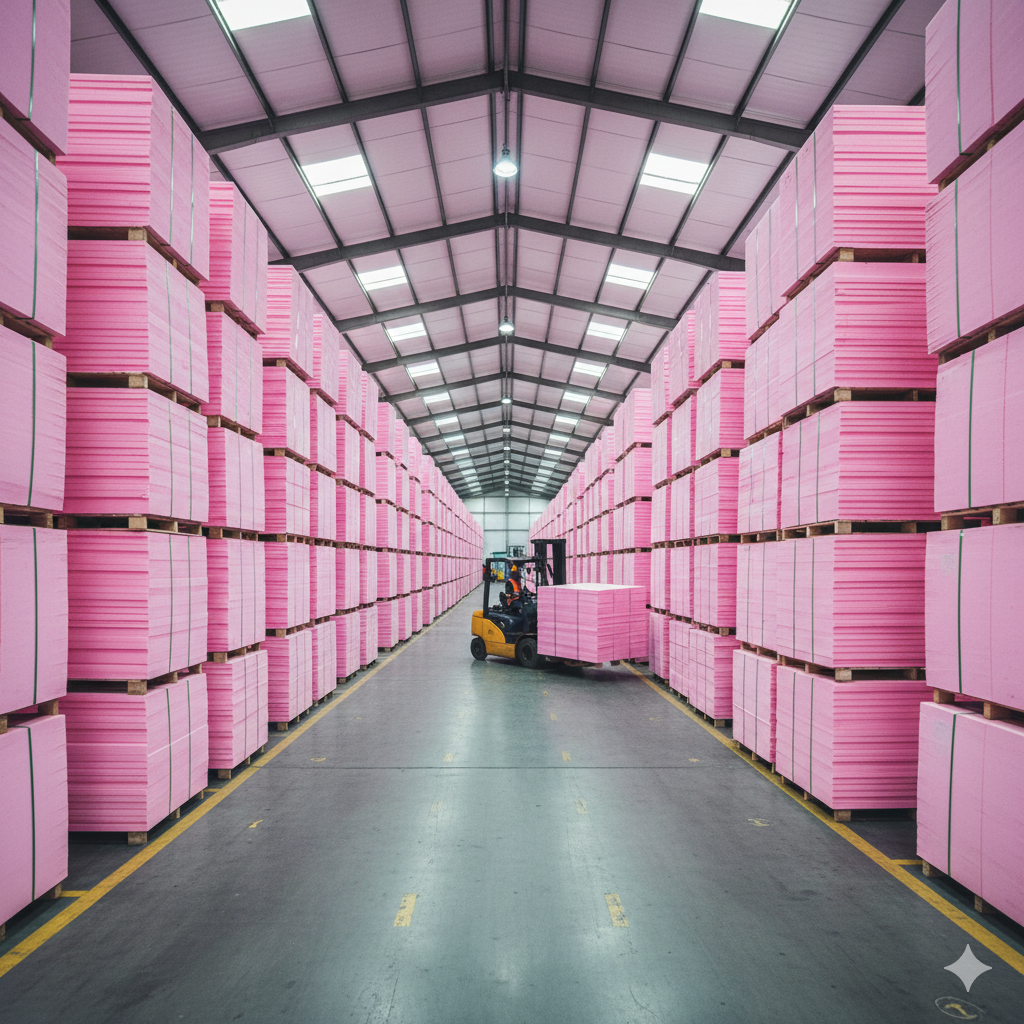
In the world of building materials, few products achieve. The combination of durability and thermal performance offered by XPS Sheet Insulation, or Extruded Polystyrene Foam. Easily recognized by its distinct pink, blue, or green color. Expanded Polystyrene (EPS), due to a specialized manufacturing process called extrusion.
This process results in a material with a unique closed-cell structure that is uniform, dense, and remarkably robust. This density is the fundamental reason why XPS is the material of choice for the most challenging insulation applications in modern construction. Its superior qualities ensure buildings maintain exceptional energy efficiency and structural integrity over the decades.
The Critical Advantage of Moisture Resistance
The single greatest threat to insulation performance is water. When traditional fibrous or open-cell insulation materials absorb moisture, their thermal resistance plummets, leading to energy waste, mold growth, and structural issues. This is where the closed-cell structure of XPS offers a significant, non-negotiable advantage.
The non-interconnected foam cells of Extruded Polystyrene Foam physically repel water, resulting in extremely low water absorption. This superior moisture resistance ensures that the material maintains its insulating power even when directly exposed to damp or wet conditions, such as continuous contact with soil or heavy rain. This durability is the primary factor driving its selection for submerged or high-humidity environments.
High Compressive Strength and Load-Bearing Applications
In many areas of a building envelope, insulation is required to bear significant weight without deforming. Standard foam insulations may fail under pressure, but XPS is specifically engineered to resist crushing, featuring a consistently high compressive strength.
The tight cellular structure gives XPS Sheet Insulation a remarkable load-bearing capacity. This property makes it indispensable for applications where heavy static or dynamic loads are present:
Under Slabs: Insulating concrete floors and rafts where the material must support the entire weight of the slab, finished floor, and live loads.
Parking Decks: Used in commercial projects beneath pavers or asphalt where vehicle traffic demands maximum structural stability.
This resistance to pressure guarantees the long-term thermal performance of the assembly, preventing costly structural movement and cold spots that arise from compromised insulation.
Applications Where XPS Excels – Below-Grade and Inverted Systems
The unique properties of Extruded Polystyrene Foam make it the undisputed champion for specific, demanding installation types.
Below-Grade Applications and Foundation Walls
Insulating the exterior of foundation walls and basements is known as below-grade applications. This environment is challenging because the insulation is constantly exposed to soil moisture, hydrostatic pressure, and seasonal freezing/thawing cycles. The moisture resistance and high compressive strength of XPS are perfectly suited here. Installing XPS Sheet Insulation around the foundation helps prevent thermal bridging and keeps the basement space warm and dry, significantly improving the home’s overall energy efficiency. It functions as essential perimeter insulation, protecting the concrete from extreme temperature swings.
Inverted Roof Systems
A revolutionary application where XPS is mandatory is the inverted roof systems (or protected membrane roofs). In this design, the rigid foam boards are placed above the waterproofing membrane, rather than below it. This protects the membrane from extreme temperature fluctuations and damaging UV rays, thereby extending the waterproofing system’s life. The XPS boards must have enough strength and moisture resistance to withstand standing water, foot traffic, and the weight of ballast (gravel or paving stones) without absorbing water or deforming.
Performance Metrics and Long-Term Value
When evaluating any insulation, its thermal resistance and stability over time are key indicators of its value.
R-Value Stability
XPS insulation typically boasts an initial R-value of around R-5 per inch of thickness. However, which is generally higher than standard EPS. However, one key advantage often cited is its R-value stability. While some foam insulation boards may experience a slight long-term reduction in R-value due to the diffusion of the blowing agent. The dense, closed-cell structure of XPS is designed to minimize this effect, providing reliable long-term thermal performance. This predictability is crucial for architects and builders calculating lifetime energy efficiency savings.
The Cost-Benefit of Durability
While XPS Sheet Insulation may have a higher initial material cost compared to standard EPS or fiberglass. Its superior durability, moisture resistance, and minimal need for replacement in tough environments like below-grade applications translate to lower long-term thermal performance costs. By effectively insulating foundation walls and high-load areas. XPS ensures the structural health and thermal integrity of the building for its entire lifespan. The investment in robust perimeter insulation and high load-bearing capacity foam dramatically reduces future maintenance expenses.
Conclusion: The Right Tool for the Toughest Jobs
XPS Sheet Insulation is a premium, high-performance material indispensable for specialized construction challenges. Its unbeatable moisture resistance and exceptional high compressive strength. Moreover, make it the logical choice for inverted roof systems and all below-grade applications, including insulating foundation walls. By utilizing its superior R-value stability and robust load-bearing capacity for crucial perimeter insulation. Furthermore, builders achieve unparalleled energy efficiency and ensure the long-term thermal performance of the entire structure. For demanding environments, Extruded Polystyrene Foam is the reliable, durable solution.
FAQ’S
While XPS is known for its excellent initial thermal performance (around R-5 per inch), it does experience a gradual reduction in R-value over time, a phenomenon known as thermal drift. This occurs because the initial captive blowing agent within the material’s closed-cell structure slowly escapes and is replaced by air. However, the dense structure of Extruded Polystyrene Foam causes this drift to happen at a slower rate compared to some other foam boards. Manufacturers are required to report the Long-Term Thermal Performance (LTTR), which represents the stable R-value expected over the product’s lifespan, ensuring the building’s calculated energy efficiency is met.
Yes, XPS is the preferred rigid foam for virtually all below-grade applications, including foundations and areas with fluctuating water tables. Its manufacturing process creates a closed-cell structure that provides superior moisture resistance, preventing water from being wicked up or absorbed into the insulation core. This ensures that the material’s insulating capacity is maintained even when the perimeter insulation around the foundation walls is submerged or subjected to constant dampness. Its high compressive strength further allows it to resist pressure from soil and water without deforming.
The high compressive strength is crucial when XPS is used beneath concrete slabs, floors, or in inverted roof systems. This exceptional load-bearing capacity means the Extruded Polystyrene Foam can withstand the immense weight of the concrete and subsequent live loads (people, vehicles, equipment) without crushing or permanently deflecting. Maintaining its thickness is vital, as any compression would compromise the entire assembly and negatively impact the long-term thermal performance of the slab insulation, leading to cold spots and thermal bridging.
Generally, no. While the distinct coloration (often pink, blue, or green) is the primary way to visually identify XPS Sheet Insulation from white EPS, the color typically only indicates the manufacturer or brand (e.g., pink for one major brand, blue for another). The core performance properties—like the R-value stability, closed-cell structure, and high compressive strength—are governed by the product’s type (e.g., Type IV, Type VI) and thickness, which should be verified on the product label, not assumed based on color.
Understanding the Critical Needs of Institutional Buildings
Schools and hospitals are not ordinary structures; they are community pillars where human health, safety, and productivity are paramount. These institutions operate under unique and stringent demands:
Hospitals require highly sterile environments, strict infection control, continuous temperature stability for patients and sensitive equipment, and a structure that supports complex services.
Schools need quiet, comfortable learning spaces to foster a productive educational environment, along with materials that are durable, safe, and easily maintained to manage high traffic and rigorous cleaning protocols.
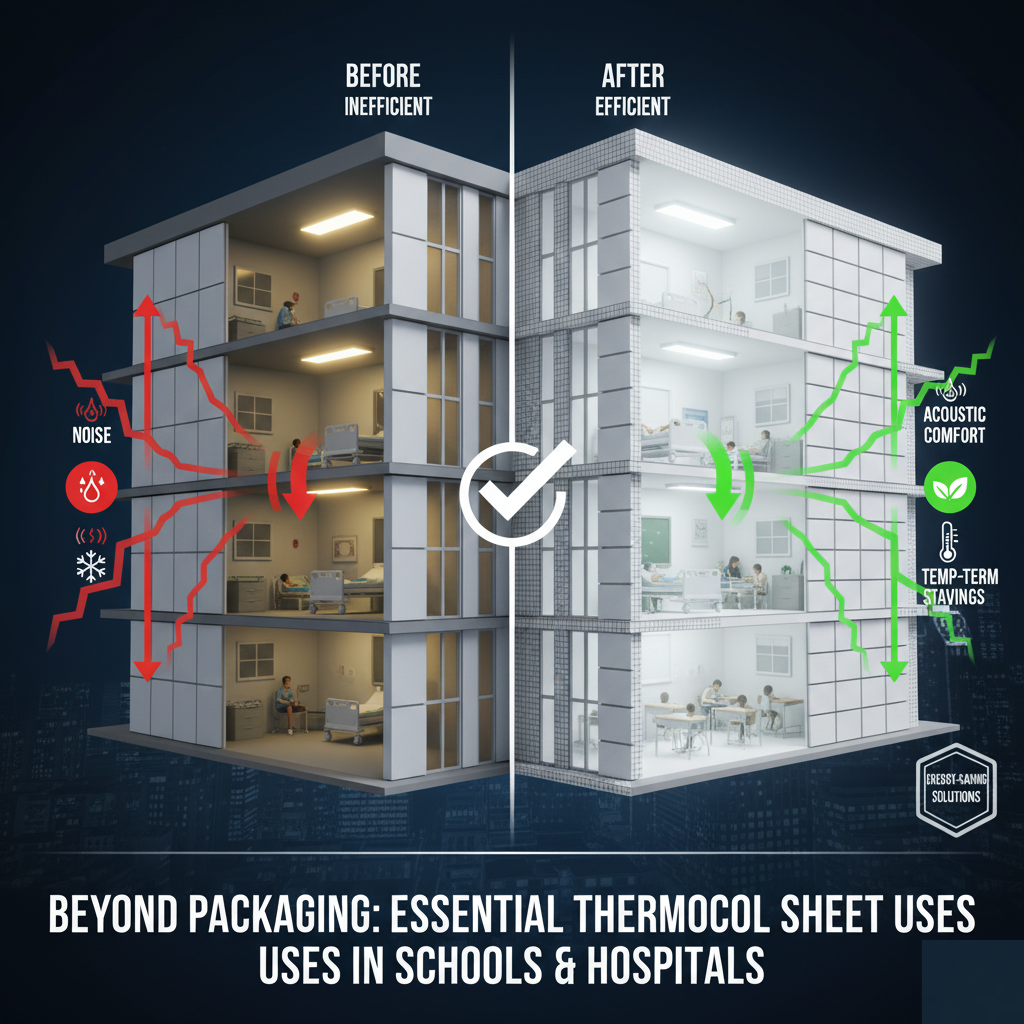
In both scenarios, the choice of building maintenance and construction materials is critical. Increasingly, Thermocol sheets, scientifically known as Expanded Polystyrene (EPS) foam boards, have emerged as a versatile and essential component, offering numerous advantages over traditional materials in addressing these specialized needs.
Temperature and Energy Control – The Role of Thermal Insulation Properties
The most recognized application of Thermocol sheets is in providing superior thermal insulation properties. In large institutional buildings, heating, ventilation, and air conditioning (HVAC) systems are major consumers of energy. Minimizing heat loss in winter and heat gain in summer is the fastest path to realizing significant operational savings.
Optimizing HVAC Efficiency in Hospitals
Hospitals, in particular, must maintain precise temperature zones, from operating theaters to patient recovery rooms. Ineffective insulation forces HVAC systems to run constantly, leading to inflated utility bills and increased risk of system failure.
EPS foam boards are installed within walls, roofs, and flooring systems to create an effective thermal envelope. This crucial barrier stabilizes the internal temperature, allowing the HVAC system to operate efficiently. This material directly supports the institutional goal of achieving significant energy-saving solutions by reducing the building’s reliance on continuous climate control. This stability is critical for the storage of medicines and the operation of life-saving equipment, contributing to the overall integrity of the facility.
Creating a Comfortable Educational Environment
For schools, temperature regulation impacts student focus and attendance. A classroom that is too hot or too cold is a distraction. Thermocol sheets in the roof and ceiling of school buildings significantly reduce the external heat transfer. This passive cooling effect is especially important in regions with extreme climates, creating a more comfortable and conducive educational environment without excessively burdening the school’s budget. Their lightweight nature makes them ideal for retrofitting older school buildings without adding significant structural load.
Noise Reduction and Focus – The Benefit of Acoustic Insulation
In busy institutional settings, noise pollution is a serious concern. The clatter of hospital carts, intercom announcements, and machinery hum can hinder patient recovery, while noise from adjacent classrooms or outdoor traffic can impair student learning.
Enhancing Patient Recovery with Acoustic Insulation
Hospitals require quiet zones. Excessive noise is a known contributor to patient stress and poor sleep, directly affecting recovery times. Acoustic insulation is therefore vital for patient wards and consultation rooms.
While primarily known for its thermal resistance, high-density Expanded Polystyrene (EPS), especially when used in combination with other materials in partition walls, provides significant acoustic insulation benefits. It helps dampen sound vibrations and reduce reverberation, creating a quieter, more therapeutic environment essential for hygiene and safety protocols that rely on clear communication.
Supporting Learning with Sound Dampening
In a school, concentration is key. Noise transference between classrooms, gymnasiums, and hallways is a constant challenge. Using Thermocol sheets as an underlay in flooring or within false ceilings helps absorb impact noise and reduce airborne sound transmission. This investment in a quieter educational environment directly translates to better student comprehension and focus. The cost-effective material solution offers high-impact improvements in learning conditions without the prohibitive expense of specialized soundproofing systems.
Hygiene, Safety, and Construction Durability
Beyond environmental control, institutions prioritize durability, ease of maintenance, and compliance with health and fire safety standards.
Facilitating Infection Control and Hygiene
In hospitals, every material must be easy to clean and resistant to biological growth. EPS foam boards are non-fibrous and do not absorb water, making them inherently resistant to mold, mildew, and bacterial growth—a non-negotiable factor in infection control environments. When protected by a hard, sealed coating, the smooth, impermeable surfaces simplify the rigorous cleaning and sterilization procedures required for healthcare facilities, contributing greatly to overall hygiene and safety.
Fire-Retardant Grade and Structural Safety
Safety is paramount. Modern Expanded Polystyrene (EPS) materials are often available in a special fire-retardant grade (FR-grade), which is crucial for public buildings. While no material is completely fireproof, this treated EPS is designed to self-extinguish when the source of the fire is removed, significantly slowing the spread of flames and meeting specific regulatory requirements for institutional construction. Choosing this grade is a fundamental step in responsible building maintenance and code compliance.
Lightweight Construction for Rapid Deployment
The lightweight construction of Thermocol sheets and prefabricated panels offers immense logistical and structural advantages.
Schools: Faster construction times minimize disruption to the school calendar. The ease of handling the lightweight construction materials also lowers labor costs and simplifies on-site logistics.
Hospitals: Their light weight reduces the load on a building’s structure, which is important for multi-story hospitals. Furthermore, these prefabricated panels can be rapidly assembled, supporting quick renovations or the construction of temporary isolation wards—a necessity for modern healthcare logistics.
Maintenance, Cost, and Future-Proofing
The economic benefits of using EPS extend far beyond initial cost savings to encompass long-term building maintenance and operational budgets.
Cost-Effective Material for Large Scale Projects
Institutions operate on taxpayer or donor funds, making cost-effectiveness essential. Thermocol sheets are a remarkably cost-effective material compared to alternatives like rockwool or specialized rigid insulation foams, offering a high R-value per dollar spent. This affordability allows for comprehensive insulation coverage across vast areas—roofs, exterior walls, and floors—which maximizes the overall thermal insulation properties of the entire structure. This initial saving, combined with the continuous energy-saving solutions provided by the insulation, guarantees a substantial return on investment (ROI).
Durability and Longevity
High-quality, dense EPS foam boards are extremely durable. Unlike softer materials, they resist compression and degradation when properly installed and protected. Their resilience to moisture means they do not rot or support vermin, drastically reducing future building maintenance issues related to structural damage or mold remediation. This longevity ensures that the performance of the thermal insulation properties remains consistent over the decades-long lifespan of the school or hospital.
Versatility with Prefabricated Panels
The use of prefabricated panels—sandwich panels that incorporate Thermocol sheets—is growing in institutional building. These factory-made units ensure consistency, speed up installation, and are especially useful for constructing extensions or specialized rooms. They support the seamless integration of services while maintaining high hygiene and safety standards.
Conclusion: A Smart Investment in Institutional Infrastructure
The utilization of Thermocol sheets—or Expanded Polystyrene (EPS) foam boards—in schools and hospitals is a strategic choice that addresses the multifaceted challenges of institutional infrastructure. From providing essential acoustic insulation to creating an environment suitable for rigorous infection control, and from delivering powerful energy-saving solutions via excellent thermal insulation properties to facilitating rapid, lightweight construction using prefabricated panels, EPS is a superior and cost-effective material.
By adopting this versatile and durable material, institutions can ensure a higher standard of hygiene and safety, provide a more comfortable educational environment for students, and significantly reduce operational costs through reduced building maintenance and superior efficiency. It is an investment that pays dividends in both the balance sheet and the well-being of the community.
FAQ’S
Yes. In institutional and commercial construction, it is crucial to use a specific fire-retardant grade (FR-grade) of Expanded Polystyrene (EPS) foam boards. While standard EPS is flammable, the FR-grade is treated with flame retardants during manufacturing. This allows the material to meet stringent building codes by self-extinguishing when the ignition source is removed. This safety feature, combined with its excellent thermal insulation properties, makes the fire-retardant grade a safe and approved, cost-effective material for use in schools and hospitals, contributing significantly to overall hygiene and safety protocols.
Thermocol sheets aid infection control primarily because of their physical properties. They are non-fibrous, closed-cell materials, meaning they do not absorb moisture or support biological growth like mold, mildew, or bacteria, unlike some traditional insulation types. When used in composite structures like prefabricated panels with sealed, smooth outer skins, they create surfaces that are easy to clean, sterilize, and maintain, which is vital for meeting the high hygiene and safety standards required in healthcare environments.
The major benefit beyond temperature control is acoustic insulation. Schools require quiet spaces for effective teaching and concentration. When integrated into walls, ceilings, and flooring, EPS foam boards help dampen sound transmission and reduce ambient noise levels. This allows teachers to maintain a better learning atmosphere and ensures that students are not distracted by noise from adjacent classrooms or exterior traffic, creating a more focused and productive educational environment. This dual function of thermal and acoustic buffering is a key element of effective building maintenance.
Yes, when properly manufactured as prefabricated panels (often known as sandwich panels), the core Thermocol sheets (EPS foam boards) are sandwiched between durable outer layers, typically steel, cement board, or high-density plastic. This structure utilizes the light weight of the EPS for easy, lightweight construction while relying on the outer skins for structural integrity and resistance to wear and tear. This makes the panels highly durable, resistant to impact, and easy to clean, proving them suitable for the heavy demands and frequent building maintenance of institutional settings.
A water tank—whether on your rooftop, in your loft, or part of a hot water system—is one of the most vital, yet often neglected, components of a residential or commercial property. Most people think of plumbing or heating elements, but rarely do they consider the material that surrounds the tank itself. In an era where energy costs are a major concern and sustainable living is a priority, leaving a water tank uninsulated is akin to leaving money on the table. This is where a simple, cost-effective, and highly efficient solution comes into play: Thermocol insulation for water tanks. Known scientifically as Expanded Polystyrene (EPS), this material offers a powerful thermal barrier that addresses one of the biggest sources of energy waste in a building.
The True Cost of an Uninsulated Tank
Without a proper thermal barrier, your tank is in constant thermal warfare with the surrounding environment.
In Cold Climates: A cold water tank in an unheated loft can freeze, causing catastrophic pipe bursts. A hot water cylinder loses heat rapidly, forcing the water heater to cycle on more frequently and significantly increasing your utility bills. This constant heat loss is known as thermal bridging.
In Hot Climates: A rooftop water storage tank absorbs relentless solar radiation, heating the water inside to uncomfortable temperatures that can even encourage bacterial growth. The water becomes too hot for a refreshing shower and requires energy-intensive cooling before use.
The solution is not just an expense; it is a long-term investment in energy efficiency and the longevity of your water system.
Thermocol (EPS): The Ideal Material for Water Tank Insulation
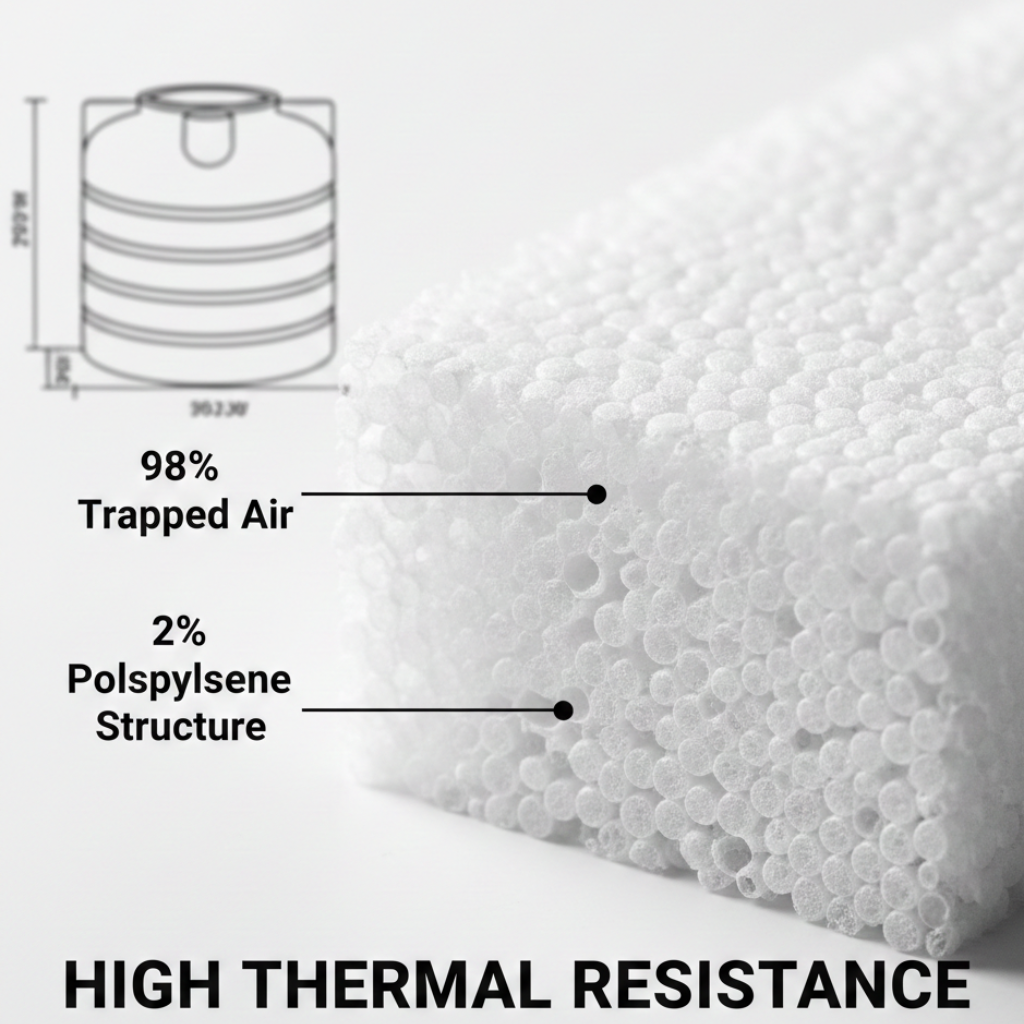
Thermocol, or Expanded Polystyrene (EPS), is a remarkably effective material for creating a robust thermal envelope around a water tank. Its unique structure is the key to its superior performance.
Understanding Expanded Polystyrene (EPS)
EPS is a lightweight, rigid foam plastic material composed of millions of tiny, closed cells. Amazingly, it is made up of about 98% trapped air and only 2% polystyrene material. It is these trapped air pockets that give it its extraordinary thermal resistance, acting as an excellent barrier against heat transfer.
Key Benefits of Using Thermocol Sheets
The properties of EPS make it an ideal choice when considering water tank insulation materials:
High R-Value (Thermal Resistance): The R-value is the measure of an insulation material’s ability to resist heat flow. EPS foam boards offer a consistently good R-value per inch of thickness, ensuring your water temperature is maintained efficiently.
Cost-Effectiveness: Compared to alternatives like Polyisocyanurate (PIR) or high-density spray foam, Thermocol insulation is generally more affordable insulation material upfront, providing a high return on investment quickly through energy savings.
Lightweight and Easy to Handle: The low density of EPS makes the insulation sheets easy to cut, shape, and transport. This is a significant advantage for both professional installers and the DIY water tank insulation enthusiast.
Moisture and Water Resistance: Unlike fibrous materials like fiberglass blankets, EPS is highly resistant to water absorption. This property prevents the material from becoming saturated, which would severely compromise its insulating properties and lead to mold or mildew growth. This is crucial for tanks where condensation or external moisture is a risk.
Durability and Longevity: When properly installed and protected from direct UV light, EPS foam is robust and maintains its thermal performance for decades, offering a long-term insulation solution.
Non-Toxic and Safe: Thermocol is non-toxic and does not emit harmful gases, making it safe for use in residential environments, even when placed near domestic water storage tanks.
Step-by-Step Guide to DIY Thermocol InsulationFor Water Tanks
Insulating a water tank with Thermocol foam boards is a feasible DIY project that can be completed in a few hours. This method is particularly effective for rectangular or square cold water storage tanks typically found in lofts, or for standard hot water cylinders where a ready-made insulation jacket may not be sufficient.
Preparation and Measurement
Safety First: If insulating a hot water cylinder, turn off the water supply and the power to the heating element (boiler or immersion heater). Allow the tank to cool slightly to ensure a safe working environment.
Clean the Surface: The tank surface must be clean, dry, and free of dust, dirt, or grease. A clean surface ensures a better fit and better adhesion if using an adhesive.
Accurate Measurement: Use a tape measure to get the precise dimensions of the tank: height, width, and depth (or diameter for a cylindrical tank). Crucially, measure the lid or top of the tank separately.
Gather Materials: You will need Expanded Polystyrene (EPS) foam boards (look for sheets with a high density for better insulation), a utility knife, a straight edge or measuring tool, insulation adhesive (polystyrene-safe), duct tape or foil tape, and a weatherproof coating (for outdoor tanks).
Cutting and Fitting the EPS Boards
Cut the Side Panels: Based on your measurements, carefully cut the EPS boards using the utility knife. Pro Tip: Score the board deeply with the knife, then snap it cleanly along the score line.
Ensure a Snug Fit: The goal is to create a complete thermal envelope with as few gaps as possible. Fit the cut pieces flush against the tank’s sides. For a cylindrical tank, you will need to cut smaller, curved sections that fit together or use thicker boards that naturally curve slightly with the tank.
Account for Obstructions: Carefully measure and cut out holes for any protruding pipes, valves, or temperature/pressure relief devices. Use the smallest possible cutout to minimize thermal bridges.
Insulate the Lid/Top: Cut a separate piece of Thermocol to fit perfectly over the tank’s lid. The top is a major source of heat loss or gain and must be covered. For outdoor tanks, ensure the lid panel is protected from water ingress.
Sealing and Protection
Secure the Boards: Use a polystyrene-safe adhesive to secure the EPS boards to the tank surface. For an easier, less permanent solution, a secure wrap of strong, broad duct tape can hold the sheets in place.
Seal All Seams and Gaps: This is the most critical step for optimal performance. Use the strong foil or duct tape to thoroughly seal every seam where two foam boards meet. Pay extra attention to the corners and the cutouts around pipes. Sealing gaps prevents air movement and dramatically boosts the insulation’s thermal performance.
Weatherproof Coating (for Outdoor Tanks): If your tank is outside (e.g., a rooftop tank), the EPS must be protected from UV rays and weather. Apply a protective outer layer, such as a waterproof coating, a reflective aluminum foil cladding, or a durable exterior paint designed for insulation. UV exposure degrades polystyrene over time.
Thermocol vs. Other Water Tank Insulation Materials
While Thermocol (EPS) is a fantastic, budget-friendly option, homeowners often consider other materials. Comparing the pros and cons helps make an informed decision based on climate and budget.
Requires professional installation; higher initial cost.
Extruded Polystyrene (XPS)
Higher compressive strength than EPS, better moisture resistance.
$5.0$
Underground tanks, high-moisture areas.
More expensive than EPS, less environmentally friendly due to blowing agents.
Thermocol strikes the best balance between cost-effectiveness and thermal efficiency for the average residential or small commercial water storage solution.
The Long-Term Return on Investment (ROI)
The initial cost of materials for insulating your water tank with EPS is quickly recouped through tangible savings.
Reduced Energy Consumption
For hot water cylinders, insulation drastically reduces heat loss, meaning the element or boiler doesn’t have to work as hard or as often. This directly translates to lower utility bills. Studies show that insulating an uninsulated or poorly insulated tank can save a significant percentage of the energy used for water heating. The thermal envelope created by the EPS maintains the stored heat, offering reliable hot water when you need it.
Extended Water Heater Lifespan
When a heater cycles on less frequently due to reduced heat loss, there is less wear and tear on its components. A well-insulated tank reduces the stress on the heating element and the tank itself, contributing to a longer, more reliable service life for your entire water heating system.
Climate Comfort and Safety
Preventing Water Freezing: For tanks in cold areas like lofts, the insulation provides a crucial barrier against freezing temperatures, preventing costly plumbing repairs caused by frozen and burst pipes.
Comfort in Summer: For rooftop tanks, the reflective coating applied over the Thermocol sheets in combination with the insulation layer minimizes heat gain from the sun, keeping the water refreshingly cooler. This is an essential consideration for homeowners in hot climatic regions.
Best Practices and Pro Tips for Maximum Performance
To ensure your Thermocol insulation for water tanks delivers its absolute best, follow these crucial tips:
Routine Inspection: Periodically check the tank for signs of moisture, damage to the protective layer, or gaps that have opened up due to settling. Maintaining the seal is key to sustained energy efficiency.
Choose the Right Thickness: Always opt for the thickest EPS board your space and budget allow. Thickness directly correlates with the R-value and overall thermal performance. Never compress the insulation, as this reduces its effectiveness.
Prioritize the Top and Bottom: Heat rises, so ensuring the lid is heavily and seamlessly insulated is paramount to reducing heat loss. The bottom of the tank (if accessible and not sitting directly on a heated floor) also needs attention to prevent heat escaping into the floor or ground.
Address Thermal Bridges: A thermal bridge is any area where the insulation layer is interrupted, allowing heat to flow freely. Pipes, mounting brackets, and access panels are common culprits. Use foam tape or sealant to fill every tiny gap around pipes after cutting the holes for the EPS board. This detail separates a good job from an excellent one.
Protect from the Elements: For outdoor tanks, UV protection is mandatory. A weatherproof coating or metal cladding shields the EPS from degradation, ensurinhttps://thermocolsheet.com/eps-foam/g its long-lasting insulation performance.
Conclusion: Securing Your Water Future with Thermocol
Thermocol insulation for water tanks is a proven, economical, and highly effective method for controlling water temperature, dramatically reducing utility bills, and protecting your property from the risks of extreme heat or cold. By choosing Expanded Polystyrene (EPS) foam boards, you invest in a solution that offers excellent thermal resistance, is simple to install, and provides long-term energy savings.
From the initial DIY water tank insulation project to enjoying decades of consistent water temperature and lower heating costs, the choice to insulate your water storage tank with Thermocol is a wise step towards a more sustainable and comfortable home or business. Embrace this smart material and turn your tank into an energy-saving asset.
FAQ’S
For most residential hot water tanks (cylinders), Google SEO guidelines often recommend aiming for a minimum R-value of R-12 to R-24 for the insulation jacket, especially in colder climates. Since Thermocol (EPS) typically has an R-value of around $4.0$ per inch, you should use an insulation sheet that is at least 3 inches thick to meet the R-12 minimum. For better energy efficiency and long-term heat loss prevention, especially in unheated spaces like lofts, aim for 4 to 6 inches of high-density EPS.
Yes, Thermocol insulation for water tanks installed outdoors, such as on a rooftop, absolutely requires protection. Expanded Polystyrene (EPS) is susceptible to degradation from UV rays (sunlight) and moisture ingress. To maintain its thermal performance and structural integrity, you must apply a weatherproof coating—preferably a thick, reflective exterior paint or a layer of aluminum foil cladding—over the EPS foam boards. This shields the material, prevents thermal bridging through gaps, and helps minimize solar radiation heat gain.
The payback period for DIY water tank insulation using affordable Thermocol sheets is usually very short, often between 6 to 18 months, depending on your existing insulation level and energy tariffs. Insulating a poorly covered hot water heater tank can reduce heat loss by up to $25\%-45\%$. The material’s low initial cost and its immediate impact on reducing the frequency of the water heater cycling on ensures a quick return on investment (ROI), leading to years of pure energy savings afterward.
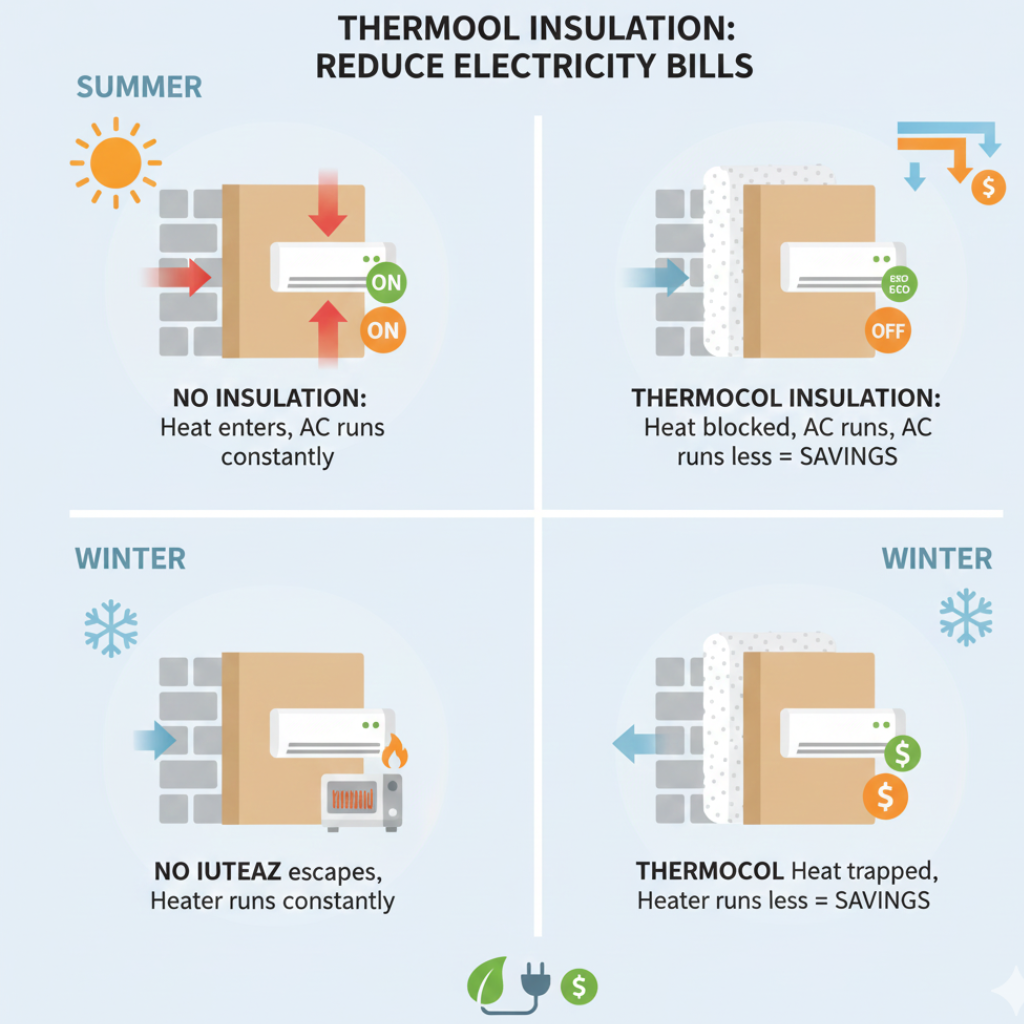
In today’s fast-paced world, energy efficiency is more important than ever. High electricity bills are a common concern for homeowners and businesses alike. One of the most effective and affordable solutions for reducing energy consumption is Thermocol insulation. Known for its lightweight, versatile, and highly insulating properties, Thermocol (also called EPS foam sheet or expanded polystyrene sheet) can significantly lower your energy costs while providing thermal comfort.
What is Thermocol?
Thermocol is a type of expanded polystyrene (EPS) material widely used in construction and insulation. It is composed of small polystyrene beads that are expanded and fused together to form rigid sheets or blocks. Thermocol sheets are lightweight, durable, and resistant to moisture, making them an ideal material for roof insulation, wall insulation panels, and other thermal protection applications.
How Thermocol Reduces Electricity Bills
1. Thermocol Minimizes Heat Transfer
One of the primary reasons for high electricity bills during summer and winter is excessive heat gain or loss through walls and roofs. Thermocol sheets act as an effective barrier against heat transfer, reducing the need for air conditioning or heating systems. By slowing down the movement of heat, Thermocol helps maintain indoor temperatures, allowing your cooling or heating systems to consume less energy.
When it comes to reducing energy consumption in buildings, choosing the right energy-efficient insulation materials is crucial. Materials like Thermocol and EPS foam sheets serve as effective thermal protection sheets, preventing heat loss during winters and heat gain during summers. By acting as a barrier to temperature fluctuations, these insulation foam sheets help maintain a stable indoor climate, reducing the workload on air conditioners and heaters. Installing such materials not only lowers electricity bills but also contributes to a sustainable and eco-friendly home or office environment.
2. Roof Insulation with Thermocol
Roofs are a major source of heat gain in buildings. Installing high-density Thermocol sheets on your roof can dramatically reduce indoor temperatures during summer months. This reduces the workload on air conditioners, leading to lower electricity consumption. Roof insulation with Thermocol also prevents heat loss during winters, ensuring minimal use of heaters.
Proper insulation is key to maintaining a comfortable indoor environment while cutting down on electricity bills. Roof insulation boards made from high-quality Thermocol or EPS foam provide excellent protection against extreme heat and cold. These boards act as effective thermal resistance sheets, reducing the transfer of heat through the roof and keeping interiors cool in summer and warm in winter. Incorporating such energy-efficient insulation solutions not only enhances comfort but also significantly lowers energy consumption, making homes and commercial buildings more sustainable and cost-effective.
3. Wall Insulation Panels
Walls are another significant factor in temperature regulation. EPS wall insulation panels provide excellent thermal resistance, keeping interiors cool in summer and warm in winter. This consistent indoor climate reduces dependency on artificial cooling and heating, directly lowering electricity bills.
Walls play a major role in regulating indoor temperatures, and using effective wall insulation panels can dramatically improve energy efficiency. High-quality insulation wall panels, such as Thermocol or EPS foam sheets, provide a strong barrier against external heat and cold, maintaining a stable indoor climate year-round. These panels offer excellent heat-proofing insulation, reducing the need for excessive air conditioning or heating. By installing such insulation solutions, homeowners and businesses can enjoy lower electricity bills, improved comfort, and a more eco-friendly building.
4. Thermocol for Soundproofing and Comfort
Thermocol not only insulates thermally but also provides soundproofing benefits. By reducing noise pollution, it enhances indoor comfort and creates a better living environment. Comfortable homes often require less energy for additional climate control solutions like fans or heaters.
In addition to temperature control, effective insulation can also enhance acoustic comfort. Soundproofing insulation made from high-quality Thermocol or EPS materials helps reduce external noise, creating a quieter and more comfortable indoor environment. At the same time, thermal insulation boards provide excellent resistance to heat transfer, keeping interiors cool in summer and warm in winter. EPS sheet Pakistan offers a reliable, locally available solution for both thermal and acoustic insulation, making it an ideal choice for homes, offices, and commercial spaces aiming to lower electricity bills while improving overall comfort.
5. Cost-Effective and Eco-Friendly Solution
Compared to other insulation materials, Thermocol sheets are highly cost-effective. They offer long-lasting thermal efficiency at a fraction of the cost, making them ideal for residential and commercial applications. Additionally, Thermocol is lightweight and recyclable, making it an eco-friendly insulation material.
For those seeking sustainable and cost-effective insulation solutions, eco-friendly EPS sheets are an excellent choice. Made from recyclable expanded polystyrene, these sheets provide superior thermal insulation while minimizing environmental impact. With affordable Thermocol sheet prices in Pakistan, homeowners and builders can implement energy-efficient insulation without straining their budgets. Additionally, bulk EPS sheets are readily available for large-scale projects, making them ideal for commercial buildings, warehouses, and housing developments that require both efficiency and economy.
Tips for Using Thermocol to Maximize Energy Savings
Use High-Density EPS Sheets: High-density sheets provide superior thermal insulation compared to standard sheets.
Combine with Other Insulation Methods: For extreme climates, combine Thermocol with reflective coatings or additional insulating layers.
Seal Gaps and Cracks: Ensure all gaps and joints are sealed properly to prevent air leakage.
Regular Maintenance: Check for moisture or damage in Thermocol sheets to maintain efficiency.
Applications of Thermocol in Buildings
Residential Houses: Roof insulation, wall insulation, and floor insulation.
Commercial Buildings: Office insulation, partition panels, and soundproofing.
Industrial Warehouses: Temperature-sensitive storage areas for energy efficiency.
Conclusion
Thermocol is more than just a lightweight material—it’s a cost-effective, eco-friendly, and efficient solution for reducing electricity bills. By improving thermal insulation in roofs, walls, and floors, Thermocol reduces reliance on energy-intensive cooling and heating systems, translating directly into savings. Whether you are building a new home or upgrading your existing structure, EPS foam sheetsand Thermocol panels are smart investments for energy efficiency.
FAQ’S
Thermocol acts as an effective thermal insulator, preventing heat from entering during summer and retaining warmth during winter. This reduces the need for air conditioning and heating, leading to lower electricity consumption and cost savings.
Thermocol can be used in roofs, walls, floors, and even ceilings. High-density roof insulation boards, wall insulation panels, and insulation foam sheets are commonly installed in homes, offices, and commercial buildings to improve energy efficiency.
Yes, Thermocol, also known as EPS, is lightweight, durable, and recyclable. Using eco-friendly EPS sheets reduces environmental impact while providing excellent thermal and sound insulation.
Absolutely. Bulk EPS sheets are available for industrial and commercial applications, offering cost-effective thermal insulation and heat-proofing solutions for warehouses, offices, and large residential complexes.
Modern road construction demands innovation to meet the challenges of soft soils, increasing traffic loads, and sustainability requirements. Traditional fill materials, such as soil or rock, often result in high settlement rates, long construction timelines, and increased costs. EPS Geofoam blocks for road construction provide a revolutionary solution to these challenges. As a lightweight construction materialwith high load-bearing capacity, EPS Geofoam reduces soil stress, accelerates construction, and supports sustainable infrastructure development. Engineers worldwide are adopting EPS Geofoam as a road embankment solution and soil stabilization material for highways, urban roads, and bridge approaches.
What are EPS Geofoam Blocks?
EPS (Expanded Polystyrene) Geofoam blocks are manufactured from high-density EPS sheets, cut into large blocks suitable for civil engineering applications. These blocks are:
Lightweight: Weighing only a fraction of conventional soil, they drastically reduce lateral soil pressure.
High-Density: Can bear significant vehicular and structural loads, making them ideal for road embankments.
Versatile: Suitable for bridges, retaining walls, thermal insulation under pavements, and slope stabilization.
Eco-Friendly: EPS is recyclable and contributes to a sustainable construction solution.
EPS Geofoam has gained popularity in geotechnical engineering for its ability to enhance soil stabilization and prevent settlement, even on weak or compressible soils.
Advantages of Using EPS Geofoam Blocks in Road Construction
1. Lightweight Construction Material
One of the most significant advantages of EPS Geofoam is its lightweight nature. Traditional fill materials like sand or gravel can exert heavy pressure on underlying soils, leading to settlement and instability. EPS Geofoam blocks reduce soil stress, ensuring long-term stability of road embankments.
2. High Load-Bearing EPS Blocks
Despite their light weight, high-density EPS blocks are capable of supporting heavy traffic loads. This makes them ideal for highways, bridges, and urban road projects where civil engineering applications demand both durability and efficiency.
3. Effective Soil Stabilization Material
Soft soils or weak subgrades are common challenges in infrastructure projects. EPS Geofoam acts as an effective soil stabilization material, reducing lateral pressure and preventing settlement or deformation over time.
4. Cost-Effective Road Embankment Solution
Using EPS Geofoam reduces the need for extensive earthworks, heavy machinery, and labor. Faster installation and lower maintenance costs make EPS Geofoam a cost-effective solution for modern road construction.
5. Thermal Insulation Material
EPS Geofoam blocks also function as thermal insulation material, preventing frost heave in colder climates and maintaining road integrity in extreme temperatures.
6. Sustainable Construction Solution
EPS is recyclable, and its use reduces the extraction of natural soil or rock. Incorporating EPS Geofoam in infrastructure projects contributes to sustainable construction practices and environmentally responsible development.
Applications of EPS Geofoam in Civil Engineering
EPS Geofoam blocks are widely applied in civil and geotechnical engineering projects:
Road Embankments and Highways: Lightweight fill material reduces soil stress on soft subgrades.
Bridge and Flyover Approaches: EPS Geofoam supports elevated road structures without extensive foundations.
Slope Stabilization and Retaining Walls: Reduces lateral earth pressure and prevents slope failure.
Urban Infrastructure Development: Used as lightweight fill in parking structures, underpasses, and city roads.
Thermal Insulation for Roads: EPS Geofoam minimizes frost heave and heat expansion issues.
Technical Considerations for EPS Geofoam in Road Construction
Block Density Selection
High-density EPS blocks for heavy traffic and highways.
Medium-density blocks for secondary roads and urban streets.
Low-density blocks for landscaping, embankment leveling, and lightweight applications.
Geotechnical Analysis
Before installation, a soil survey ensures proper placement and density selection. This is critical to maximize the benefits of EPS Geofoam as a soil stabilization material.
Installation Process
Prepare the subgrade surface.
Lay EPS Geofoam blocks according to design specifications.
Cover with protective geotextile or drainage layers.
Apply asphalt or concrete surface layers.
EPS Geofoam blocks are easy to cut, transport, and install, reducing construction timelines and labor costs.
Technical Considerations
Block Density: High-density EPS blocks are used for heavy load areas, while lower-density blocks suit lighter applications.
Geotechnical Analysis: Engineers conduct soil analysis to determine the optimal placement and block density.
Installation: Blocks are cut on-site or pre-cut to project specifications and placed with minimal compaction.
Case Studies: Successful Applications of EPS Geofoam
Highway over Marshland: EPS Geofoam minimized soil stress, eliminated the need for deep pile foundations, and accelerated project completion.
Bridge Approach Embankments: High-density EPS provided sufficient load-bearing capacity while reducing lateral pressure on soft soils.
Sustainability and Environmental Benefits
EPS Geofoam is a sustainable construction solution, offering:
Reduced consumption of natural soil and rock.
Recyclable and eco-friendly material.
Lower carbon footprint due to reduced transportation and machinery usage.
Long-lasting durability, minimizing repair and reconstruction needs.
Conclusion
EPS Geofoam blocks are revolutionizing road construction and civil engineering applications. With benefits like lightweight construction material, high-density load-bearing EPS blocks, soil stabilization, thermal insulation, and sustainable construction practices, EPS Geofoam is the ideal solution for modern infrastructure development.
For engineers and contractors, integrating EPS Geofoam into road projects ensures long-term stability, cost efficiency, and environmental responsibility. From highways to urban streets, EPS Geofoam is shaping the future of infrastructure development.
FAQ’S
EPS Geofoam blocks are primarily used as a lightweight construction material for road embankments, bridge approaches, and soil stabilization projects. Their high load-bearing capacity and low weight reduce soil stress, prevent settlement, and provide a sustainable construction solution for modern infrastructure.
EPS Geofoam acts as a soil stabilization material by minimizing lateral pressure on weak or compressible soils. This reduces the risk of subsidence and improves the durability of roads, embankments, and other civil engineering structures, making it an ideal road embankment solution.
Yes, high-density EPS blocks can support substantial vehicular loads, including highways and heavy traffic areas. Their strong load-bearing EPS properties ensure safety and long-term performance, even on soft subgrades, while offering faster installation compared to traditional fill materials.
Absolutely. EPS Geofoam is a recyclable and eco-friendly material, reducing the need for natural soil and rock extraction. Its use in road construction contributes to sustainable construction solutions, lowers carbon footprint, and supports infrastructure development with minimal environmental impact.