
thermocol sheet price in pakistan

Category: Uncategorized

  • How Insulation Improves Home Value & Comfort

    How Insulation Improves Home Value & Comfort

    In modern housing, comfort and energy efficiency are no longer luxuries, they are expectations. Whether you are building a new house or upgrading an existing one, proper insulation plays a major role in how your home feels, performs, and is valued in the market. This guide explains how insulation improves home value & comfort, with a practical focus on homes in Pakistan.

    Understanding Home Insulation
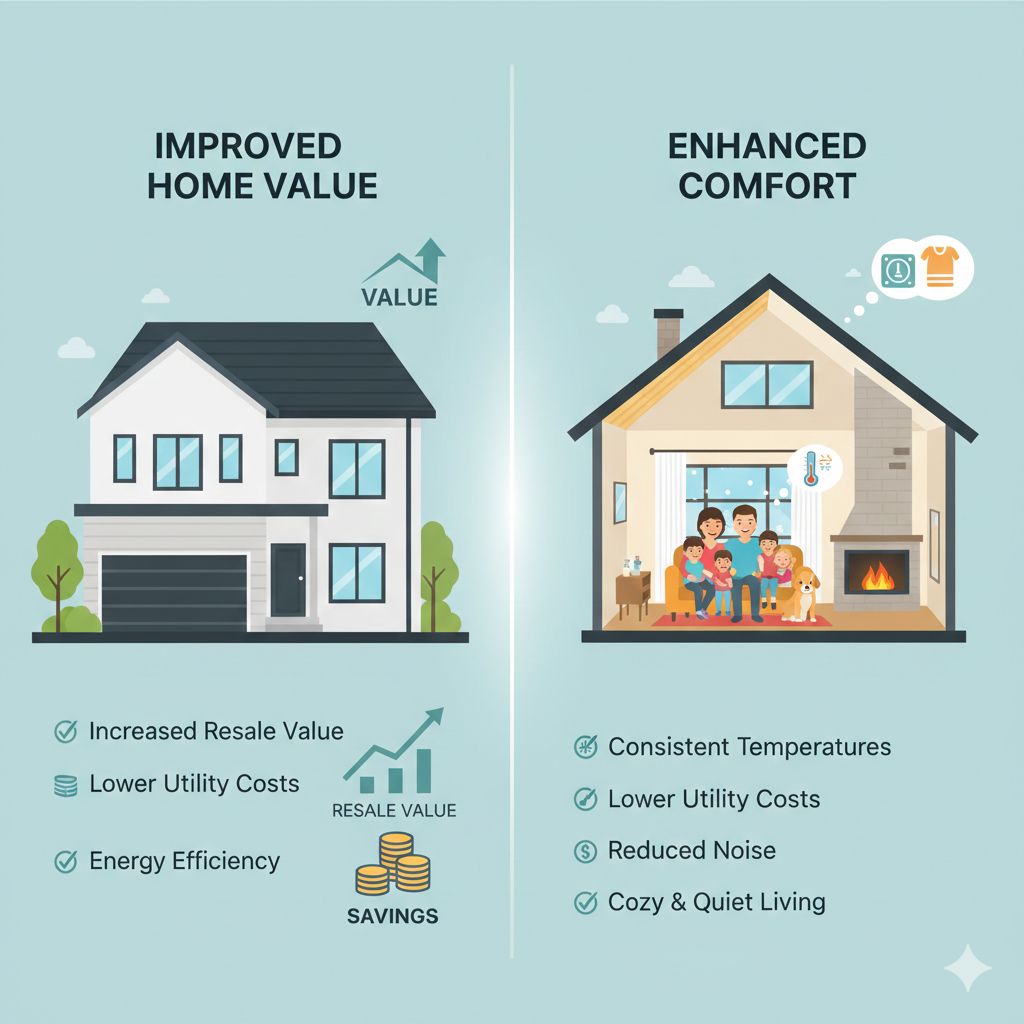
    house insulation in pakistan

    House insulation is the process of adding materials to walls, roofs, floors, and ceilings to reduce heat transfer between indoor and outdoor environments. By limiting unwanted heat gain in summer and heat loss in winter, insulation creates a more stable indoor temperature.

    In regions with extreme weather variations, such as Pakistan, effective home insulation in Pakistan helps homes remain comfortable throughout the year while reducing reliance on heating and cooling systems.

    How Insulation Improves Home Comfort

    One of the most noticeable benefits of insulation is daily comfort. Insulation improves home comfort by maintaining consistent indoor temperatures and minimizing hot and cold spots.

    Key comfort improvements include:

    • Reduced indoor temperature fluctuations
    • Better control over humidity levels
    • Quieter indoor spaces due to sound absorption
    • Less strain on air conditioners and heaters

    When insulation is properly installed, living spaces feel naturally balanced rather than artificially cooled or heated.

    Thermal Resistance and Its Role in Insulation

    The effectiveness of insulation depends largely on thermal resistance, which measures how well a material resists heat flow. Higher thermal resistance means better insulation performance.

    Materials with good thermal resistance:

    • Slow down heat transfer
    • Improve indoor temperature stability
    • Increase overall energy efficiency

    Selecting insulation with appropriate thermal resistance ensures long-term comfort without excessive energy consumption.

    How Insulation Increases Home Value
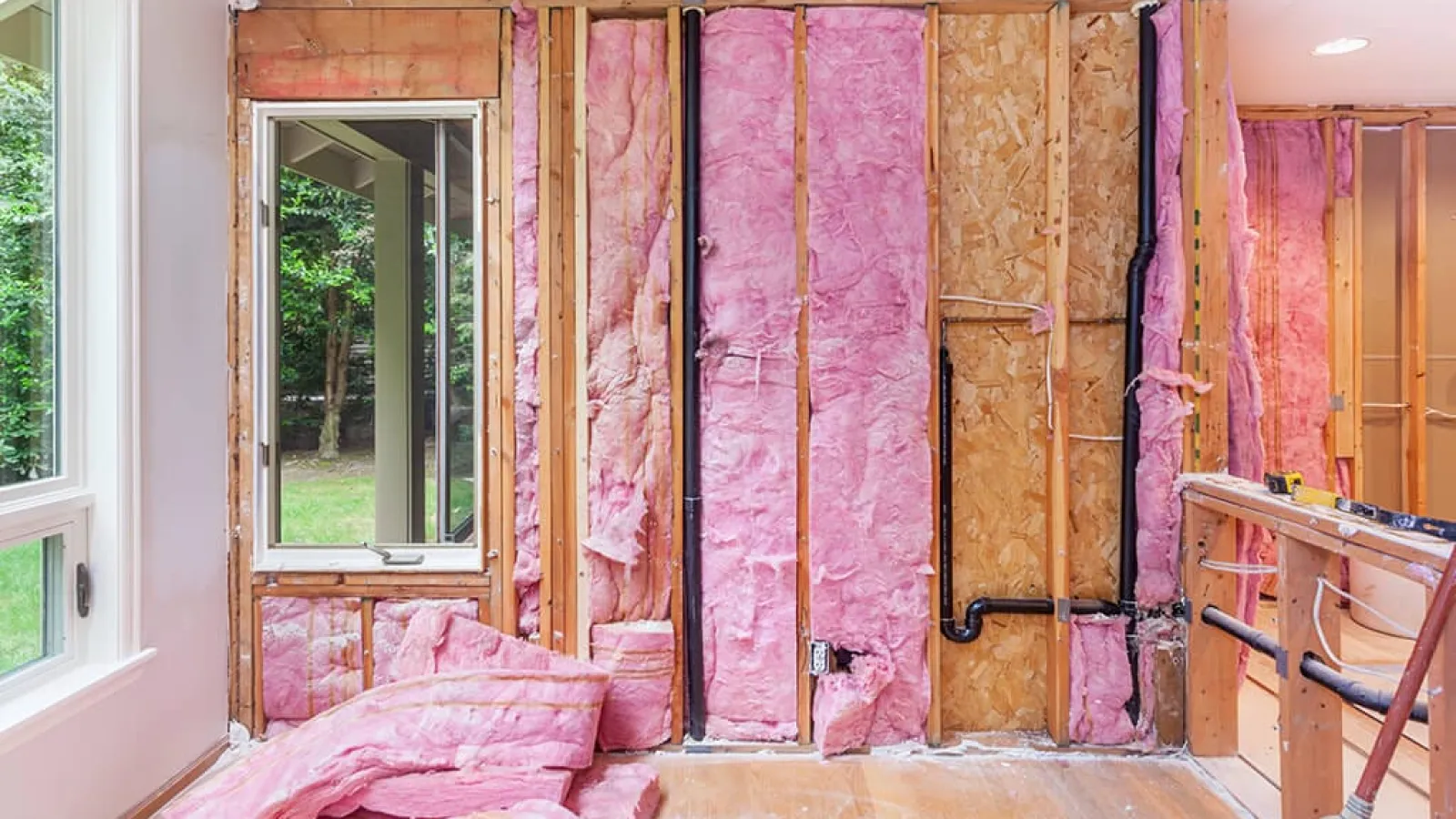
    home insulation

    Beyond comfort, insulation has a direct impact on property value. Homes with proper insulation are more attractive to buyers because they promise lower utility bills and better living conditions.

    Ways insulation adds value:

    • Improved energy efficiency ratings
    • Lower long-term maintenance costs
    • Higher resale appeal
    • Enhanced structural protection

    In competitive real estate markets, well-insulated homes stand out as smart, future-ready investments.

    Home Insulation in Pakistan: Why It Matters

    Climate conditions make home insulation in Pakistan especially important. Long summers, rising electricity costs, and increasing urban heat all contribute to higher indoor discomfort in poorly insulated houses.

    Proper house insulation in Pakistan helps homeowners:

    • Reduce cooling costs during peak summer months
    • Protect interiors from extreme outdoor heat
    • Improve indoor air quality and comfort

    As awareness grows, insulation is becoming a key feature in modern Pakistani homes.

    Insulation Density Comparison Table (Residential Use)

    Insulation MaterialTypical Density (kg/m³)Thermal Resistance LevelCommon Home Application
    Glasswool12 – 24Medium to HighRoofs, ceilings, ducts
    Rockwool40 – 80HighWalls, fire-rated areas
    EPS Sheets15 – 25MediumWalls, roofs
    XPS Boards30 – 45HighFloors, roofs
    PU Foam Panels35 – 45Very HighWalls, roofs

    Note: Density selection should match climate conditions and insulation purpose to achieve optimal thermal resistance.

    How to Improve Home Insulation Effectively

    If you are wondering how to improve home insulation, focus on areas with the highest heat exchange. These typically include roofs, external walls, and windows.

    Practical improvement steps:

    • Insulate roofs and ceilings first
    • Seal gaps and air leaks
    • Use insulation boards or blankets for walls
    • Upgrade old or damaged insulation materials

    Even partial upgrades can result in noticeable comfort improvements.

    House Insulation and Energy Efficiency

    house insulation

    Efficient house insulation reduces the workload on cooling and heating systems. This leads to lower electricity consumption and longer equipment lifespan.

    Energy-efficient homes also:

    • Experience fewer temperature shocks
    • Maintain comfort with less energy input
    • Align with modern sustainability standards

    Over time, energy savings often outweigh the initial insulation cost.

    Home Insulation Price Considerations

    The home insulation price depends on several factors, including material type, thickness, and installation area. Roof insulation usually costs less than full wall insulation but still delivers significant benefits.

    In local markets, the home insulation price in Pakistan varies by city, product quality, and labor costs. Instead of focusing only on upfront price, homeowners should consider long-term energy savings and comfort gains.

    Long-Term Benefits of Insulating Your Home

    Proper insulation offers benefits that go beyond temperature control:

    • Reduced energy bills year after year
    • Enhanced indoor comfort for all seasons
    • Higher property resale value
    • Better protection against moisture and heat damage

    These advantages make insulation one of the smartest upgrades for any home.

    Conclusion

    Understanding how insulation improves home value & comfort helps homeowners make informed decisions. With better thermal resistance, improved indoor comfort, and increased market appeal, insulation is a long-term investment rather than a short-term expense. For homes in Pakistan, where climate challenges are significant, proper insulation is becoming an essential part of smart housing design.

    FAQ’S

    Insulation improves home comfort by reducing heat transfer, keeping indoor temperatures stable during hot summers and cooler months. This minimizes temperature fluctuations and reduces dependency on air conditioning.

    Yes, proper house insulation increases home value by improving energy efficiency, lowering utility bills, and making the property more attractive to buyers looking for long-term cost savings.

    The ideal option depends on the area being insulated. Roof insulation is often the first priority for home insulation in Pakistan due to intense heat exposure, followed by wall and floor insulation.

    Home insulation price in Pakistan varies based on material type, thickness, and covered area. While upfront costs differ, long-term energy savings usually offset the investment.

    Homeowners can improve thermal resistance by insulating roofs and external walls, sealing air gaps, and using insulation materials with appropriate density and thickness.
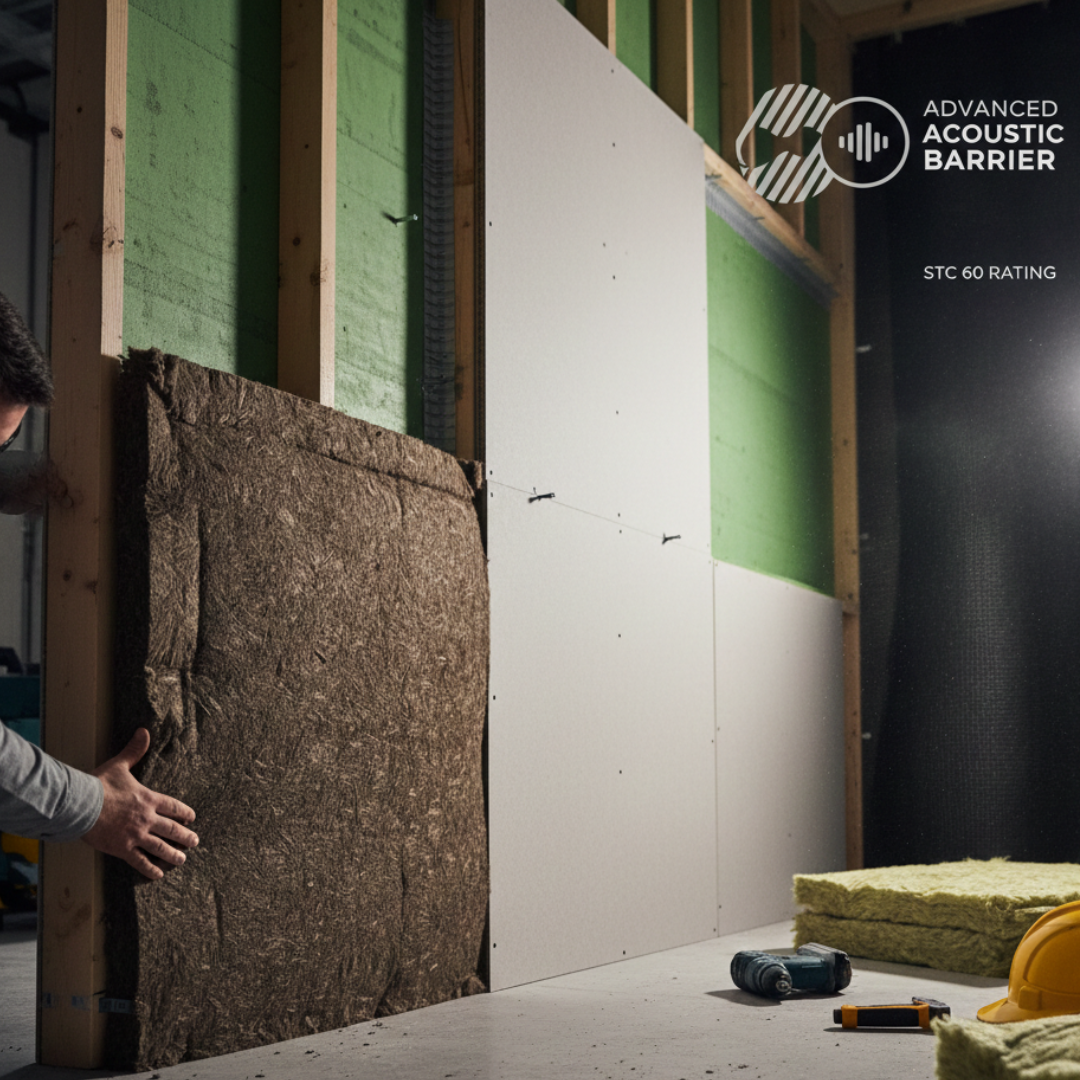
  • Best Density Rockwool for Fireproofing

    Best Density Rockwool for Fireproofing

    Fire safety has become a critical requirement for residential, commercial, and industrial buildings in Pakistan. One of the most trusted solutions for passive fire protection is rockwool insulation, also known as mineral wool. Selecting the best density rockwool for fireproofing plays a major role in achieving fire resistance, thermal stability, and long-term building safety.

    This detailed guide explains rockwool densities, fire ratings, applications, pricing considerations, and comparisons to help you choose the right solution for your project.

    What Is Rockwool Insulation?

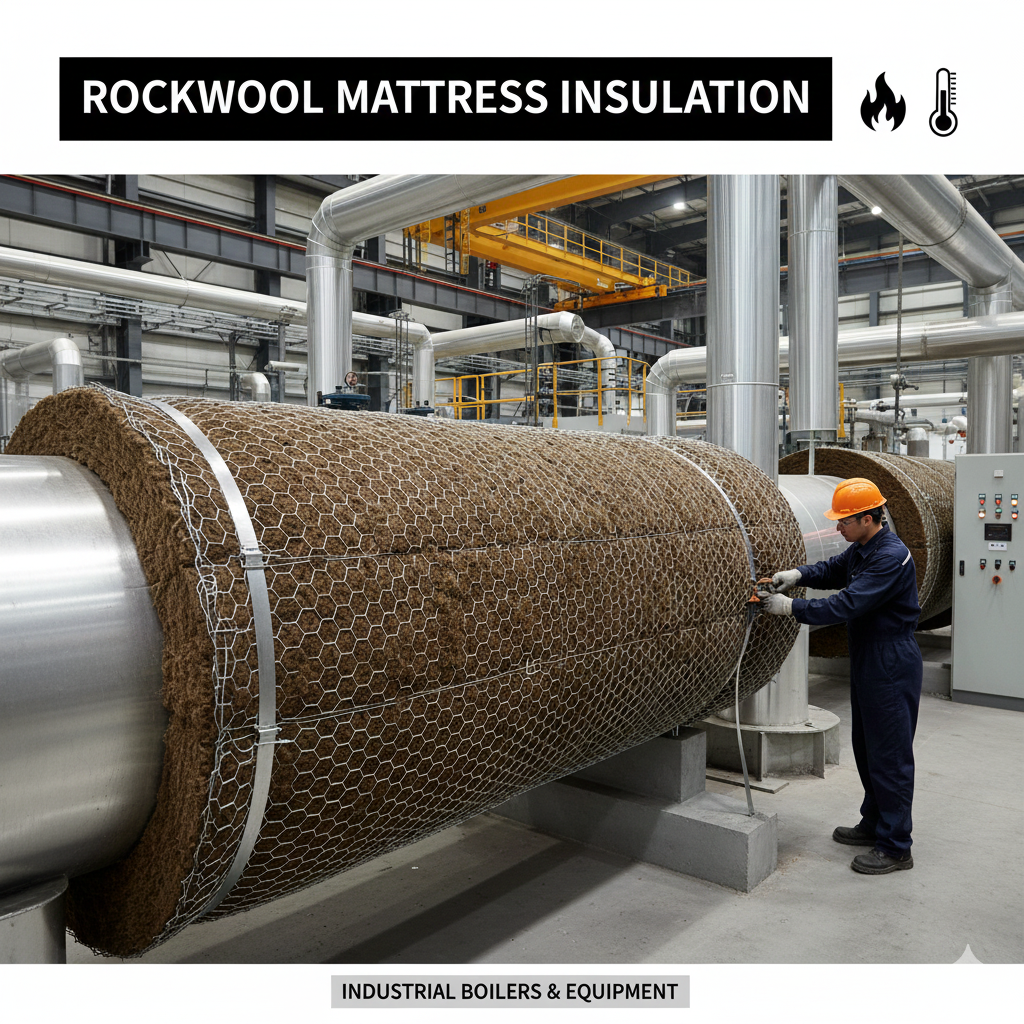
    rockwool mattress insulation for industrial plant

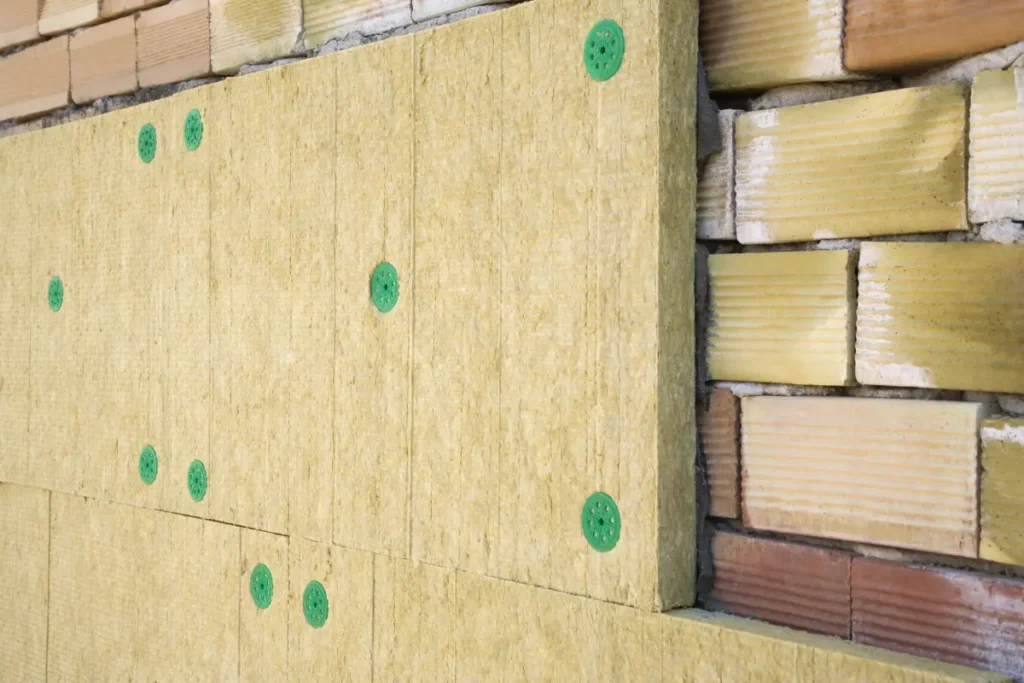
    Rockwool insulation is manufactured from natural volcanic rock and minerals that are melted and spun into dense, fibrous insulation. Because of its non-combustible nature, rockwool insulation Pakistan is widely used in buildings that require high fire resistance along with thermal and acoustic performance.

    Unlike many synthetic materials, rockwool does not melt or emit toxic smoke at high temperatures, making it ideal for fireproofing applications.

    Why Density Matters in Fireproofing

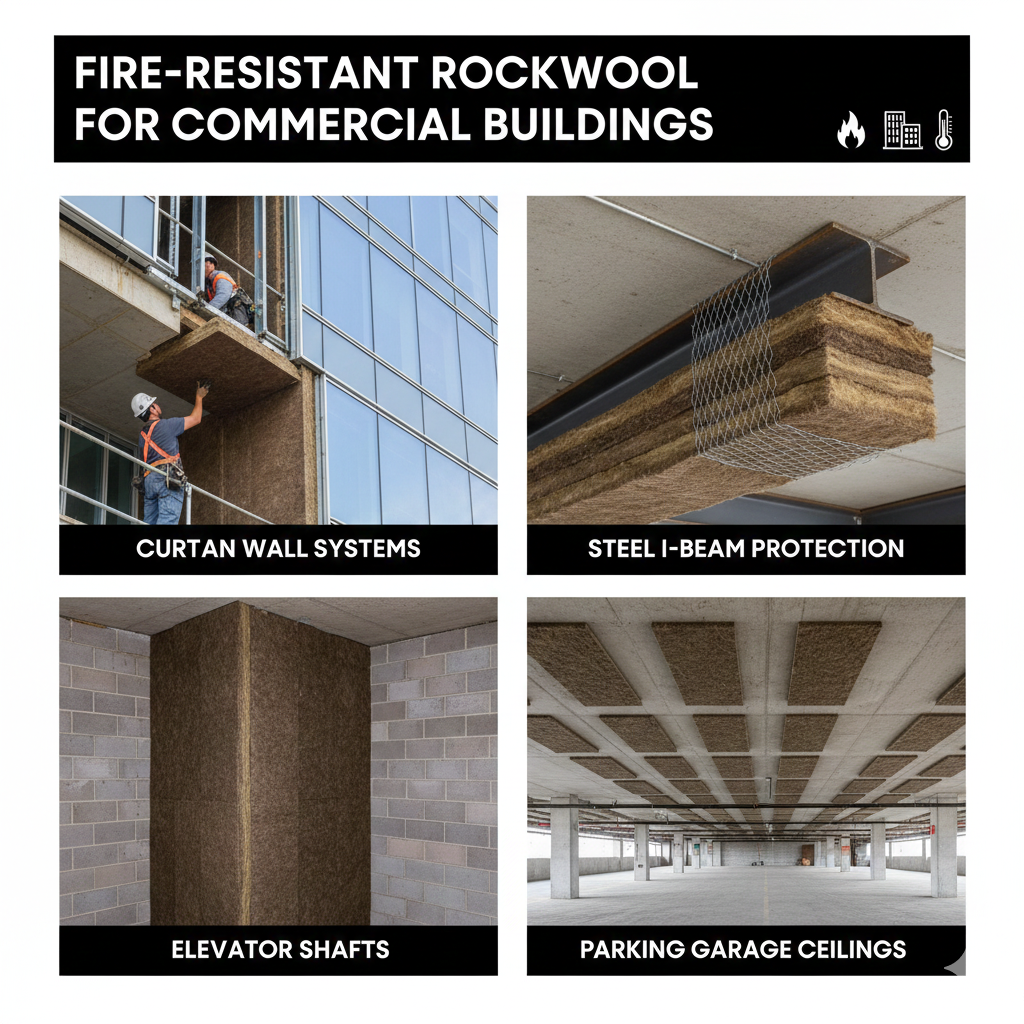
    fire resistant rockwool for commercial buildings

    Density directly affects how rockwool performs under fire exposure. Higher-density boards offer better structural integrity, slower heat transfer, and longer fire resistance times.

    For fireproofing applications:

    • Low density is suitable for basic thermal or acoustic insulation
    • Medium density balances insulation and cost
    • High density is preferred for certified fire-rated systems

    Choosing the correct density ensures compliance with safety standards without unnecessary overspending.

    Best Density Rockwool for Fireproofing Applications

    1. Medium Density Rockwool (40–60 kg/m³)

    This range is commonly used for:

    • Internal partition walls
    • Ceiling fire barriers
    • HVAC and service shafts

    It provides reliable thermal insulation and basic fire protection in non-critical areas.

    2. High Density Rockwool (80–120 kg/m³)

    High-density rockwool is considered the best density rockwool for fireproofing in demanding environments, such as:

    • Fire-rated walls and floors
    • Industrial plants and warehouses
    • High-rise buildings

    These densities are often used in systems achieving mineral wool 2 hour fire rating when installed correctly.

    Mineral Wool 2 Hour Fire Rating – How It Works

    Rockwool fibers can withstand temperatures above 1000°C. When installed in tested assemblies, high-density rockwool can help achieve a mineral wool 2 hour fire rating, meaning it can resist fire spread for up to two hours.

    This makes it suitable for:

    • Fire escape routes
    • Electrical rooms
    • Structural steel fire protection

    Fire ratings depend on system design, thickness, and installation quality.

    Faced Rockwool Insulation for Fireproofing

    Faced rockwool insulation includes an additional facing layer such as aluminium foil, black tissue, or fiberglass mesh. These facings:

    • Improve handling and durability
    • Reduce fiber release
    • Enhance moisture resistance

    Faced boards are commonly used in duct fireproofing, ceilings, and industrial applications where surface protection is required.

    Is Rockwool Insulation Waterproof?

    A common question is whether rockwool insulation waterproof performance is reliable. Rockwool fibers are water-repellent but breathable, meaning:

    • They do not absorb water easily
    • They retain shape and fire performance after drying

    However, proper vapor barriers and external protection are recommended for exposed installations.

    Rockwool Insulation Small Pack – When Is It Useful?

    For minor projects or repairs, rockwool insulation small pack options are available. These are suitable for:

    • Small rooms or partitions
    • Generator enclosures
    • Home studios and fire-rated cabinets

    Small packs reduce waste and are cost-effective for limited applications.

    Rockwool vs Fibreglass for Fireproofing

    glasswool vs rockwool

    The comparison of rockwool vs fibreglass is important when fire safety is a priority:

    • Rockwool is non-combustible and offers higher fire resistance
    • Fibreglass provides thermal insulation but lower fire performance
    • Rockwool maintains structure at extreme temperatures

    For fireproofing, rockwool is generally the safer and more durable option.

    Density Comparison Table for Fireproofing Rockwool

    Density (kg/m³)Fire Resistance LevelCommon ApplicationsRecommended Use
    40–60LowThermal insulationNot suitable for fireproofing
    60–80MediumAcoustic panelsLimited fire protection
    80–100HighFire-rated walls, ceilingsIdeal for commercial fireproofing
    100–120Very HighSteel structures, shaftsBest density rockwool for fireproofing

    Rockwool Insulation Price in Pakistan – What Affects Cost?

    The rockwool insulation price depends on:

    • Density and thickness
    • Faced or unfaced boards
    • Brand and quality standards
    • Quantity and location

    In the local market, rockwool insulation Pakistan pricing varies by city and application, but higher-density boards naturally cost more due to improved fire performance.

    Common Fireproofing Applications of Rockwool

    Rockwool is widely used for:

    • Fire-rated walls and partitions
    • Steel structure fire protection
    • Generator and boiler rooms
    • Industrial sheds and factories
    • Commercial buildings and hospitals

    Its versatility makes it a preferred fireproofing solution across Pakistan.

    Conclusion

    Selecting the best density rockwool for fireproofing is essential for building safety, compliance, and long-term performance. Medium-density rockwool works well for standard applications, while high-density boards are ideal for achieving advanced fire ratings such as mineral wool 2 hour fire rating. With added benefits like moisture resistance, acoustic insulation, and durability, rockwool remains one of the most reliable fireproofing materials available.

    FAQ’S

    The ideal density ranges from 80 to 120 kg/m³, depending on the level of fire resistance required and the application area.

    Yes, rockwool insulation Pakistan is widely used in commercial, industrial, and residential projects due to its excellent fire and thermal properties.

    When installed as part of a certified system, high-density mineral wool can achieve a mineral wool 2 hour fire rating.

    Rockwool is water-repellent and maintains its insulation and fire resistance even in humid or damp conditions.

    In a rockwool vs fibreglass comparison, rockwool offers significantly higher fire resistance and does not melt under extreme heat.

  • Glasswool & Aluminium Foil for Duct Insulation

    Glasswool & Aluminium Foil for Duct Insulation

    Efficient HVAC systems depend heavily on proper duct insulation. In Pakistan’s hot summers and humid conditions, energy losses through uninsulated or poorly insulated ducts can significantly increase electricity costs. This is where Glasswool & Aluminium Foil for Duct Insulation becomes a practical and cost-effective solution for residential, commercial, and industrial buildings.

    This guide explains how glasswool combined with aluminium foil works, why it is widely used, and what buyers in Pakistan should know before choosing duct insulation materials.

    What Is Glasswool & Aluminium Foil Duct Insulation?

    glasswool and aluminium foil insulation

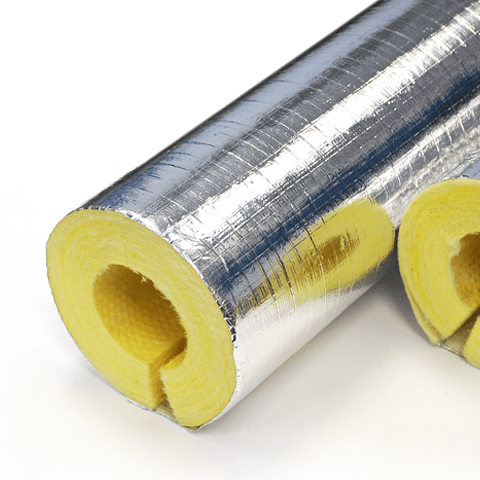
    Glasswool insulation is a fibrous material manufactured from recycled glass, designed to trap air and reduce heat transfer. When paired with a reflective aluminium foil facing, it becomes a highly efficient insulation system for HVAC ducts.

    In Glasswool & Aluminium Foil for Duct Insulation Pakistan, this combination is preferred because it offers both thermal resistance and vapor barrier protection, helping ducts perform efficiently in varied climate conditions.

    How Glasswool with Aluminium Foil Works in HVAC Systems

    Glasswool for HVAC & Duct System

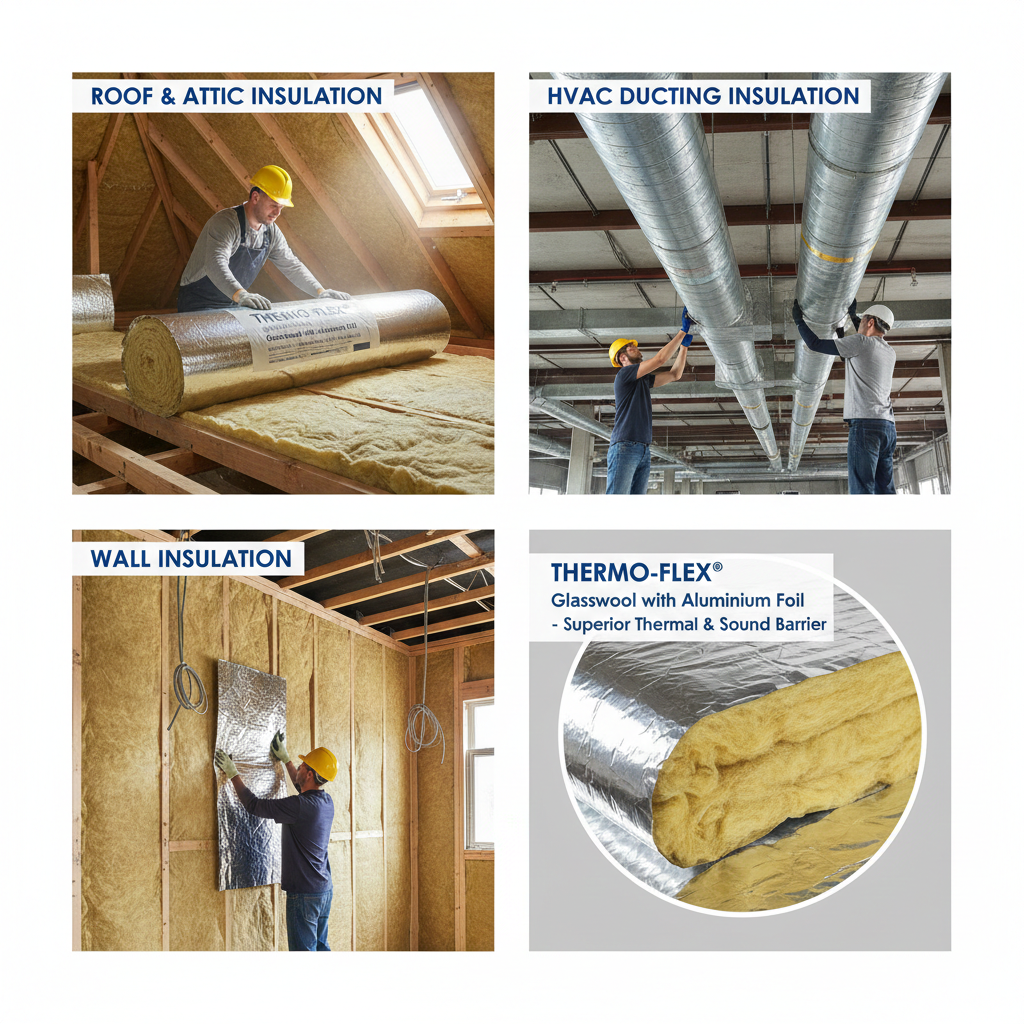
    The performance of glasswool insulation with aluminium foil comes from a dual-action mechanism:

    • Glasswool fibers slow down heat flow by trapping air
    • Aluminium foil reflects radiant heat and blocks moisture vapor

    Together, they help maintain consistent air temperature inside ducts while reducing condensation and energy loss.

    Benefits of Glasswool Duct Insulation

    1. Thermal Efficiency

    Glasswool duct insulation helps keep cooled or heated air at the desired temperature as it travels through ducts, improving overall HVAC efficiency.

    2. Moisture & Condensation Control

    The foil facing acts as a vapor barrier, making aluminium foil duct insulation especially useful in humid environments.

    3. Lightweight & Flexible Installation

    Glasswool blankets are easy to cut, wrap, and install around circular or rectangular ducts without adding excessive load.

    4. Noise Reduction

    Apart from thermal performance, glasswool also absorbs sound, reducing noise generated by air movement inside ducts.

    Glasswool Blanket with Aluminium Foil – Common Applications

    glasswool with aluminium foil

    A glasswool blanket with aluminium foil is widely used in:

    • Central air-conditioning ducts
    • Commercial HVAC systems
    • Industrial ventilation ducts
    • Hospitals, malls, offices, and hotels

    Its flexibility makes it suitable for both new installations and retrofit projects.

    Why Aluminium Foil Facing Is Important

    glasswool with aluminium foil industrial applications

    Aluminium foil is not just a covering; it plays a functional role in insulation systems:

    • Reflects radiant heat
    • Prevents moisture ingress
    • Enhances durability of glasswool
    • Improves hygiene in HVAC systems

    This makes foil-faced insulation ideal for long-term duct performance.

    Thickness & Density Considerations

    Choosing the right thickness and density depends on:

    • Indoor vs outdoor duct placement
    • Temperature difference between air and surroundings
    • Energy efficiency requirements

    Higher thickness generally improves insulation but should be selected according to project needs rather than over-specification.

    Common Duct & Insulation Materials (Pakistan)

    Insulation MaterialThermal PerformanceMoisture ResistanceAcoustic ControlRelative Price
    Glasswool + Aluminium FoilHighHigh (foil-faced)GoodMedium
    EPS / Thermocol SheetMediumLowLowLow
    Jumbolon Foam SheetMedium–HighHighMediumMedium–High

    Note: Prices vary by city, thickness, and supplier. Always compare specifications instead of price alone.

    Glasswool & Aluminium Foil for Duct Insulation Price Factors

    The Glasswool & Aluminium Foil for Duct Insulation price depends on several variables:

    • Glasswool density and thickness
    • Type and quality of aluminium foil
    • Roll size and brand
    • Project quantity

    In local markets, Glasswool & Aluminium Foil for Duct Insulation price in Pakistan can vary by city and supplier, so comparing specifications is more important than focusing only on cost.

    Glasswool vs Other Duct Insulation Materials

    Compared to alternatives like elastomeric foam or rigid boards, glasswool with foil offers a balanced solution:

    • Better coverage for large duct networks
    • Competitive pricing for commercial projects
    • Strong thermal and acoustic performance

    This makes it a popular choice for HVAC contractors across Pakistan.

    Installation Best Practices

    For optimal performance:

    • Ensure joints are sealed properly
    • Avoid compressing the glasswool layer
    • Maintain foil continuity for vapor control
    • Use appropriate tapes and fasteners

    Correct installation is as important as the insulation material itself.

    Conclusion

    Glasswool combined with aluminium foil remains one of the most practical solutions for duct insulation in Pakistan. Its ability to reduce heat loss, control condensation, and improve HVAC efficiency makes it suitable for a wide range of applications. By selecting the right specifications and ensuring proper installation, long-term energy savings and system performance can be achieved.

    FAQ’S

    Glasswool & aluminium foil for duct insulation is used to reduce heat loss, prevent condensation, and improve energy efficiency in HVAC air-conditioning and ventilation ducts.

    Yes, glasswool insulation with aluminium foil is ideal for Pakistan’s hot and humid climate because the foil acts as a vapor barrier while glasswool provides strong thermal resistance.

    Commonly used thicknesses range from 25mm to 50mm, depending on whether the duct is indoor or outdoor and the required energy efficiency level.

    Yes, aluminium foil duct insulation significantly reduces condensation by blocking moisture vapor from entering the insulation layer.

    Glasswool duct insulation absorbs sound vibrations, helping to reduce HVAC noise and improve indoor acoustic comfort.

    The price depends on thickness, density, foil quality, roll size, brand, and total project quantity.

  • Insulation Sheets for Cold Rooms & Freezers

    Insulation Sheets for Cold Rooms & Freezers

    Cold rooms and freezers are highly sensitive environments where even minor insulation failure can result in major energy loss, temperature instability, and product spoilage. Selecting the right insulation sheets is essential to ensure consistent cooling, operational efficiency, and long-term durability.

    This guide explains insulation solutions for cold rooms and freezers, material options, performance requirements, and best practices—especially relevant for commercial and industrial projects.

    Importance of Insulation in Cold Rooms & Freezers

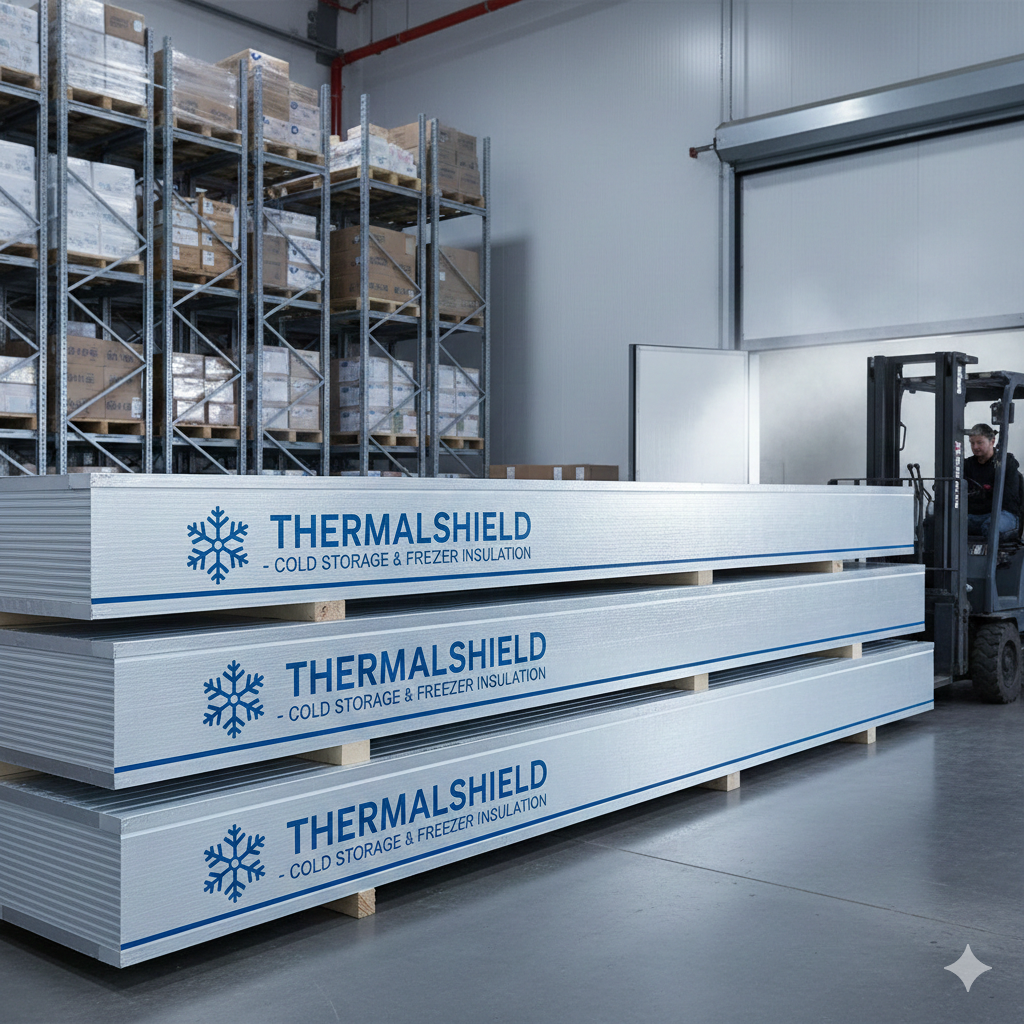
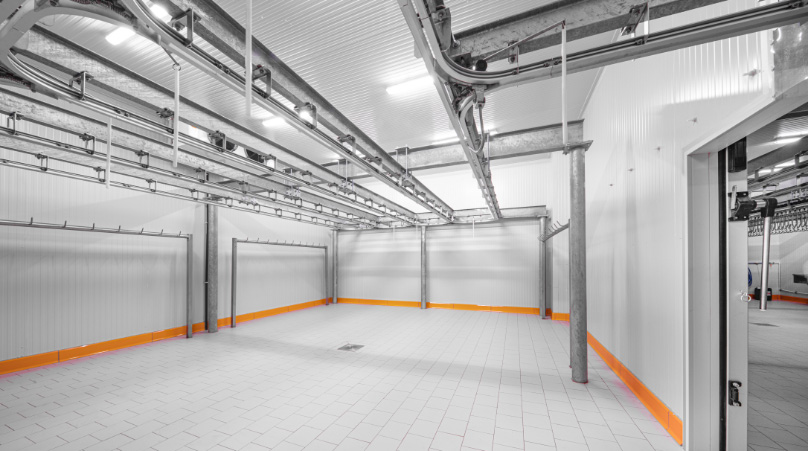
    insulation sheet for cold storage and freezers

    Cold rooms operate at controlled temperatures far below ambient conditions. Without proper insulation, heat infiltration increases compressor load, leading to higher electricity consumption and equipment wear.

    High-quality insulation ensures:

    • Stable internal temperatures
    • Reduced energy consumption
    • Moisture and condensation control
    • Longer refrigeration system life

    This makes insulation a core structural component, not just an add-on.

    Insulation Sheets for Cold Rooms & Freezers Pakistan – Market Overview

    The demand for Insulation Sheets for Cold Rooms & Freezers Pakistan has grown due to expanding food storage, pharmaceutical logistics, and export-driven cold chains. Local suppliers now offer a wide range of insulation systems designed to meet temperature, humidity, and hygiene requirements.

    These systems are used in:

    • Food processing units
    • Cold storage warehouses
    • Meat and dairy facilities
    • Pharmaceutical freezers

    Insulation for Cold Storage – Performance Requirements

    Effective insulation for cold storage must meet strict performance criteria:

    • Low thermal conductivity
    • High vapor resistance
    • Structural stability at low temperatures
    • Compatibility with refrigeration systems

    Insulation failure in cold storage environments often results in ice buildup, panel damage, and increased operational costs.

    Best Insulation Sheets for Cold Rooms and Freezers

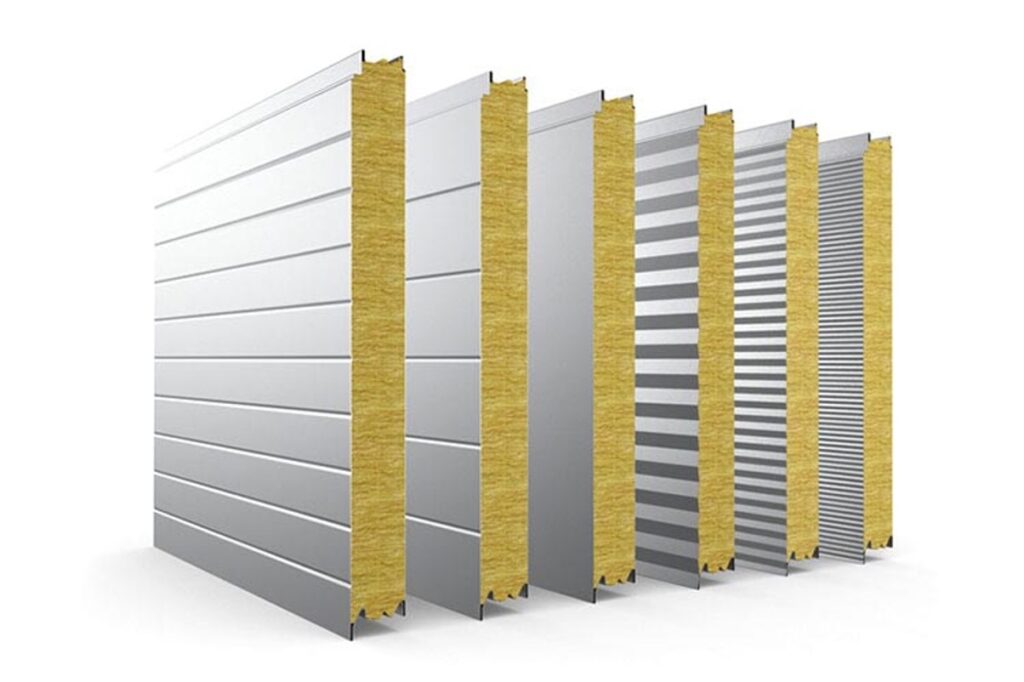
    rockwool sandwich panels

    The best insulation sheets for cold rooms and freezers are selected based on temperature range, wall thickness, and operational load. Commonly used insulation solutions include rigid foam panels and prefabricated insulated panels.

    Key considerations when choosing insulation sheets:

    • Temperature set point (chiller vs freezer)
    • Internal humidity levels
    • Floor, wall, and ceiling load
    • Hygiene and cleaning requirements

    Cold Room Materials – What Are They Made Of?

    Understanding cold room materials helps in designing efficient systems. These materials typically include:

    • Rigid insulation cores
    • Protective metal or composite facings
    • Sealed joints to prevent air leakage

    Each component plays a role in maintaining thermal integrity and preventing condensation.

    Cold Room Insulation Panels Explained

    freezers wall panels pakistan

    Cold room insulation panels are prefabricated systems designed for quick installation and airtight performance. These panels minimize thermal bridges and are widely used in modular cold room construction.

    Advantages include:

    • Faster installation
    • Uniform insulation thickness
    • Reduced onsite labor
    • Improved temperature consistency

    These panels are especially suitable for large cold storage facilities.

    Freezer Wall Panels – Structural & Thermal Role

    Freezer wall panels must withstand extreme temperature differences between interior and exterior environments. They are engineered to:

    • Prevent heat ingress
    • Resist moisture penetration
    • Maintain panel rigidity at sub-zero temperatures

    High-density insulation cores combined with sealed joints ensure freezer efficiency and structural stability.

    Cold Storage Insulation Materials – Comparison

    Different cold storage insulation materials offer varying performance levels. Selection depends on cost, energy efficiency, and application scale.

    Common factors influencing material choice:

    • Operating temperature
    • Installation speed
    • Maintenance requirements
    • Lifecycle cost

    High-performance materials reduce long-term operational expenses even if initial costs are higher.

    Sandwich Panel Cold Room Systems

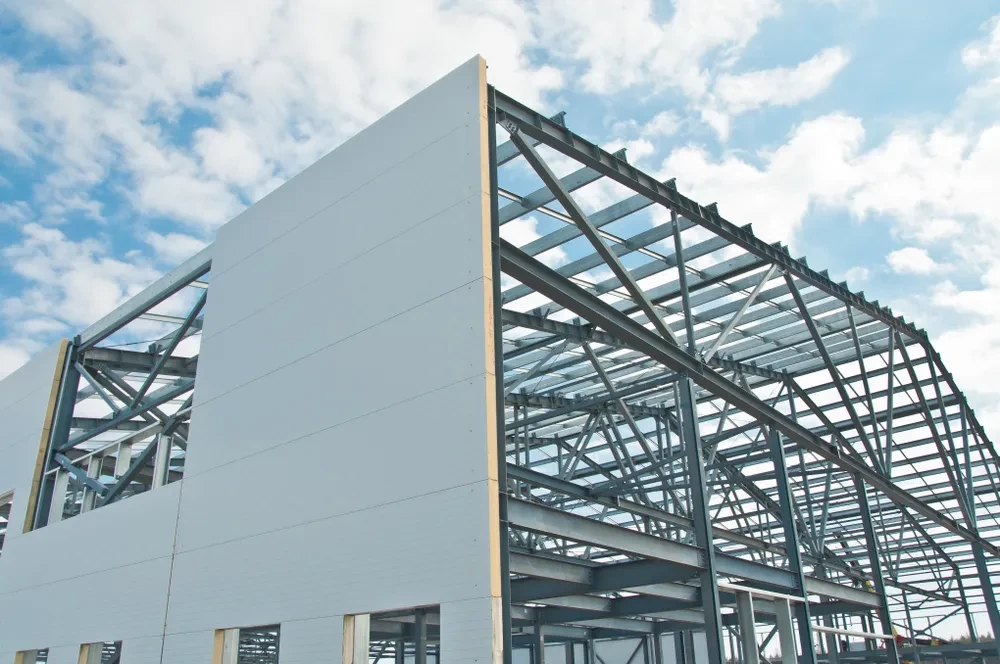
    A sandwich panel cold room system integrates insulation and structure into a single unit. These panels consist of an insulation core sandwiched between protective metal sheets.

    Benefits include:

    • Excellent thermal performance
    • Clean, hygienic surfaces
    • Modular expandability
    • Reduced construction time

    Sandwich panel systems are widely used in modern cold storage projects.

    Installation Best Practices

    To maximize insulation performance:

    • Ensure tight panel joints
    • Use vapor barriers where required
    • Seal all penetrations properly
    • Avoid thermal bridges

    Professional installation is critical to prevent long-term efficiency loss.

    Maintenance & Long-Term Durability

    Cold room insulation requires minimal maintenance when properly installed. However, periodic inspections should focus on:

    • Joint sealing
    • Moisture signs
    • Panel alignment

    Early detection of issues prevents costly repairs and downtime.

    Final Thoughts

    Insulation sheets are the backbone of efficient cold rooms and freezers. Choosing the right materials, panels, and installation methods ensures consistent temperature control, energy savings, and operational reliability.

    Investing in high-quality insulation is not an expense—it is a long-term performance strategy for cold storage facilities.

    FAQ’S

    The best insulation sheets for cold rooms and freezers are those with low thermal conductivity and high moisture resistance. Insulated panels designed specifically for cold storage environments provide stable temperatures and long-term energy efficiency.

    Cold storage insulation materials typically include rigid insulated panels engineered to minimize heat transfer. These materials are selected based on operating temperature, humidity levels, and durability requirements.

    Yes, a sandwich panel cold room system is highly suitable for freezer applications. These panels combine insulation and structural strength, making them ideal for sub-zero environments.

    The thickness of cold room insulation panels depends on the temperature range. Freezers usually require thicker panels compared to chillers to prevent heat ingress and condensation.

    Properly installed freezer wall panels significantly reduce energy loss, helping refrigeration systems operate efficiently and lowering overall electricity consumption.

  • Insulation Sheet Life Expectancy & Durability

    Insulation Sheet Life Expectancy & Durability

    Insulation is one of the most important long-term investments in any building. While insulation materials are designed to last for decades, their performance does not remain the same forever. Understanding insulation lifespan helps homeowners, builders, and facility managers make informed decisions about maintenance, replacement, and cost planning.

    This guide explains how long different insulation materials last, what affects their durability, and when replacement becomes necessary.

    Understanding Insulation Lifespan

    Insulation lifespan refers to how long insulation materials can perform effectively before losing thermal efficiency, structural integrity, or safety. While insulation does not “expire” like food, its ability to resist heat flow can decline due to moisture, compression, contamination, or poor installation.

    Different materials age differently, which is why knowing their expected lifespan is critical.

    How Long Does Insulation Last in Walls?

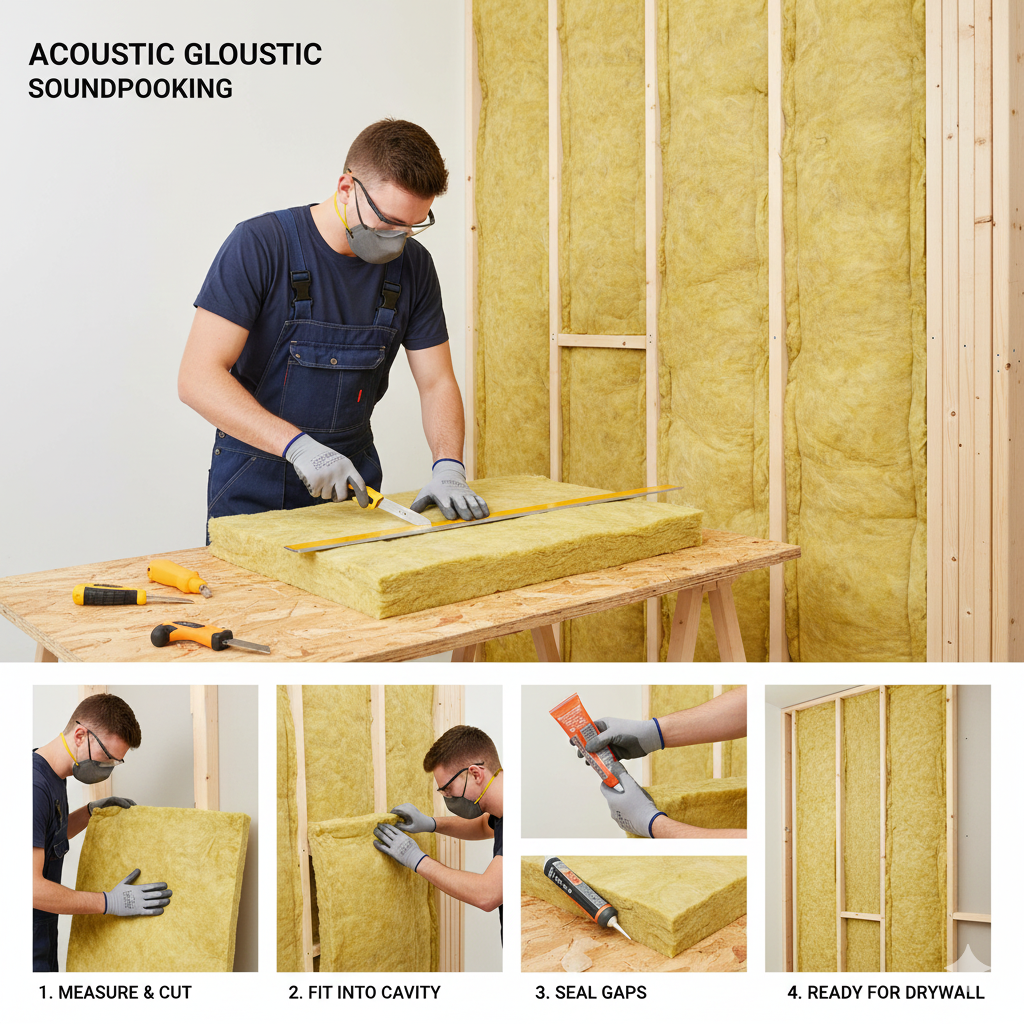
    Glasswool Sheet For Soundproofing

    One of the most common homeowner questions is how long does insulation last in walls. In properly sealed wall cavities, insulation can last anywhere from 30 to 80 years, depending on material type and environmental conditions.

    Wall insulation generally lasts longer than attic insulation because it is less exposed to:

    • Moisture fluctuations
    • Dust and debris
    • Temperature extremes

    However, water intrusion or pest damage can significantly shorten its lifespan.

    Fiberglass Insulation Longevity Explained

    How Long Does Fibreglass Insulation Last in Attic?

    Many homeowners ask how long does fibreglass insulation last in attic spaces. Fiberglass insulation typically lasts 20 to 30 years in attics because it is exposed to heat buildup, humidity, and air movement.

    Over time, attic fiberglass insulation may:

    • Compress and lose thickness
    • Collect dust that reduces R-value
    • Shift due to airflow

    These factors reduce efficiency even if the insulation looks intact.

    How Long Does Fibre Glass Insulations Last in Walls?

    When installed inside walls, how long does fibre glass insulations last in walls becomes less of a concern. Fiberglass in walls can perform effectively for 40 to 60 years if it remains dry and undisturbed.

    Proper vapor barriers and airtight construction significantly extend wall insulation life.

    How Often Should Attic Insulation Should Replaced?

    A common maintenance question is how often should attic insulation should replaced. In most cases, attic insulation should be inspected every 10 to 15 years and replaced when:

    • R-value drops noticeably
    • Moisture or mold is present
    • Rodent or insect damage occurs
    • Energy bills increase unexpectedly

    Replacement frequency depends more on condition than age alone.

    Average Insulation Replacement Cost

    Insulation TypeTypical LocationApprox. Cost Range (PKR / sq.ft)
    Fiberglass InsulationAttic180 – 300
    Fiberglass InsulationWalls250 – 420
    Cellulose InsulationAttic220 – 380
    Foam-Based InsulationWalls / Roof450 – 750

    Note: Costs vary by city, labor access, and insulation thickness.
    Cellulose Insulation Durability

    Cellulose insulation is made from recycled paper treated with fire-retardant chemicals. While eco-friendly, its lifespan is generally 20 to 30 years.

    Cellulose insulation is more sensitive to:

    • Moisture absorption
    • Settling over time
    • Pest activity

    Regular inspections are essential to maintain performance.

    When to Replace Insulation in Walls

    Knowing when to replace insulation in walls helps prevent energy loss and indoor comfort issues. Replacement is recommended if you notice:

    • Uneven indoor temperatures
    • Persistent damp smells
    • Visible mold or mildew
    • Renovations that expose wall cavities

    Replacing wall insulation during remodeling is often more cost-effective than waiting.

    How Much Does It Cost to Replace the Insulation?

    Homeowners frequently ask how much does it cost to replace the insulation. Costs vary based on material, area size, and accessibility.

    Typical factors affecting cost include:

    • Type of insulation (fiberglass, cellulose, foam)
    • Wall or attic access
    • Labor complexity
    • Removal of old insulation

    While replacement can be a significant investment, it often pays back through reduced energy bills and improved comfort.

    Factors That Reduce Insulation Durability

    Several factors can shorten insulation lifespan:

    • Moisture leaks or condensation
    • Poor installation
    • Compression or settling
    • Pest infestation
    • Fire or smoke exposure

    Addressing these issues early can delay the need for full replacement.

    How to Extend Insulation Life

    You can maximize insulation durability by:

    • Fixing roof and plumbing leaks promptly
    • Ensuring proper ventilation
    • Sealing air gaps
    • Conducting periodic inspections

    Preventive care significantly improves long-term performance.

    Final Thoughts

    Insulation is not a “set and forget” building component. Understanding insulation sheet life expectancy and durability allows homeowners and building owners to plan maintenance, reduce energy waste, and maintain indoor comfort.

    Regular inspections, moisture control, and timely replacement ensure insulation continues to perform efficiently for decades.

    FAQ’S

    In most homes, insulation installed in walls can last between 40 to 80 years if it remains dry and undisturbed. Its lifespan depends on material quality, installation method, and moisture control.

    Fibreglass insulation in attics typically lasts 20 to 30 years because it is exposed to temperature changes, dust, and airflow that gradually reduce its effectiveness.
    Attic insulation should be inspected every 10 to 15 years and replaced when signs of compression, moisture damage, or rising energy bills appear.

    Insulation in walls should be replaced during renovations if it is damaged, moldy, wet, or outdated. Open walls provide the most cost-effective opportunity for replacement.

    Cellulose insulation offers good thermal performance but usually has a shorter lifespan than fiberglass due to settling and moisture sensitivity.

    The cost to replace insulation depends on material type, area size, and accessibility. Attic replacements are usually more affordable than wall insulation upgrades.

  • Sandwich Panels Using EPS & Rockwool

    Sandwich Panels Using EPS & Rockwool

    Sandwich panels have become a core building solution for industrial, commercial, and prefabricated structures due to their speed of installation, thermal performance, and structural efficiency. When combined with EPS or Rockwool insulation, these panels deliver reliable heat control, fire resistance, and long-term durability.

    Moreover, this guide explains how EPS and Rockwool sandwich panels work, their applications, cost considerations, and how to choose the right panel type for your project.

    What Are Insulated Sandwich Panels?

    Sandwich Panels Using EPS & Rockwool

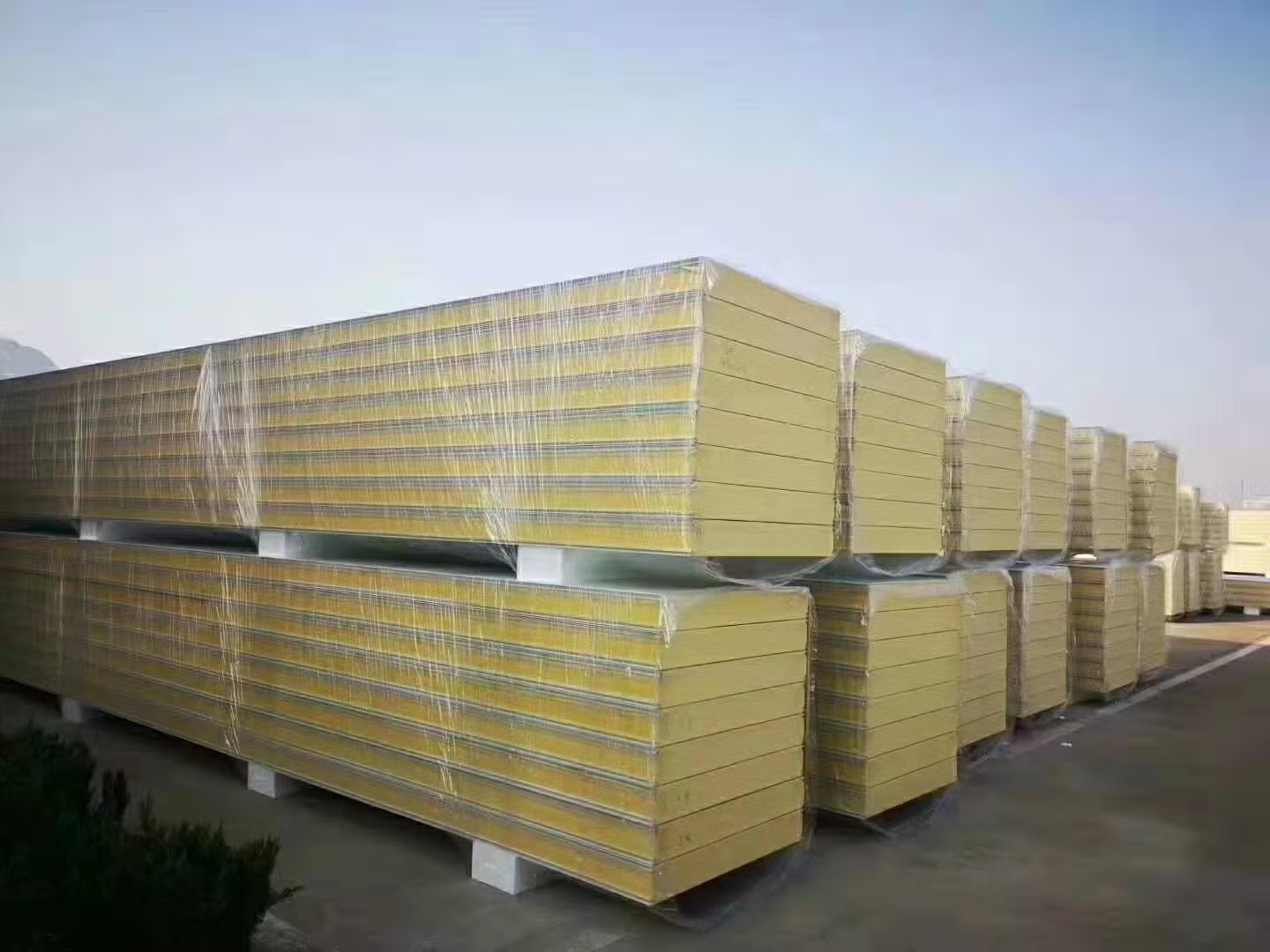
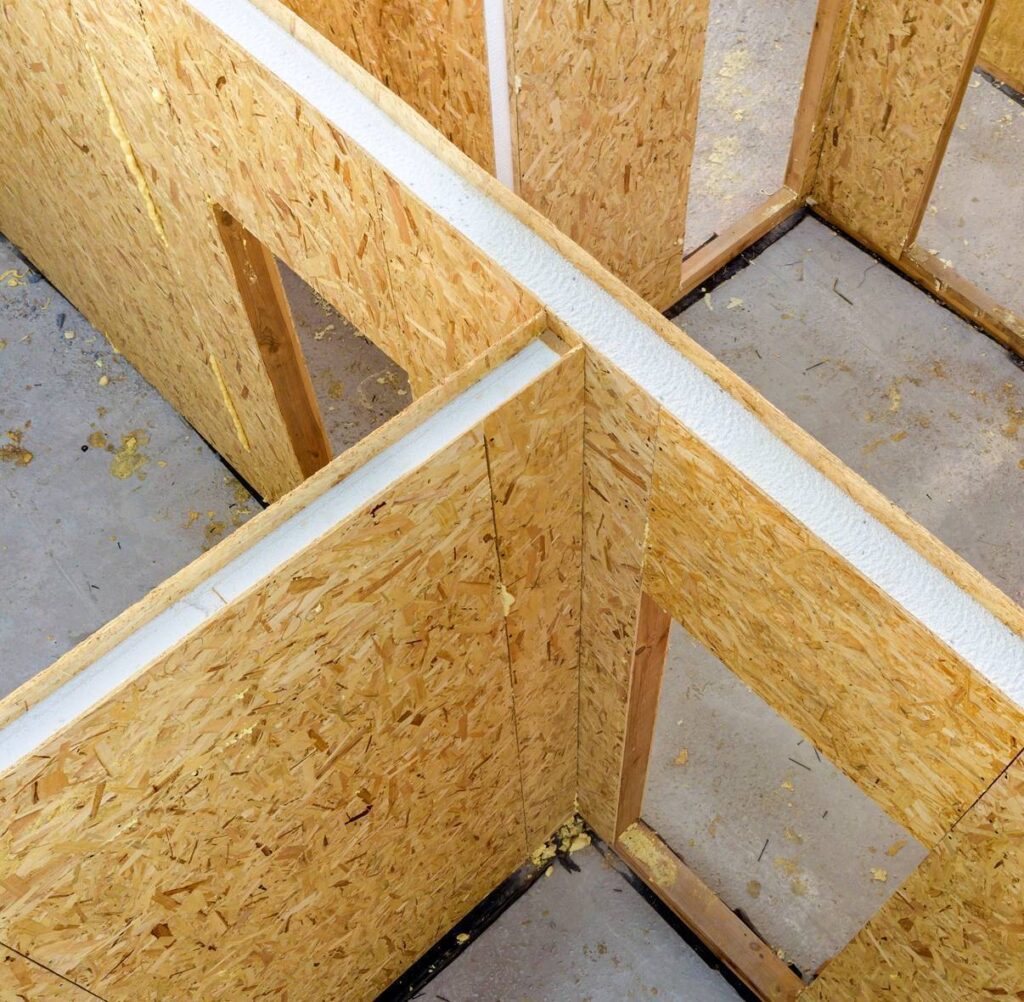
    Insulated sandwich panels are prefabricated building elements made of three layers:

    • An outer metal sheet
    • An insulation core (EPS or Rockwool)
    • An inner metal sheet

    Moreover, this layered design provides thermal insulation, sound reduction, and structural rigidity in a single product, making them ideal for fast-track construction projects.

    EPS Sandwich Panels – Lightweight & Cost-Effective

    rockwool sandwich panels

    EPS-based panels are widely used where thermal insulation and affordability are the primary requirements. Expanded polystyrene cores make panels light in weight while maintaining good insulation properties.

    EPS sandwich panels are commonly selected for:

    • Warehouses
    • Cold storage units
    • Prefabricated offices
    • Temporary structures

    Moreover, they are easy to handle and reduce overall construction load.

    Rockwool Sandwich Panels – Fire & Sound Protection

    Rockwool metal panels are designed for applications where fire safety and acoustic insulation are critical. It is a mineral-based insulation material that offers excellent resistance to high temperatures.

    Moreover, they are ideal for:

    • Industrial plants
    • Power facilities
    • Commercial kitchens
    • Fire-rated buildings

    However, their dense core improves sound absorption and enhances safety compliance.

    EPS vs Rockwool Sandwich Panels – Key Differences

    FeatureEPS PanelsRockwool Panels
    WeightLightweightHeavier
    Fire ResistanceModerateExcellent
    Thermal InsulationGoodVery Good
    Sound InsulationLimitedHigh
    CostLowerHigher

    However, choosing the right insulation core depends on project requirements rather than price alone.

    Bredco Sandwich Panels – What to Know

    Bredco sandwich panels are known in the market for standardized panel systems used in modular and industrial construction. These panels typically offer consistent thickness, reliable bonding, and compatibility with EPS or Rockwool cores.

    Builders often consider bredco panels when looking for prefabricated solutions that balance performance and installation speed.

    BRD Insulation Panels for Sale – Market Overview

    You may find brd insulation panels for sale through local suppliers and distributors offering EPS and Rockwool core options. Availability usually depends on panel thickness, metal gauge, and insulation density.

    Furthermore, projects requiring bulk quantities often benefit from factory-direct sourcing to maintain consistency and reduce lead time.

    PU Rockwool Panels – Hybrid Insulation Systems

    PU rockwool panels combine polyurethane performance with mineral insulation benefits. These systems are typically used in high-spec commercial or industrial environments where thermal efficiency and fire resistance must coexist.

    Such panels are more specialized and are selected based on engineering specifications rather than general construction needs.

    EPS vs Rockwool Sandwich Panels – Price Comparison (Pakistan)

    Prices vary by thickness, metal sheet gauge, fire rating, and order volume. The table below reflects typical market ranges.

    Panel TypeInsulation CoreThicknessApprox. Price Range (PKR / sq.ft)Best Use
    Sandwich PanelEPS50mm650 – 900Warehouses, prefab offices
    Sandwich PanelEPS75mm900 – 1,200Cold rooms, site offices
    Sandwich PanelRockwool50mm1,300 – 1,700Fire-rated buildings
    Sandwich PanelRockwool75mm1,700 – 2,200Industrial & commercial units
    PU Rockwool PanelHybrid50mm2,200 – 2,800High-spec facilities

    Cost Insight:
    EPS panels remain the most economical option, while Rockwool and PU Rockwool panels are selected for fire safety, acoustic control, and regulatory compliance.

    BRD Insulation Panels Cost & Budget Planning

    Understanding brd insulation panels cost helps developers plan efficiently. Moreover, pricing is influenced by:

    • Insulation core type (EPS or Rockwool)
    • Panel thickness
    • Metal sheet gauge
    • Fire rating requirements

    Moreover, EPS panels are usually more economical, while Rockwool panels command higher prices due to material density and safety performance.

    Sandwich Panels for Cost Optimization

    When evaluating sandwich panels for cost, consider total lifecycle value instead of upfront pricing. Moreover, faster installation, reduced energy loss, and minimal maintenance can significantly lower long-term expenses.

    However, cost-efficient planning includes selecting the right insulation core for the building’s actual functional needs

    Where Are EPS & Rockwool Sandwich Panels Used?

    These panels are widely used in:

    • Factories and industrial sheds
    • Cold storage and clean rooms
    • Commercial buildings
    • Prefabricated housing
    • Controlled-environment facilities

    However, their versatility makes them suitable for both temporary and permanent structures.

    How to Choose the Right Sandwich Panel

    Choose EPS sandwich panels if:

    • Budget is a priority
    • Fire rating is not critical
    • Lightweight construction is required

    Choose Rockwool sandwich panels if:

    • Fire safety is mandatory
    • Acoustic control is required
    • The building is industrial or high-risk

    Moreover, always consult structural and fire safety guidelines before final selection.

    Final Thoughts

    Sandwich panels using EPS and Rockwool offer modern construction solutions that combine speed, insulation performance, and structural integrity. Whether selecting EPS for economical builds or Rockwool for fire-rated applications, the right choice enhances efficiency and safety.

    However, understanding material behavior, cost structure, and application ensures long-term value for any construction project.

    FAQ’S

    Insulated sandwich panels are used in industrial, commercial, and prefabricated buildings to provide thermal insulation, structural strength, and faster construction.

    EPS panels are better for cost-effective thermal insulation, while Rockwool panels are preferred for fire resistance and sound insulation in commercial and industrial projects.

    Yes, bredco sandwich panels are commonly used in industrial structures due to their standardized design, durability, and compatibility with EPS or Rockwool insulation cores.

    Sandwich panels for cost are calculated based on insulation core type, thickness, metal sheet gauge, fire rating, and total order quantity.

    Yes, brd insulation panels for sale are available through local manufacturers and distributors offering EPS, Rockwool, and hybrid insulation options.

    Yes, rockwool metal panels offer excellent fire resistance and are widely used in fire-rated commercial and industrial buildings.

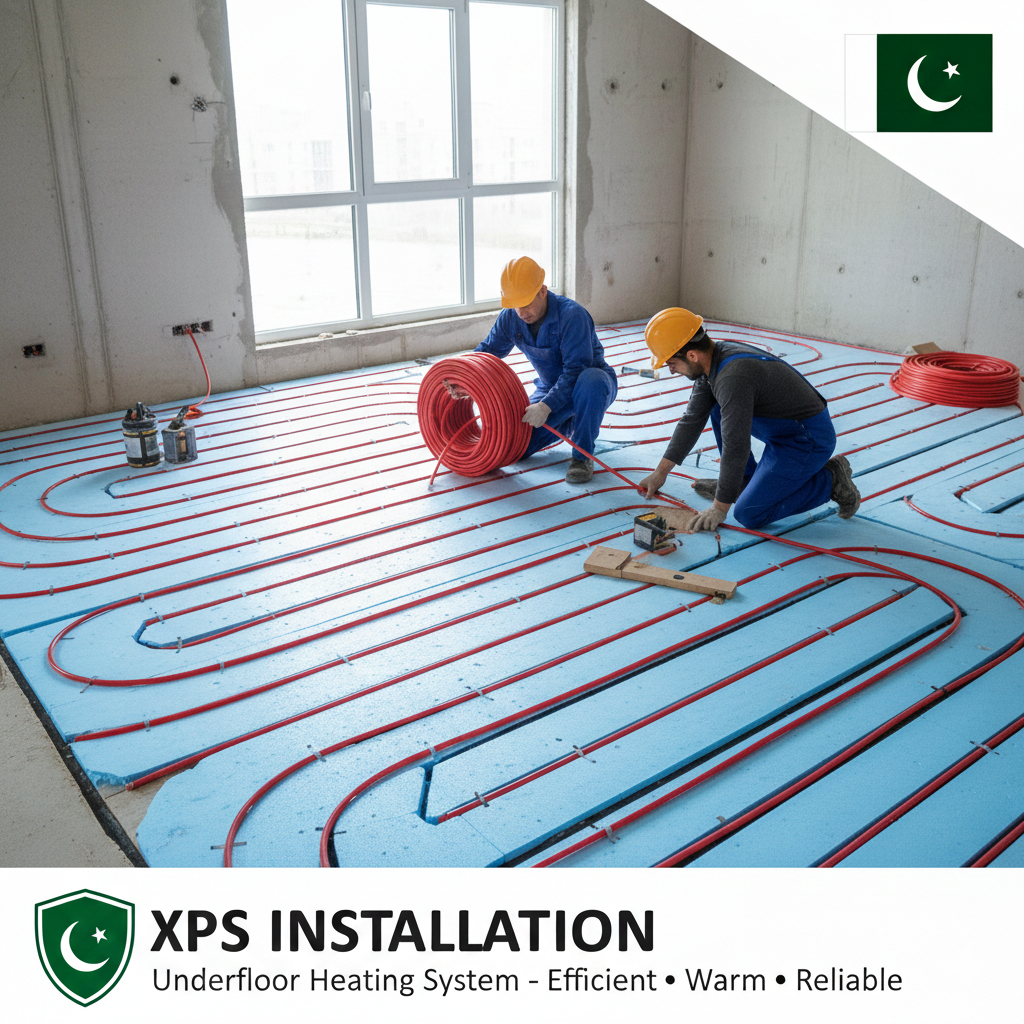
  • EPS & XPS for Underfloor Heating Systems

    EPS & XPS for Underfloor Heating Systems

    Underfloor heating systems are becoming increasingly popular in modern residential and commercial construction due to their comfort, energy efficiency, and space-saving design. However, the success of any underfloor heating setup depends heavily on the insulation layer installed beneath it. This is where EPS and XPS insulation boards play a critical role.

    This guide explains how EPS and XPS perform in underfloor heating applications, compares their thermal and structural properties, and helps you select the most suitable material for long-term efficiency.

    Understanding Underfloor Heating Insulation

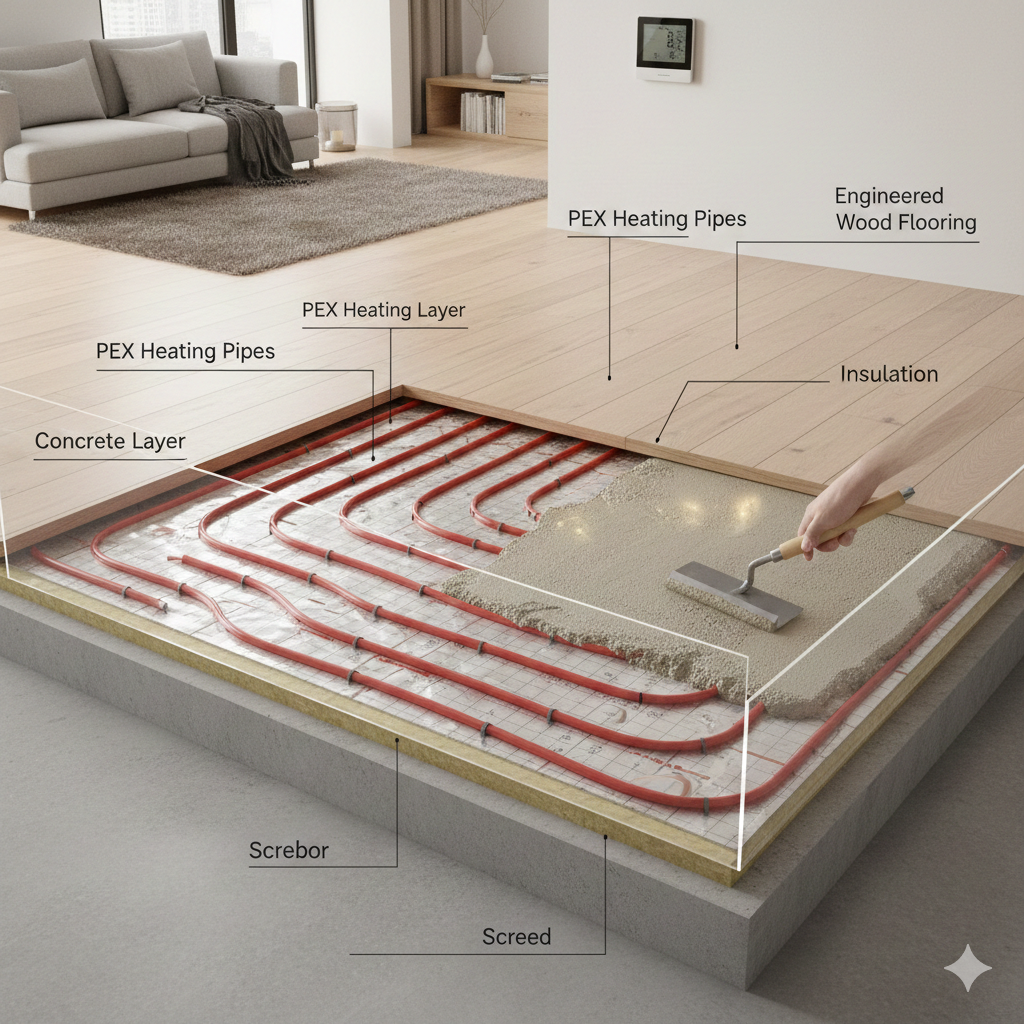
    Underfloor hEating System

    Underfloor heating works by evenly distributing heat across a floor surface. Without proper insulation below the heating pipes or cables, a significant amount of heat is lost downward into the slab or soil. High-quality insulation ensures:

    • Faster heat response
    • Reduced energy consumption
    • Consistent indoor temperatures
    • Protection of heating elements

    Choosing between EPS and XPS insulation directly impacts system performance and operating cost.

    Best EPS & XPS for Underfloor Heating Systems

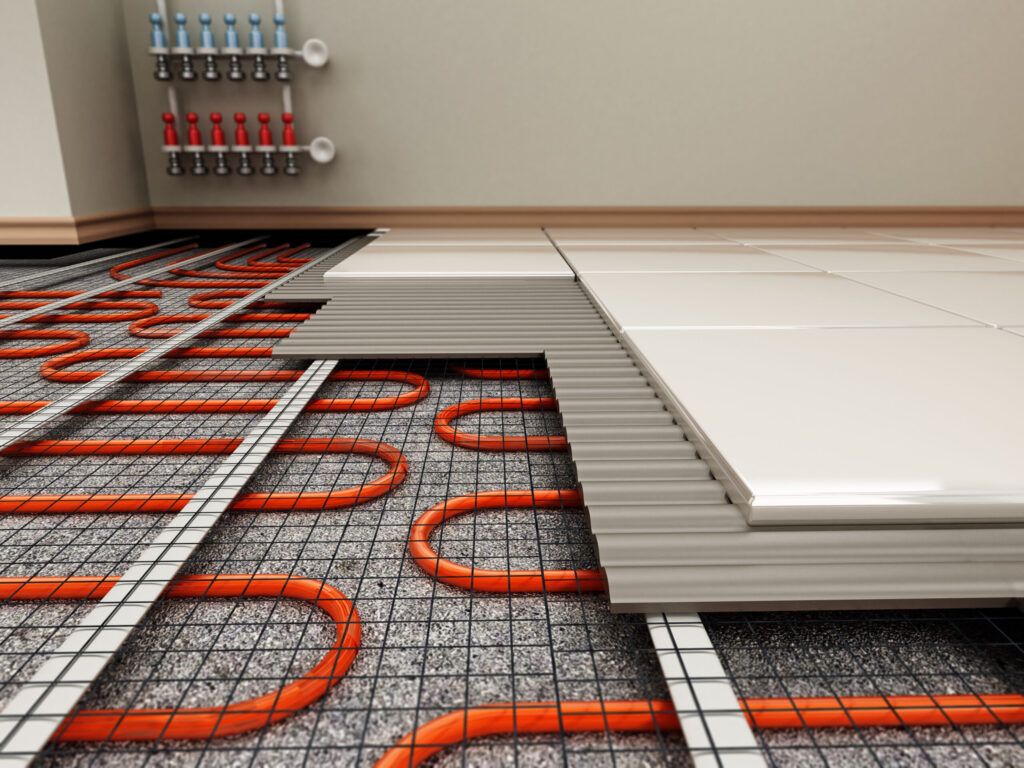
    Ground heating system structural detail. 3D illustration.

    The best EPS & XPS for Underfloor Heating Systems depends on structural load, moisture exposure, and insulation thickness requirements. Both materials are rigid foam boards, but their internal structure gives them different advantages.

    EPS is lightweight and economical, while XPS is dense and moisture-resistant. Each serves a distinct purpose in underfloor applications.

    EPS vs XPS Thermal Conductivity

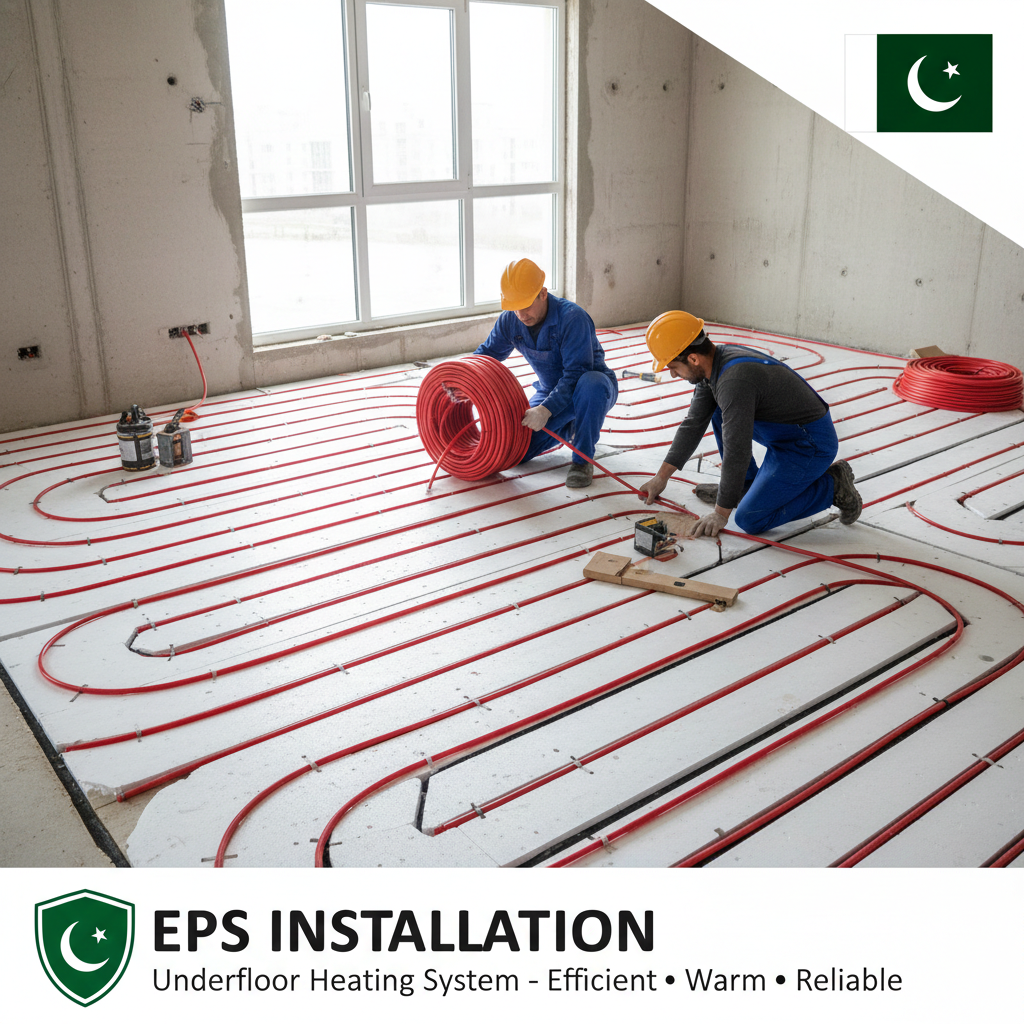
    EPS Installation at underfloor heating system

    EPS vs XPS Thermal Conductivity is one of the most important performance comparisons.

    • EPS has a slightly higher thermal conductivity, meaning it allows marginally more heat transfer.
    • XPS offers lower thermal conductivity, which improves heat retention under floors.

    For projects where maximum thermal efficiency is required in limited thickness, XPS is generally preferred.

    EPS Vs XPS R-Value Explained

    The EPS Vs XPS R-Value comparison helps determine insulation effectiveness per inch.

    • EPS provides stable R-values that depend on density.
    • XPS delivers higher R-values per thickness, making it suitable for compact floor assemblies.

    In underfloor heating, higher R-value insulation improves system efficiency by directing heat upward instead of allowing it to escape into the slab.

    EPS Vs XPS Insulation Performance Under Floors

    When comparing EPS Vs XPS Insulation, performance differences become more noticeable in underfloor heating environments:

    • EPS performs well in dry, low-load residential floors.
    • XPS excels in high-load, moisture-prone, or commercial floors.

    Both materials are compatible with hydronic and electric heating systems when correctly installed.

    EPS vs XPS Cost Comparison

    From a budgeting perspective, EPS vS XPS Cost is often a deciding factor.

    • EPS is significantly more affordable and ideal for large-area residential projects.
    • XPS costs more upfront but offers longer lifespan and improved durability.

    For developers working within tight budgets, EPS provides excellent value, while XPS is better for premium or long-term projects.

    EPS vs XPS Compressive Strength

    EPS vs XPS Compressive Strength is critical for underfloor heating systems installed beneath concrete slabs.

    • EPS offers moderate compressive strength, sufficient for homes.
    • XPS provides high compressive strength, making it suitable for heavy loads, machinery, and commercial flooring.

    This makes XPS more reliable for under-slab insulation in demanding environments.

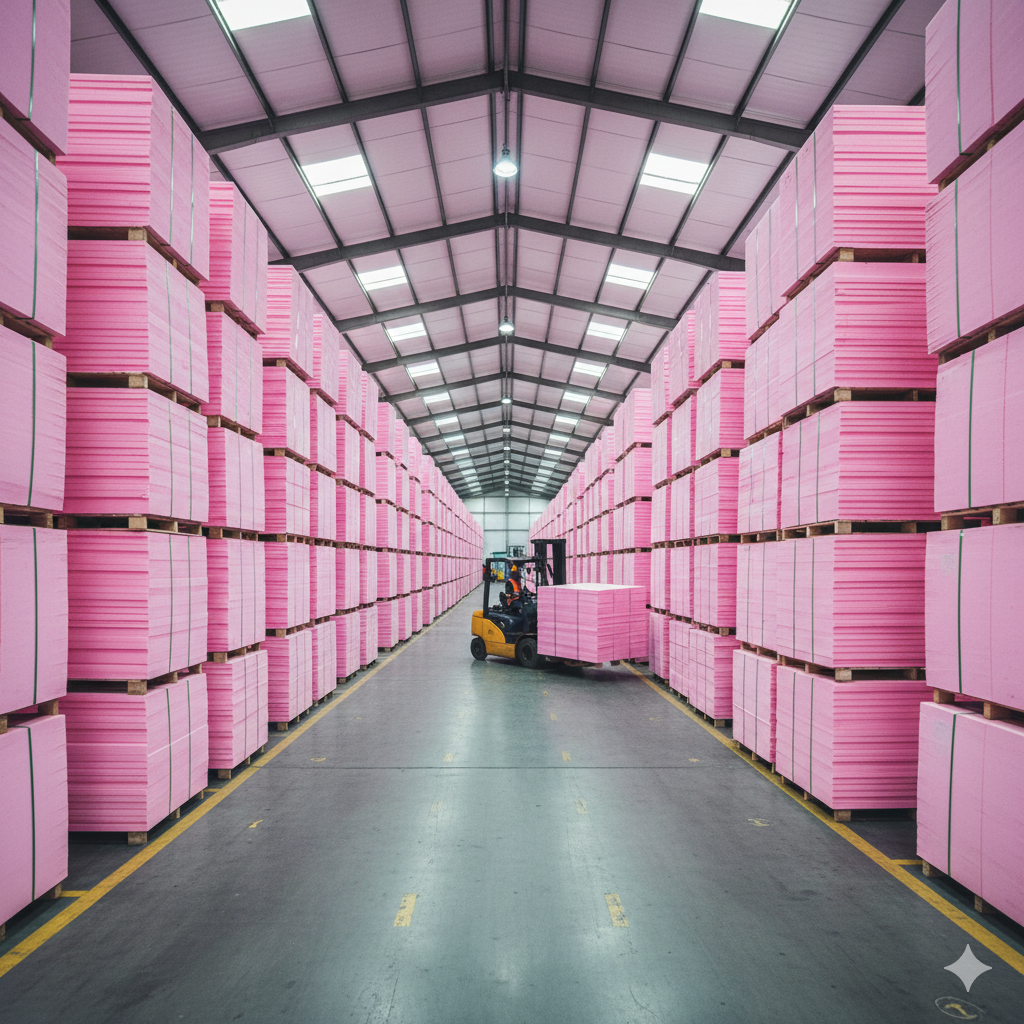
    Role of XPS Insulation in Heated Floors

    XPS Insulation is widely used in modern underfloor heating systems due to its closed-cell structure. It resists moisture absorption, maintains shape under load, and ensures consistent thermal performance over time.

    These properties make XPS particularly effective in basements, ground floors, and high-traffic areas.

    EPS vs XPS Under Slab Applications

    The EPS vs XPS under slab comparison highlights suitability for different ground conditions.

    • EPS is suitable for dry soil conditions with controlled loads.
    • XPS performs better in wet soil, high water table areas, or where structural pressure is high.

    Selecting the correct material ensures long-term insulation performance and prevents heat loss beneath the slab.

    Which Insulation Is Better for Underfloor Heating?

    There is no universal answer, as the best choice depends on application:

    • Choose EPS for residential homes, apartments, and cost-sensitive projects.
    • Choose XPS for commercial buildings, industrial floors, and moisture-exposed slabs.

    Both materials can deliver excellent underfloor heating performance when properly designed.

    Installation Best Practices

    For optimal results:

    • Ensure boards are tightly fitted with no gaps
    • Install a vapor barrier if required
    • Place heating pipes or cables evenly
    • Pour concrete carefully to avoid board displacement

    Correct installation is just as important as material selection.

    EPS & XPS for Underfloor Heating Systems – (2026)

    Prices vary by density, thickness, and city. Below are market-realistic ranges used by insulation suppliers in Pakistan.

    MaterialThicknessApprox. Price Range (PKR / sq.ft)Best Application
    EPS Sheet1 inch160 – 220Residential underfloor heating
    EPS Sheet2 inch280 – 360Under slab insulation (homes)
    XPS Insulation Board25mm380 – 520High-efficiency heated floors
    XPS Insulation Board50mm650 – 850Commercial & moisture-prone slabs

    Cost Insight:
    EPS remains the economical choice, while XPS justifies its higher price with better thermal resistance, compressive strength, and moisture stability.

    Final Thoughts

    EPS and XPS insulation boards both play a vital role in underfloor heating systems. Understanding their differences in thermal performance, cost, and strength allows homeowners and builders to make informed decisions that improve comfort and energy efficiency.

    Choosing the right insulation today ensures lower heating costs and better performance for years to come.

    FAQ’S

    Both work well, but XPS is better for moisture resistance and high loads, while EPS is ideal for cost-effective residential underfloor heating systems.

    Typically, 25mm to 50mm insulation is recommended depending on slab type, load, and desired thermal performance.

    Yes. EPS works well in dry regions, while XPS is recommended in humid cities like Karachi due to its water resistance.

    Lower thermal conductivity means less heat loss. XPS generally performs better, improving heating efficiency and reducing energy bills.
    Yes. EPS vs XPS compressive strength becomes critical under concrete slabs. XPS handles higher structural loads more effectively.
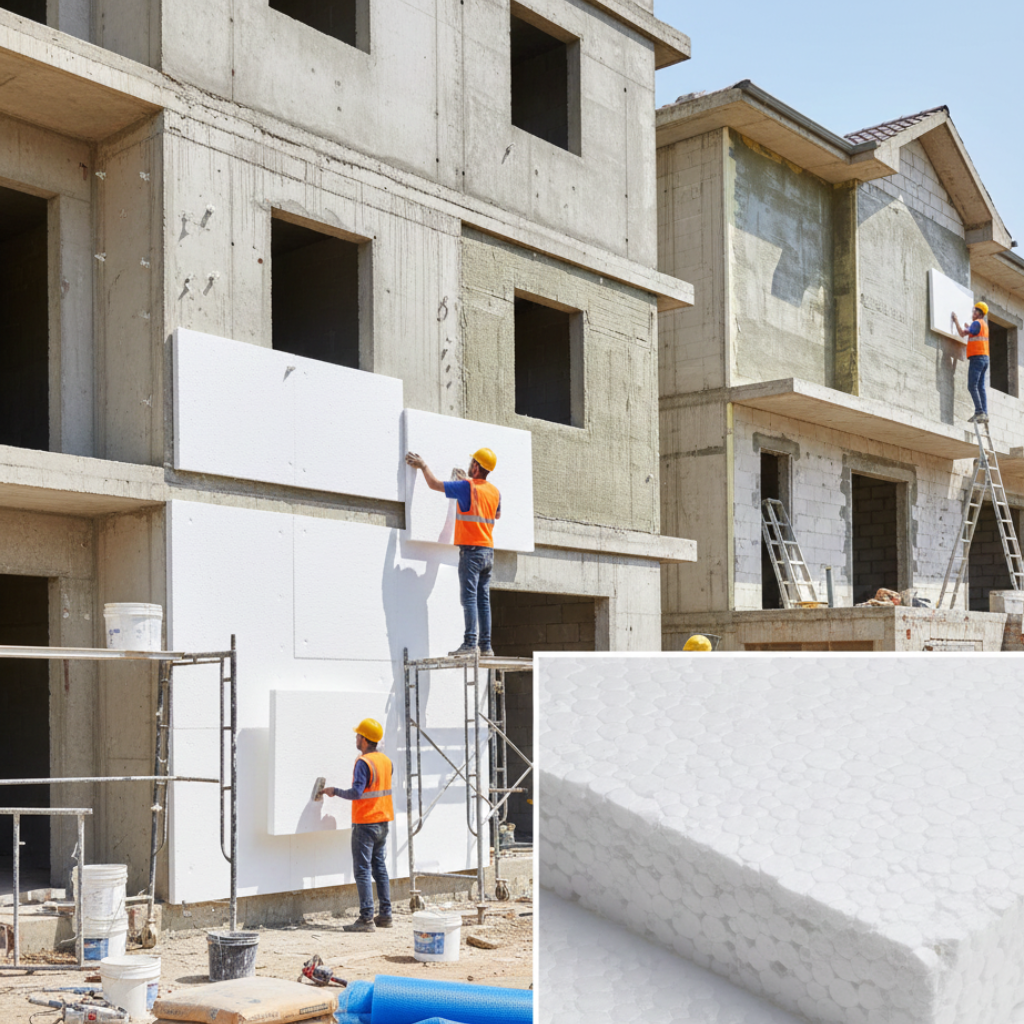
  • Factory Rate Insulation Sheets in Pakistan

    Factory Rate Insulation Sheets in Pakistan

    With rising temperatures, increasing energy costs, and expanding industrial construction, insulation has become a necessity rather than a luxury. Buying insulation at factory rates helps builders, contractors, and homeowners reduce project costs without compromising quality. This guide explains everything you need to know about factory rate insulation sheets in Pakistan, including types, applications, and pricing insights.

    What Are Factory Rate Insulation Sheets?

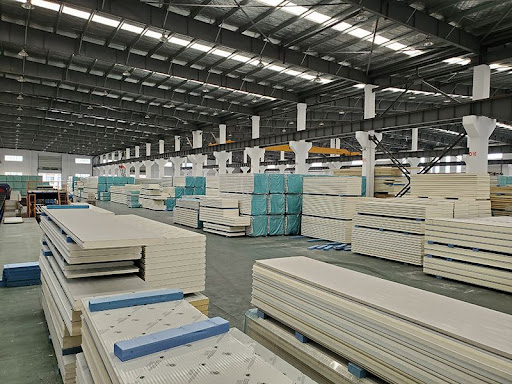
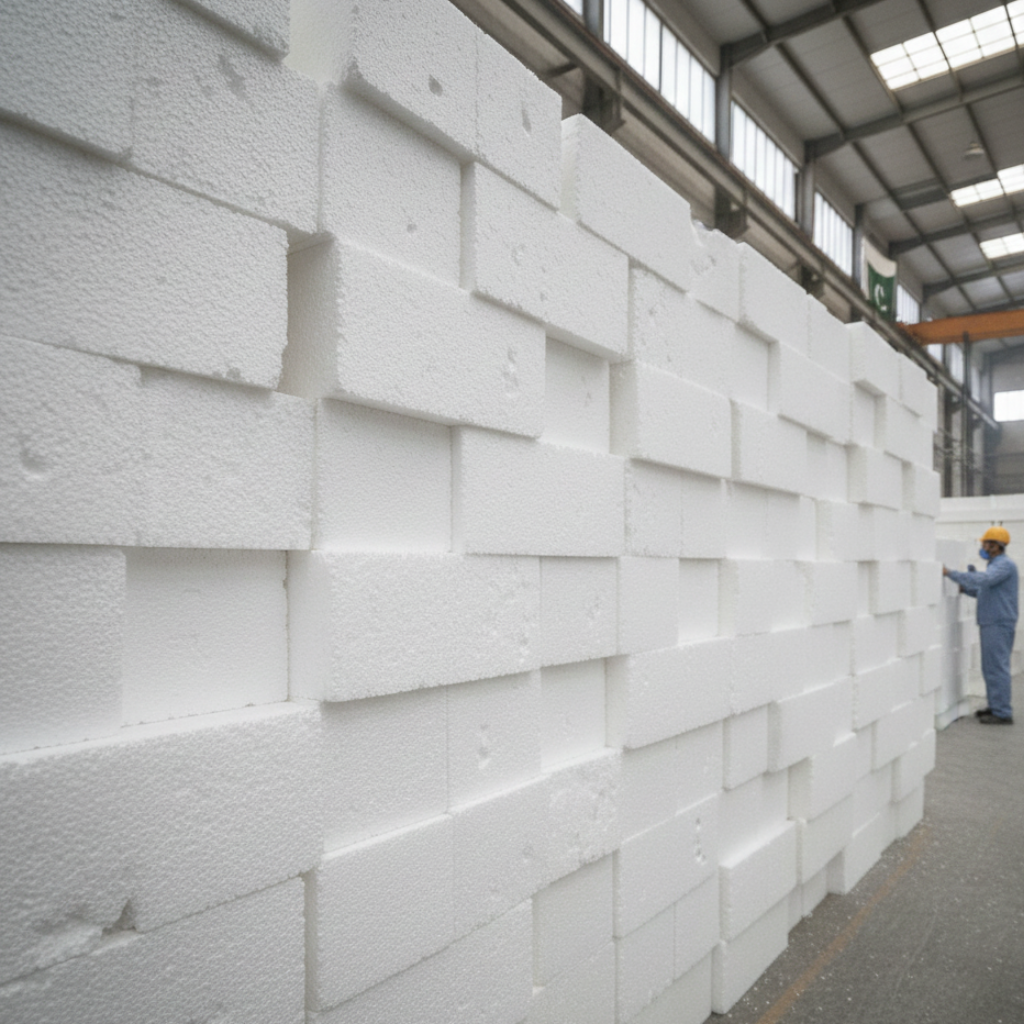
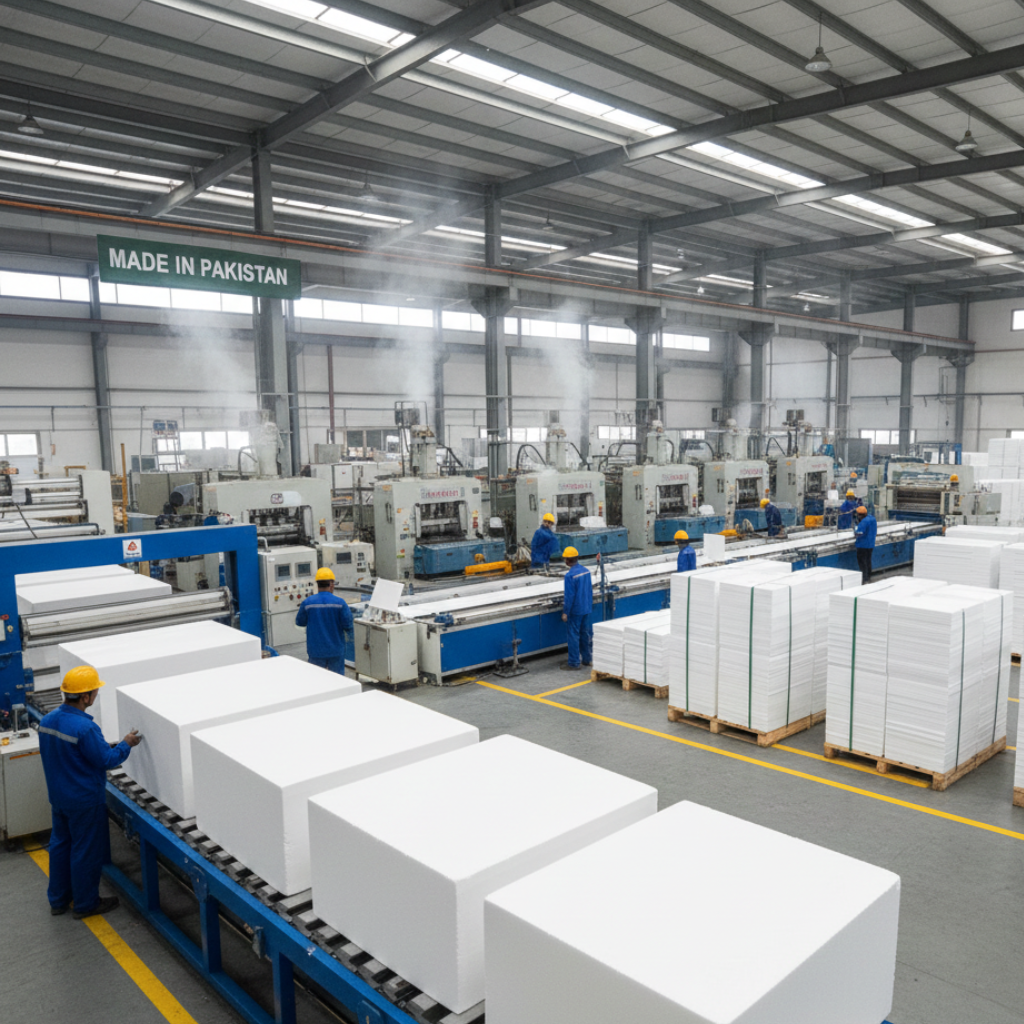
    thermocol blocks manufacturer in pakistan

    Factory rate insulation sheets are thermal insulation materials sold directly from manufacturers or production units, without distributor or retailer markups. These sheets are commonly used in roofs, walls, warehouses, cold rooms, and industrial buildings to reduce heat transfer and improve energy efficiency.

    Buying directly from factories ensures better pricing consistency, bulk availability, and quality control.

    Why Choose Factory Rate Insulation Sheets in Pakistan?

    Pakistan’s climate demands effective thermal solutions, especially in urban and industrial areas. Factory-direct insulation offers several advantages:

    • Lower cost compared to market retail prices
    • Consistent material density and thickness
    • Suitable for large-scale commercial and industrial use
    • Better availability for custom sizes and bulk orders

    This is why many contractors now prefer the best factory rate insulation sheets in Pakistan instead of retail-supplied materials.

    Types of Insulation Sheets Available at Factory Rates

    Thermocol (EPS) Insulation Sheets

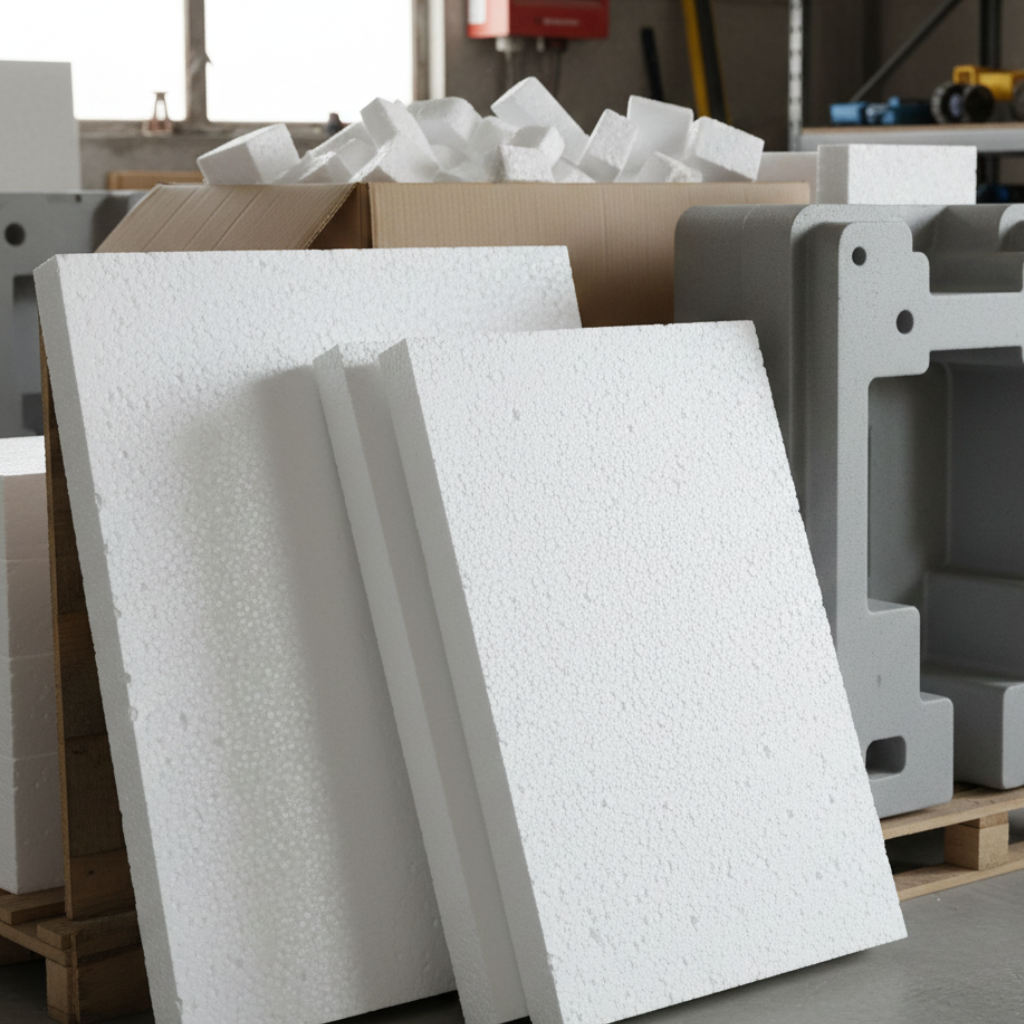
    Thermocol Sheet Supplier in Pakistan

    Thermocol, also known as EPS insulation, is widely used for roof and wall insulation. It is lightweight, cost-effective, and easy to install.

    The thermocol sheet price in Pakistan varies depending on thickness, density, and application. EPS is commonly used in residential, warehouse, and temporary structures.

    The thermocol insulation sheet price in Pakistan is generally lower when purchased directly from factories, especially for bulk projects.

    Jumbolon Insulation Sheets

    Jumbolon Board in Pakistan

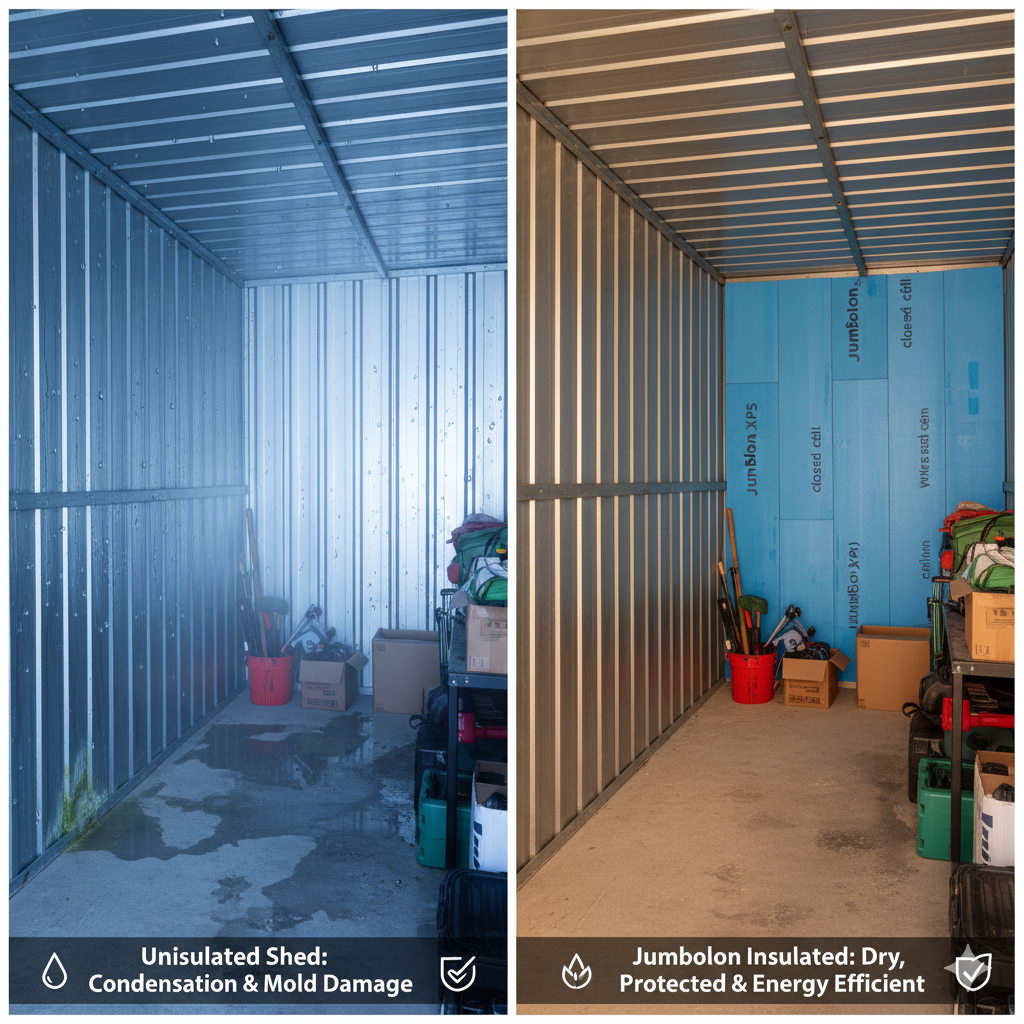
    Jumbolon sheets are closed-cell foam insulation materials known for flexibility and moisture resistance. They are commonly used in metal roofing, HVAC ducts, and industrial sheds.

    The jumbolon sheet price in Pakistan depends on thickness (such as 10mm or 12mm), roll size, and backing options like aluminum foil.

    2-Inch Thermocol Sheets

    XPS Sheet Vs EPS Sheet

    For projects requiring higher thermal resistance, thicker EPS sheets are used. Many industrial buyers specifically look for the 2 inch thermocol sheet price in Pakistan when insulating warehouses, cold storage units, and factory roofs.

    Thicker sheets reduce heat penetration more effectively and improve indoor temperature stability.

    Karachi: A Major Hub for Factory Rate Insulation

    Karachi is one of Pakistan’s largest manufacturing centers for insulation materials. Many buyers source Karachi factory rate insulation sheets in Pakistan due to:

    • Proximity to manufacturing plants
    • Better logistics and bulk availability
    • Competitive factory pricing

    Industries, commercial buildings, and exporters often rely on Karachi-based insulation suppliers for large-scale requirements.

    Where Are Factory Rate Insulation Sheets Used?

    Factory-direct insulation sheets are widely used in:

    • Industrial warehouses and factories
    • Commercial buildings and shopping centers
    • Residential roof insulation
    • Cold rooms and storage facilities
    • Metal sheds and prefabricated structures

    These applications benefit directly from reduced material costs and consistent thermal performance.

    Factors Affecting Insulation Sheet Prices in Pakistan

    Several elements influence insulation pricing at factory level:

    • Raw material quality
    • Sheet thickness and density
    • Order quantity (bulk vs small orders)
    • Custom cutting or lamination requirements
    • Transportation and location

    This is why factory prices are usually more stable and predictable compared to retail markets.

    How to Choose the Right Factory Rate Insulation Sheet

    When selecting insulation sheets, consider:

    • Climate and heat exposure
    • Roof or wall structure type
    • Required thickness and density
    • Budget and project size

    Consulting with manufacturers directly often helps in choosing the most cost-effective insulation solution.

    Price Comparison Table (Indicative Factory Rates – Pakistan)

    Insulation MaterialCommon ThicknessApprox. Factory Rate (PKR)Best Use Case
    EPS / Thermocol Sheet2 inchLow to MediumRoof insulation, wall insulation, cold rooms
    Jumbolon Sheet12mmMediumMetal roofs, warehouses, sound & heat control
    High-Density EPS2 inchMedium to HighIndustrial insulation, load-bearing areas

    Note: Prices vary based on density, order volume, and city (especially Karachi factory rates).

    Are Factory Rate Insulation Sheets Reliable?

    Yes. Factory-supplied insulation sheets often meet industry standards because they come straight from production lines. Quality control, uniform density, and customization options are usually better compared to resellers.

    Final Thoughts

    Investing in factory rate insulation sheets in Pakistan is a smart decision for anyone looking to reduce construction costs while improving energy efficiency. Whether you need EPS thermocol, jumbolon foam, or thicker insulation boards, factory-direct purchasing ensures value, consistency, and long-term performance.

    As energy costs continue to rise, proper insulation sourced at factory rates remains one of the most cost-effective building upgrades available in Pakistan.

    FAQ’S

    Factory rate insulation sheets in Pakistan are insulation materials sold directly from manufacturers or authorized distributors without middlemen. This helps buyers get better pricing on products like thermocol, EPS, and jumbolon sheets.

    At factory level, thermocol (EPS) sheets are usually the most affordable, followed by jumbolon foam. Pricing depends on thickness, density, and order quantity.

    No. While Karachi has many factories, factory rate insulation sheets in Pakistan are also supplied to Lahore, Islamabad, Rawalpindi, Faisalabad, Multan, and other cities through wholesale networks.

    Common thicknesses include 1 inch, 1.5 inch, and 2 inch thermocol sheets, as well as 6mm to 12mm jumbolon sheets. Custom thicknesses may be available for bulk orders.

    Yes. Factory rate insulation sheets are widely used for residential roofs, commercial buildings, warehouses, cold storage, and industrial sheds due to their cost efficiency.

    Always check density, compression strength, and supplier credentials. Reliable manufacturers provide consistent quality even at factory rate pricing.

  • Insulation Sheets for Prefabricated Houses

    Insulation Sheets for Prefabricated Houses

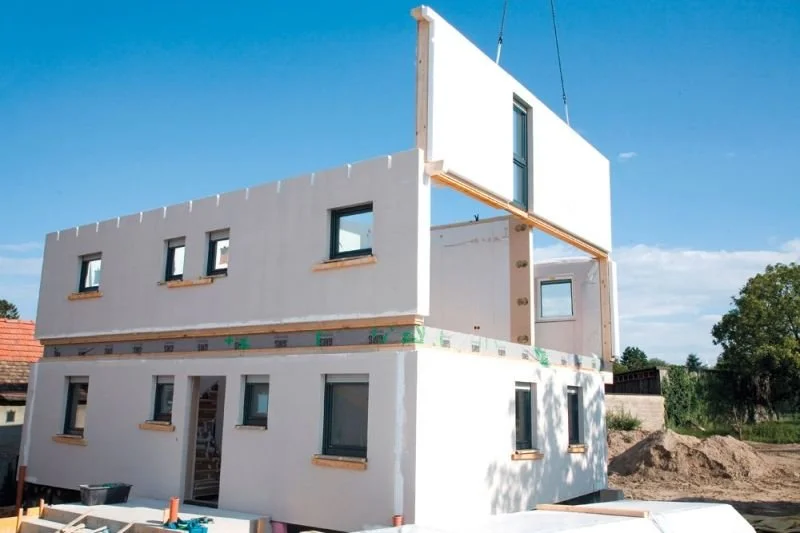
    Prefabricated houses are rapidly gaining popularity in Pakistan due to their fast construction, cost efficiency, and modern design flexibility. However, one critical factor that determines their comfort and long-term performance is proper insulation. Choosing the right insulation sheets for prefabricated houses ensures thermal comfort, energy efficiency, and durability in diverse climatic conditions.

    This guide explains how insulation sheets work in prefabricated homes, the best materials available, and why insulation is essential for prefabricated housing projects across Pakistan.

    Understanding Prefabricated Houses and Insulation Needs

    Prefabricated houses are manufactured off-site and assembled on location. Unlike traditional brick structures, prefab homes rely heavily on panels and lightweight materials. Because of this, insulation sheets play a vital role in regulating indoor temperature, reducing heat transfer, and improving overall livability.

    Without proper insulation, prefabricated homes can become excessively hot in summer and uncomfortably cold in winter.

    Why Insulation Sheets Are Essential for Prefab Homes

    Insulation sheets are not just an add-on for prefabricated houses; they are a core construction element. Their benefits include:

    • Reduced heat transfer through walls and roofs
    • Improved indoor temperature stability
    • Lower electricity consumption for cooling and heating
    • Enhanced comfort in extreme weather
    • Increased lifespan of prefabricated panels

    For regions with temperature variations, insulation becomes even more critical.

    Types of Insulation Sheets Used in Prefabricated Houses

    Different insulation materials are used based on climate, budget, and structural requirements. Common insulation sheets for prefabricated homes include:

    EPS Insulation Sheets

    EPS Foam

    Lightweight and economical, EPS sheets are widely used for wall and roof insulation in prefab structures.

    XPS Insulation Sheets

    Jumbolon Insulation Pipes in Pakistan

    XPS provides better moisture resistance and higher compressive strength, making it suitable for roofs and floors.

    Rockwool Insulation Sheets

    Rockwool offers both thermal and acoustic insulation, ideal for prefab homes near noisy environments.

    Polyethylene Foam Sheets

    Flexible and easy to install, these sheets are often used as supplementary insulation layers.

    Insulation Sheets for Prefabricated Houses Near Islamabad

    jumbolon Insulation for Metal Sheds

    Climate conditions around Islamabad demand insulation that performs well in both hot summers and cool winters. Using insulation sheets for prefabricated houses near Islamabad helps maintain indoor comfort while reducing dependency on air conditioning and heaters.

    Proper insulation also protects prefab structures from thermal stress caused by seasonal temperature fluctuations common in this region.

    Insulation Sheets for Prefabricated Houses in Pakistan

    Across the country, insulation sheets prefabricated houses in Pakistan are becoming a standard requirement rather than an optional feature. From northern cooler regions to hot southern cities, insulation solutions are customized based on local environmental conditions.

    Prefab housing projects in Pakistan increasingly rely on insulation sheets to meet energy efficiency expectations and modern construction standards.

    Thermal Performance and Energy Efficiency

    Insulation sheets reduce heat flow between indoor and outdoor environments. This directly impacts energy efficiency by:

    • Lowering cooling costs in summer
    • Retaining warmth during winter
    • Reducing load on HVAC systems
    • Improving overall energy performance of the house

    Energy-efficient prefabricated homes are more economical to operate and environmentally responsible.

    Installation Process in Prefabricated Houses

    Insulation sheets are usually installed within wall panels, roofing systems, or flooring assemblies during the manufacturing or on-site assembly stage. Precision installation ensures:

    • No thermal gaps
    • Proper sealing
    • Long-term performance
    • Structural compatibility

    Correct installation is just as important as selecting the right insulation material.

    Cost Considerations and Long-Term Value

    While insulation adds to the initial construction cost, it significantly reduces operational expenses over time. Lower electricity bills and reduced maintenance make insulation sheets a cost-effective investment for prefabricated houses.

    Over the lifespan of a prefab home, insulation delivers far greater savings than its upfront cost.

    Environmental and Comfort Benefits

    Beyond cost savings, insulation sheets contribute to:

    • Reduced carbon footprint
    • Sustainable housing solutions
    • Improved indoor comfort
    • Noise reduction in urban areas

    These benefits make insulated prefabricated houses suitable for residential, commercial, and temporary housing applications.

    Choosing the Right Insulation Sheets

    Selecting insulation depends on:

    • Local climate
    • Building design
    • Budget constraints
    • Moisture exposure
    • Required thermal performance

    Professional consultation ensures the best insulation solution for long-term performance.

    Conclusion

    Insulation sheets are a foundational component of modern prefabricated houses. They enhance comfort, improve energy efficiency, and protect structures from extreme weather. As prefabricated housing continues to grow in Pakistan, insulation is no longer optional—it is essential.

    Choosing the right insulation sheets ensures that prefabricated homes remain comfortable, efficient, and durable for years to come.

    FAQ’S

    Insulation sheets help prefabricated houses control heat transfer, reduce energy consumption, and maintain indoor comfort in both hot and cold weather conditions common in Pakistan.

    EPS, XPS, and Rockwool insulation sheets are commonly used in Pakistan due to their thermal efficiency, durability, and compatibility with prefabricated house structures.

    Yes, insulation sheets are highly suitable for prefabricated houses near Islamabad as they help manage seasonal temperature variations and improve energy efficiency year-round.

    Proper insulation minimizes heat gain and loss, reducing the need for air conditioning and heating, which significantly lowers electricity bills over time.

  • Thermal Conductivity Comparison: EPS, XPS, Rockwool

    Thermal Conductivity Comparison: EPS, XPS, Rockwool

    When selecting insulation for buildings, one technical factor plays a decisive role in performance: thermal conductivity. Understanding how different materials perform helps engineers, architects, and homeowners choose the most efficient insulation system. This guide presents a clear thermal conductivity comparison EPS XPS Rockwool, explaining how each material works and where it performs best.

    Understanding Thermal Conductivity in Insulation

    Thermopore Sheet Installation

    Thermal conductivity measures how easily heat flows through a material. Lower thermal conductivity means better insulation performance. Materials with low conductivity slow down heat transfer, keeping interiors cooler in summer and warmer in winter.

    This property directly affects:

    • Energy efficiency
    • Cooling and heating costs
    • Indoor comfort

    Overview of Common Insulation Materials

    The most widely used insulation materials in construction include:

    • EPS (Expanded Polystyrene)
    • XPS (Extruded Polystyrene)
    • Rockwool (Mineral Wool)

    Each material differs in structure, density, and heat resistance.

    EPS Foam – Structure and Thermal Performance

    EPS Foam

    EPS foam is manufactured by expanding polystyrene beads and fusing them together. The trapped air inside the beads provides insulation.

    Key Characteristics of EPS Foam

    • Lightweight
    • Cost-effective
    • Moderate thermal resistance
    • Higher water absorption than XPS

    EPS is commonly used in walls, roofs, and packaging. Interestingly, EPS foam surfboard cores also use similar material properties due to lightweight strength and buoyancy, though construction-grade EPS differs in density.

    XPS Foam – High-Performance Insulation

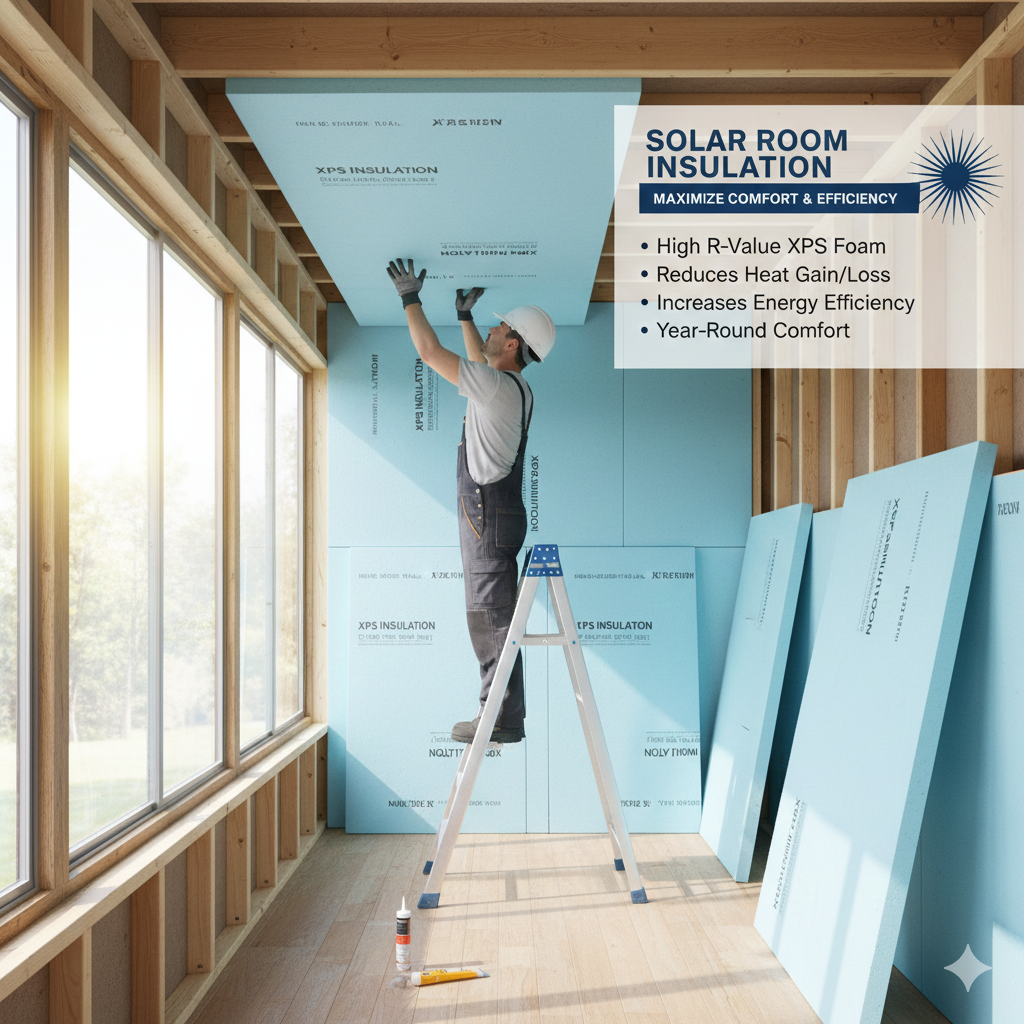
    Solar Room Insulation in Pakistan

    XPS foam is produced using an extrusion process, creating a closed-cell structure that improves strength and moisture resistance.

    Key Characteristics of XPS Foam

    • Lower thermal conductivity than EPS
    • High compressive strength
    • Excellent moisture resistance
    • Long service life

    Because of these properties, XPS is preferred in demanding environments such as foundations, roofs, and exposed insulation areas.

    Rockwool – Mineral-Based Thermal Control

    Soundproofing Material glasswool vs rockwool

    Rockwool is made from molten volcanic rock spun into fibers. Unlike foam-based insulation, rockwool is inorganic and fire-resistant.

    Key Characteristics of Rockwool

    • Stable thermal performance
    • Fire resistance
    • Sound absorption
    • Heavier than EPS and XPS

    While rockwool has slightly higher thermal conductivity compared to XPS, it offers additional benefits like acoustic insulation.

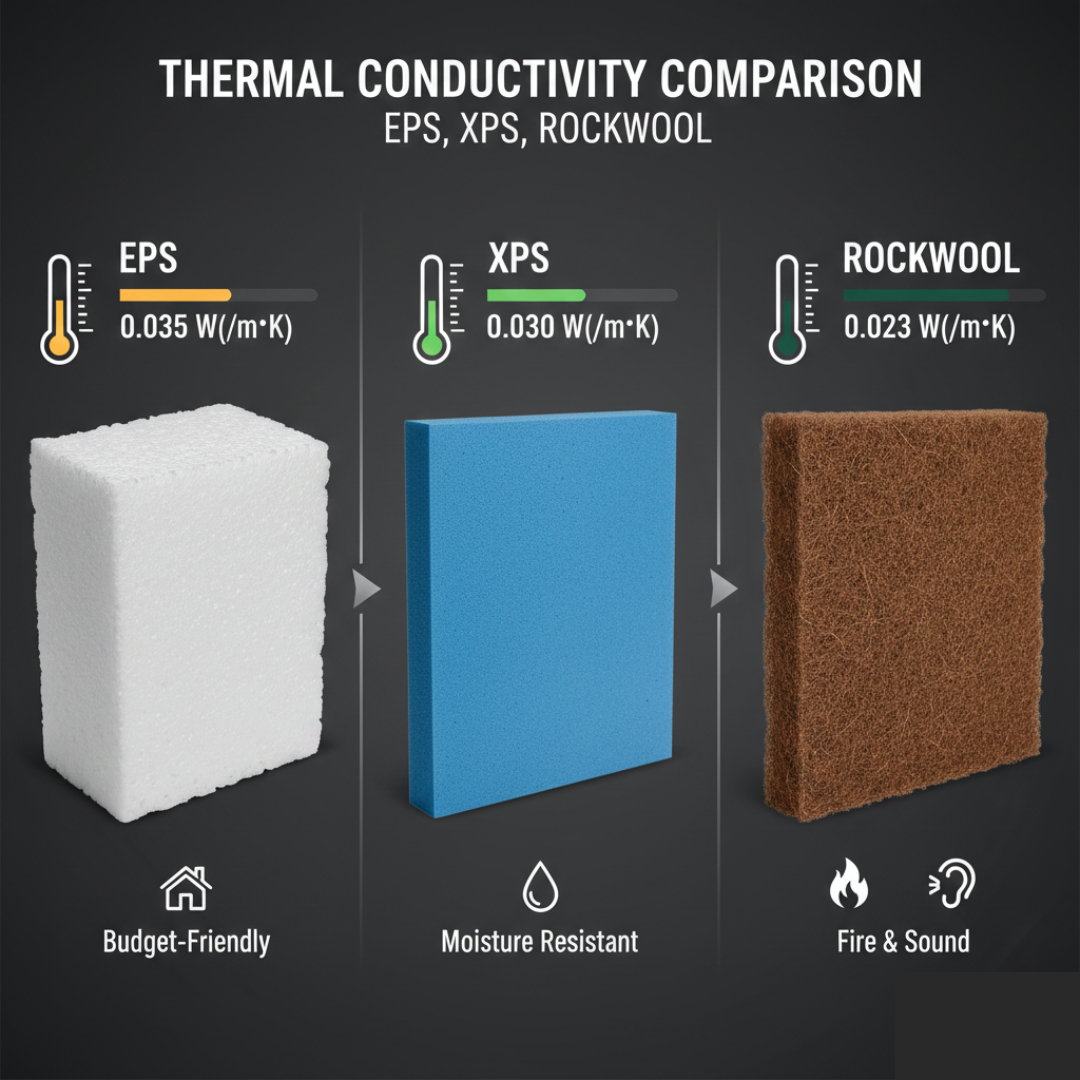
    Thermal Conductivity Comparison: EPS, XPS, Rockwool

    Below is a simplified comparison based on general performance ranges:

    MaterialThermal Conductivity (W/m·K)Moisture ResistanceStructural Strength
    EPSModerateMediumLow
    XPSLowHighHigh
    RockwoolModerateHighMedium

    This thermal conductivity comparison EPS XPS Rockwool shows why XPS is often selected where maximum thermal efficiency is required.

    EPS vs XPS R Value Explained

    R-value measures resistance to heat flow. Higher R-value means better insulation.

    When comparing EPS vs XPS R value:

    • XPS generally provides higher R-value per inch
    • EPS requires greater thickness to achieve similar performance

    This difference makes XPS vs EPS an important comparison in space-limited designs.

    How to Convert Thermal Conductivity to U Value

    Engineers often need to convert thermal conductivity to U value to evaluate overall building performance.

    • Thermal conductivity measures material performance
    • U-value measures heat loss through an entire building element

    Lower U-value indicates better insulation. Material thickness and layering directly affect the final U-value.

    Choosing the Right Material Based on Application

    EPS Foam Is Suitable

    • Budget-focused projects
    • Wall insulation
    • Lightweight applications

    XPS Foam Is Ideal

    • Roofs and foundations
    • High moisture areas
    • Space-constrained insulation

    Rockwool Is Preferred

    • Fire-sensitive environments
    • Acoustic insulation needs
    • Industrial and commercial buildings

    Final Thoughts

    Understanding insulation performance requires more than price comparison. A clear thermal conductivity comparison EPS XPS Rockwool highlights how each material behaves under real-world conditions. While EPS foam offers affordability, XPS foam delivers superior thermal resistance, and rockwool adds fire and sound control benefits.

    The right insulation choice depends on performance goals, environmental exposure, and building design.

    FAQ’S

    Among EPS, XPS, and rockwool, XPS foam generally has the lowest thermal conductivity. This means it offers better thermal resistance with less thickness compared to EPS foam and rockwool.

    To convert thermal conductivity to U value, divide the material’s thermal conductivity by its thickness and include all layers of the building element. A lower U value indicates better insulation performance.

    The main difference in XPS vs EPS lies in structure and performance. XPS has a closed-cell structure, higher compressive strength, better moisture resistance, and a higher R value than EPS.

    Yes, EPS foam is suitable for many building applications, especially walls and roofs where budget-friendly insulation is needed. However, for moisture-prone areas, XPS foam performs better.