
thermocol sheet price in pakistan

Tag: construction insulation services

  • Glasswool Roll Price in Pakistan: An Essential Buyer’s Guide for Thermal Insulation

    Glasswool Roll Price in Pakistan: An Essential Buyer’s Guide for Thermal Insulation

    The rising need for energy efficiency and comfortable indoor environments across Pakistan has made thermal insulation a key consideration for homeowners, builders, and industrial operators. Among the most popular and cost-effective solutions is glasswool insulation roll. If you are searching for the current glass wool insulation price in Pakistan, this comprehensive guide will break down the costs, factors affecting pricing, and essential buying tips.

    What is Glasswool Insulation and Why is it Popular in Pakistan?

    Glasswool Rolls in Pakistan

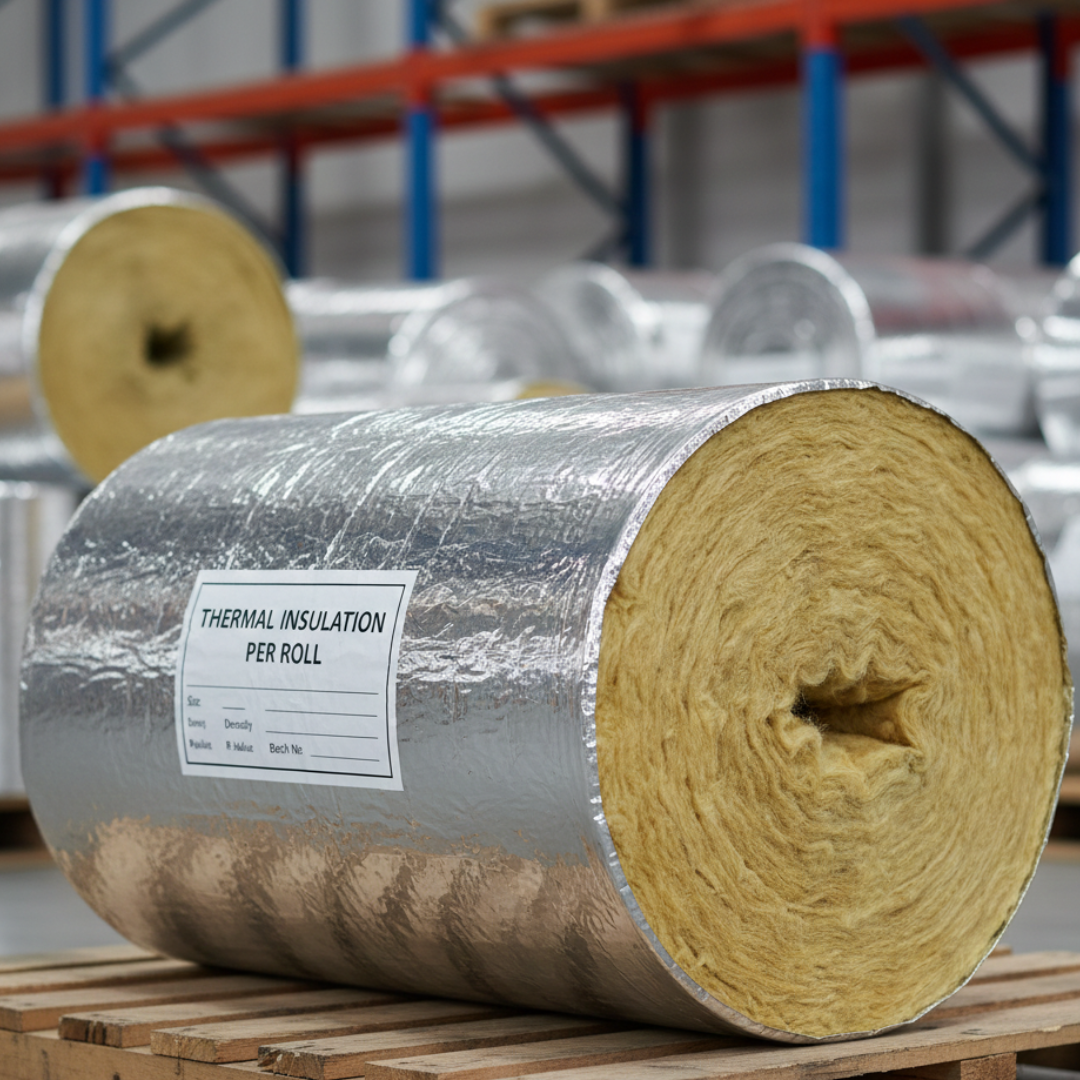
    Glasswool, also known as fiberglass or fiber glass wool, is an insulating material made from fine fibers of glass arranged into a wool-like texture. This structure traps small pockets of air, giving it exceptional thermal and acoustic insulation properties.

    In Pakistan’s diverse and often extreme climate—from the intense heat of Karachi and Lahore to the cold of the northern areas—glasswool rolls are widely favored due to several key benefits:

    • Excellent Thermal Performance: It effectively resists heat flow, reducing the energy needed for air conditioning in summer and heating in winter. This translates directly into lower electricity bills.
    • Superior Soundproofing: The dense, fibrous composition makes it an effective noise insulation material for walls, ceilings, and partitions.
    • Fire Resistance: Glasswool is generally non-combustible, adding a critical layer of safety to any structure.
    • Cost-Effectiveness: When compared to alternatives, the glass wool roll price in Pakistan offers a superior balance of performance and affordability.

    Current Glasswool Roll Price in Pakistan (2025 Estimate)

    The cost of fiber glass wool is not fixed and depends heavily on several specifications. However, based on current market trends and common product types, here is an estimated price breakdown:

    Product TypeThickness (Density)Estimated Price Range (PKR)Unit
    Standard Glasswool Roll (Unfaced)25mm (12-16 kg/m³)PKR 3,500 – PKR 4,500Per Roll (Approx. 40-48 sq. ft.)
    Glasswool Roll with FSK Facing50mm (16-24 kg/m³)PKR 6,000 – PKR 8,000Per Roll (Approx. 24-32 sq. ft.)
    Glasswool Roll Price per Square Foot25mm – 50mmPKR 55 – PKR 85Per Square Foot (Varies)
    Acoustic Glass Wool Slab50mm – 75mm (Higher Density)PKR 1,200 – PKR 1,800Per Square Meter

    Note: These prices are estimates for late 2025 and are subject to fluctuation based on currency rates, import duties, and supplier location (Karachi, Lahore, Islamabad).

    Factors Affecting Glass Wool Insulation Price

    Understanding the variables that influence the cost will help you choose the most budget-friendly option for your project.

    1. Thickness and Density

    This is the most crucial factor determining the glass wool blanket’s performance and cost.

    • Thickness: Rolls are commonly available in 25mm (1-inch) and 50mm (2-inch) thicknesses. Thicker rolls provide a higher R-value (thermal resistance) but are naturally more expensive.
    • Density: Measured in kilograms per cubic meter ($\text{kg/m}^3$), typical densities range from 12 $\text{kg/m}^3$ for light roof insulation to 48 $\text{kg/m}^3$ for high-performance sound insulation. Higher-density rolls cost more due to the material volume.

    2. Facing/Vapor Barrier

    Glasswool can be unfaced (plain) or faced with a protective layer, which significantly impacts the price of glass wool in Pakistan.

    • Unfaced: Cheapest option, suitable for cavity walls where moisture is not a major concern.
    • FSK (Foil Scrim Kraft): A foil layer acts as an excellent vapor barrier, essential for roofing and HVAC ducts in humid climates. This facing increases the price.
    • Vinyl/WMP-VR: A white, vinyl-faced option often used for visible indoor applications where a clean look and added resistance are desired.

    3. Supplier and Brand

    Whether you opt for locally manufactured products or international brands like KIMMCO, Afico, or Izocam will affect the cost. Local manufacturers often provide the best glass wool price in Pakistan, especially for bulk orders, as they save on import duties.

    4. Market Dynamics

    Like all construction materials, the price is influenced by global energy costs (which impact the manufacturing process) and regional supply-demand. For the most accurate quote, it’s best to contact a trusted insulation material supplier directly.

    Where to Buy and Installation Tips
    Glasswool Insulation in Pakistan

    Finding a reliable supplier is key to ensuring you get high-quality material at a competitive rate. Major cities like Karachi, Lahore, and Islamabad have numerous distributors catering to residential and industrial needs.

    Where to Buy:

    • HVAC and Industrial Suppliers: These firms often stock a variety of densities and facings, including specialized fiberglass thermal insulation blanket products for ductwork.
    • Large Hardware Stores: Some large construction material retailers carry standard rolls for residential projects.
    • Online Marketplaces: For smaller projects or price comparison, online platforms can be a good starting point.

    Installation Safety & Technique:

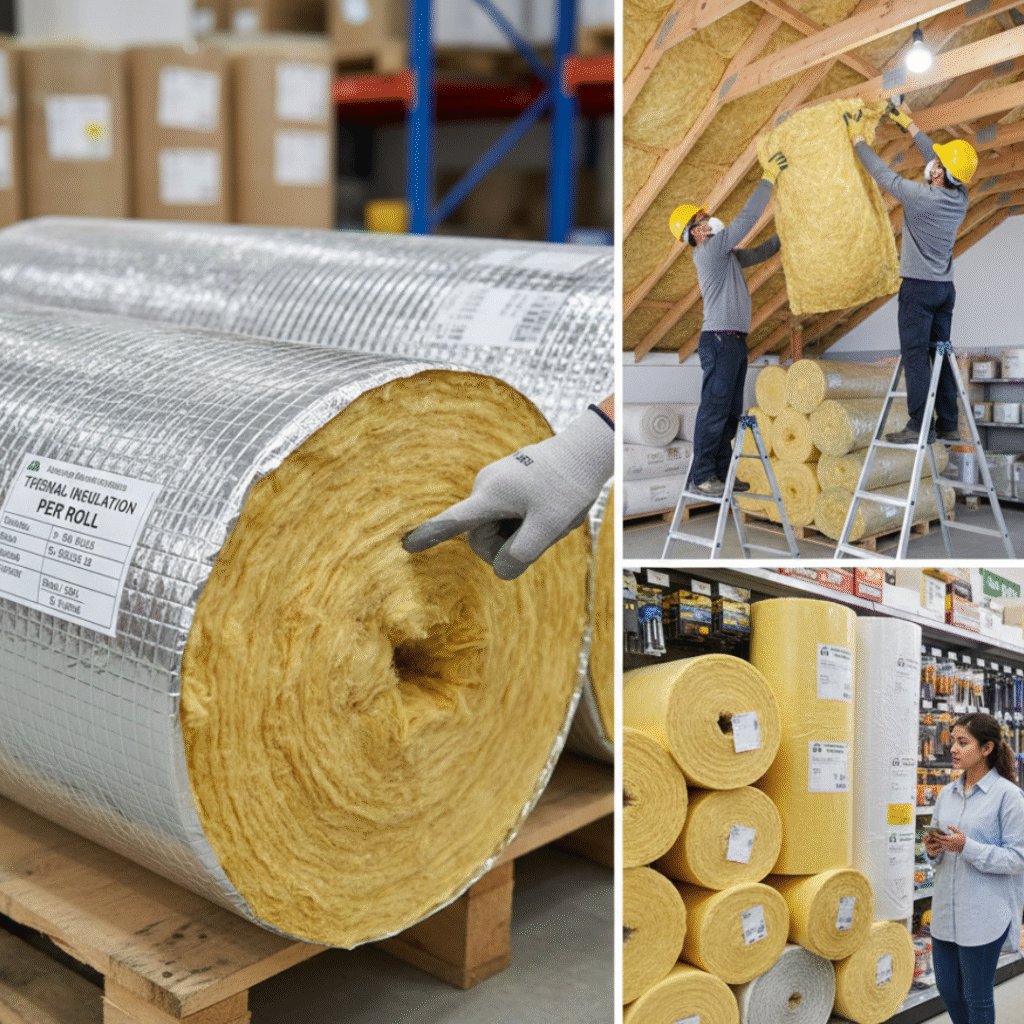
    Glasswool insulation should be handled with care. Always wear gloves, eye protection, and a mask to prevent irritation from glass fibers. For large-scale projects, consulting an experienced glasswool insulation contractor is recommended to ensure correct installation and maximize energy savings.

    Conclusion: Making an Informed Insulation Investment

    The glasswool roll price in Pakistan remains highly competitive, establishing it as one of the most effective and affordable ways to manage thermal and acoustic environments in any building project. By carefully assessing your needs—primarily the required thickness, density, and facing—you can select the ideal heat insulation material that delivers long-term energy savings and enhanced indoor comfort. Don’t view the cost as an expense, but as a critical investment in your property’s value and sustainability.

    FAQ’S

    The price of glasswool rolls depends on factors such as thickness, density, roll size (length and width), brand or manufacturer, and whether it has additional facing (e.g., foil-faced, mesh-faced). Transportation and regional demand also affect final retail prices.

    Prices vary depending on specs — for standard density rolls (e.g., 25–50 mm thickness) typical in ceiling or wall insulation, glasswool rolls can range roughly from PKR 1,500 to PKR 4,500 per roll. Heavier-density or thicker rolls (used for more intensive thermal or acoustic insulation) tend to be more expensive.
    (Note: Actual prices fluctuate based on market and supplier.)

    You can buy glasswool rolls from building materials suppliers, insulation-specific dealers, and construction-material markets. Prices often vary by city — metropolitan areas like Karachi, Lahore, Islamabad may have more supply and slightly different pricing due to logistics and competition.

    Not always. Performance depends on correct density and thickness for your application rather than price alone. A moderately priced roll with proper density and correct installation can outperform a costly, but mismatched roll. Evaluate technical specifications (density, R-value, thickness) for best value.

  • Jumbolon vs. EPS Sheet: Which Is the Better Insulation Choice?

    Jumbolon vs. EPS Sheet: Which Is the Better Insulation Choice?

    Choosing the right insulation material is a critical decision for any construction project. It impacts everything from long-term energy costs to the structural integrity and comfort of the building. Two common choices in the rigid foam insulation market are Jumbolon sheets vs EPS (Expanded Polystyrene) sheets. While both are lightweight, foam-based materials, they are fundamentally different in composition, properties, and overall performance.

    This comprehensive guide breaks down the key differences to help you determine which material—Jumbolon or EPS sheet—is the superior option for your specific application.

    Understanding the Materials: Jumbolon vs EPS Sheet

    XPS Vs EPS Sheet

    The core difference lies in their manufacturing process and material classification.

    1. Jumbolon (Extruded Polystyrene – XPS)

    Jumbolon is a popular brand name for Extruded Polystyrene (XPS) foam insulation. It is manufactured through a continuous extrusion process that results in a unique structure.

    • Structure: Closed-cell, homogenous, and uniform. This tight, non-interconnected cell structure is key to its superior properties.
    • Key Advantage: The closed-cell structure makes it an extremely effective moisture-resistant foam and accounts for its high compressive strength.

    2. EPS Sheet (Expanded Polystyrene)

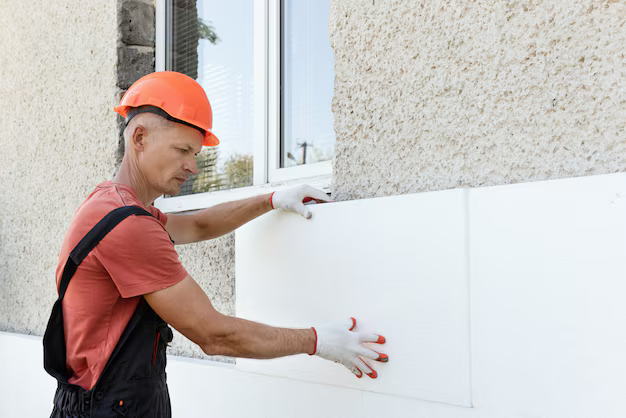
    Expanded Polystyrene (EPS) sheets, sometimes colloquially referred to as Thermopore or Thermocol, are made by expanding polystyrene beads with steam, fusing them into a solid block, and then cutting the block into sheets.

    Key Advantage: It is highly cost-effective and lightweight.

    Structure: Closed-cell, but the cells are not completely interconnected; there are tiny voids between the fused beads.

    Performance Comparison: Jumbolon vs. EPS Sheet

    XPS Sheet Vs EPS Sheet

    The performance of an insulating material is measured by several key criteria, including thermal efficiency, resistance to moisture, and long-term durability.

    1. Thermal Insulation (R-Value)

    The R-value measures a material’s resistance to heat flow. A higher R-value indicates better thermal resistance and insulating capability.

    FeatureJumbolon (XPS)EPS Sheet (Expanded Polystyrene)Verdict
    R-Value per InchGenerally $\approx 5$Generally $\approx 3.6 – 4.2$Jumbolon (XPS) offers a significantly higher R-value per inch, providing superior thermal performance in thinner applications.
    Long-Term PerformanceMaintains R-value exceptionally well over time.Can see a slight drop in R-value if exposed to moisture over the long term.Jumbolon (XPS) maintains efficiency better.

    2. Moisture Resistance and Water Absorption

    Water absorption is critical, as a wet insulator loses its R-value rapidly.

    • Jumbolon (XPS): Due to its fine, uniform closed-cell structure, it is highly hydrophobic. It has very low water absorption (often $< 0.3\%$ by volume, even when submerged) and is an excellent water-resistant insulation choice, making it ideal for below-grade applications and areas prone to dampness.
    • EPS Sheet: While largely closed-cell, the spaces between the fused beads can allow water vapor to permeate and, in prolonged exposure to moisture, it can absorb more water (up to $2-3\%$ by volume).

    Verdict: Jumbolon (XPS) is the clear winner for moisture resistance, ensuring stable performance in humid or wet environments.

    3. Compressive Strength

    Compressive strength is the material’s ability to withstand loads without deforming or failing.

    • Jumbolon (XPS): Features a high compressive strength (often $250 – 350$ KPa or more). Its dense, uniform structure makes it ideal for bearing heavy loads.
    • EPS Sheet: Compressive strength is good but varies significantly with the density grade. It typically performs well but is generally less robust than XPS at comparable densities.

    Verdict: Jumbolon (XPS) is better suited for applications under high load or pressure, such as floor insulation and roof insulation.

    Common Applications of Jumbolon Vs EPS Sheet

    The best choice often depends on the specific job.

    ApplicationJumbolon (XPS) RecommendationEPS Sheet Recommendation
    Below-Grade Insulation (Foundations, Slabs)Strongly Recommended (Due to high moisture resistance and compressive strength).Not ideal for long-term below-grade use where persistent moisture is a factor.
    Wall Insulation (Cavity or Exterior)Excellent choice (High R-value, durability).Good choice (Cost-effective and lightweight for above-grade walls).
    Roof Insulation (Flat or Pitched)Recommended (Withstands environmental stress and traffic loads better).Suitable for light-load roof systems where cost is the primary factor.
    General Packaging/Void FillOverkill, generally too expensive.Highly Recommended (Most cost-effective foam for non-structural, protective use).

    Cost-Effectiveness and Durability

    While Jumbolon provides better performance, the final decision often comes down to budget and long-term value.

    • Initial Cost: The Expanded Polystyrene (EPS sheet) typically has a lower insulation material cost per square foot than Jumbolon (XPS). It is the more budget-friendly option upfront.
    • Long-Term Value: Jumbolon’s long-lasting insulation properties—its superior moisture resistance and higher R-value retention—mean it can offer better lifetime value and greater energy efficiency over the decades, leading to lower utility bills. Its durability also reduces the risk of material replacement.

    Conclusion: Which Is Better Jumbolon Vs EPS Sheet?

    There is no single “better” material; there is only the right material for the job.

    • Choose Jumbolon (XPS) when:
      • You need the highest possible thermal resistance in a limited thickness.
      • The application involves persistent moisture, such as a basement, foundation, or water tank insulation.
      • The material will be subject to heavy loads, such as in floor insulation or a trafficable roof.
    • Choose EPS Sheet when:
      • The budget is the primary constraint.
      • The application is for above-grade walls where it will be protected from direct water exposure.
      • The material is for lightweight use like packaging or a quick, non-structural heat proofing solution.

    In the final analysis, for applications requiring long-lasting insulation and maximum thermal performance under challenging conditions, the superior compressive strength and moisture-resistant foam properties of Jumbolon (XPS) make it the clear technical winner, justifying its higher insulation material cost.

    FAQ’S

    The main difference lies in how they are manufactured. Jumbolon (XPS) is made through an extrusion process, resulting in a closed-cell, highly uniform structure with no internal voids. This structure gives it superior moisture resistance and high compressive strength. EPS sheets are made by expanding and fusing beads, resulting in a closed-cell structure but with tiny air voids between the fused beads, which allows for slightly higher water vapor permeability and absorption over time.

    Yes, Jumbolon (XPS) is highly recommended for basement, foundation, and other below-grade insulation applications. This is because these areas are prone to constant moisture exposure. Jumbolon’s extremely low water absorption and high moisture-resistant foam properties ensure its R-value remains stable and its performance is not compromised by groundwater or damp soil, unlike EPS, which can absorb more water over the long term.

    Jumbolon (XPS) generally offers better long-term performance and R-value retention. While both materials have high initial R-values, Jumbolon’s robust, closed-cell structure is inherently resistant to moisture ingress. Since water infiltration is the primary cause of R-value degradation in foam insulation, the superior water resistance of Jumbolon ensures it maintains its specified thermal resistance over the lifespan of the building more reliably than standard EPS sheets.

    An EPS sheet is the most cost-effective foam option when the application is above-grade and not exposed to constant moisture or high structural loads. It is a great budget-friendly choice for non-structural applications like general wall insulation, temporary heat proofing, or protective packaging where its slightly lower R-value per inch and higher permeability are acceptable trade-offs for a lower insulation material cost.

  • XPS Sheet Insulation

    XPS Sheet Insulation

    Introduction: What Makes XPS Sheet Insulation a Construction Staple?

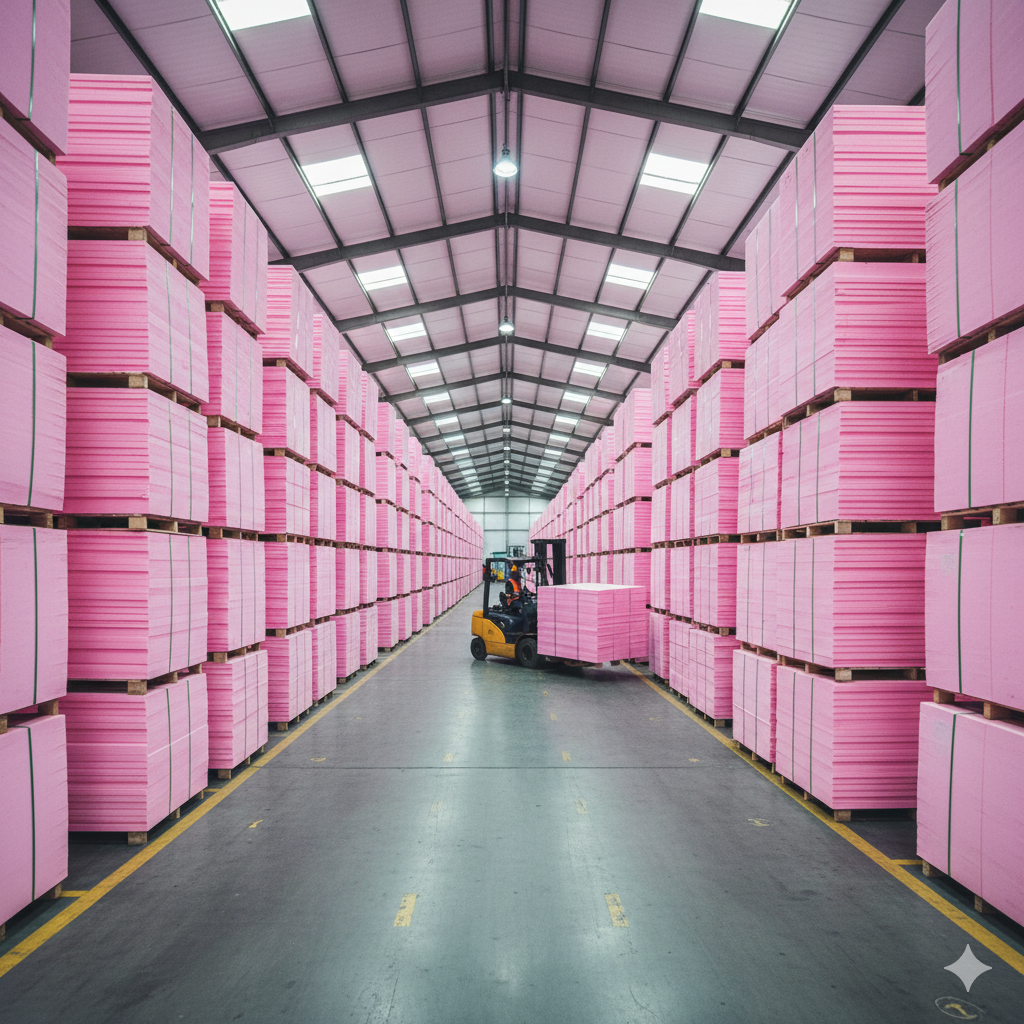
    In the world of building materials, few products achieve. The combination of durability and thermal performance offered by XPS Sheet Insulation, or Extruded Polystyrene Foam. Easily recognized by its distinct pink, blue, or green color. Expanded Polystyrene (EPS), due to a specialized manufacturing process called extrusion.

    This process results in a material with a unique closed-cell structure that is uniform, dense, and remarkably robust. This density is the fundamental reason why XPS is the material of choice for the most challenging insulation applications in modern construction. Its superior qualities ensure buildings maintain exceptional energy efficiency and structural integrity over the decades.

    The Critical Advantage of Moisture Resistance

    The single greatest threat to insulation performance is water. When traditional fibrous or open-cell insulation materials absorb moisture, their thermal resistance plummets, leading to energy waste, mold growth, and structural issues. This is where the closed-cell structure of XPS offers a significant, non-negotiable advantage.

    The non-interconnected foam cells of Extruded Polystyrene Foam physically repel water, resulting in extremely low water absorption. This superior moisture resistance ensures that the material maintains its insulating power even when directly exposed to damp or wet conditions, such as continuous contact with soil or heavy rain. This durability is the primary factor driving its selection for submerged or high-humidity environments.

    High Compressive Strength and Load-Bearing Applications

    In many areas of a building envelope, insulation is required to bear significant weight without deforming. Standard foam insulations may fail under pressure, but XPS is specifically engineered to resist crushing, featuring a consistently high compressive strength.

    The tight cellular structure gives XPS Sheet Insulation a remarkable load-bearing capacity. This property makes it indispensable for applications where heavy static or dynamic loads are present:

    • Under Slabs: Insulating concrete floors and rafts where the material must support the entire weight of the slab, finished floor, and live loads.
    • Parking Decks: Used in commercial projects beneath pavers or asphalt where vehicle traffic demands maximum structural stability.

    This resistance to pressure guarantees the long-term thermal performance of the assembly, preventing costly structural movement and cold spots that arise from compromised insulation.

    Applications Where XPS Excels – Below-Grade and Inverted Systems

    Jumbolon Board in Pakistan

    The unique properties of Extruded Polystyrene Foam make it the undisputed champion for specific, demanding installation types.

    Below-Grade Applications and Foundation Walls

    Insulating the exterior of foundation walls and basements is known as below-grade applications. This environment is challenging because the insulation is constantly exposed to soil moisture, hydrostatic pressure, and seasonal freezing/thawing cycles. The moisture resistance and high compressive strength of XPS are perfectly suited here. Installing XPS Sheet Insulation around the foundation helps prevent thermal bridging and keeps the basement space warm and dry, significantly improving the home’s overall energy efficiency. It functions as essential perimeter insulation, protecting the concrete from extreme temperature swings.

    Inverted Roof Systems

    A revolutionary application where XPS is mandatory is the inverted roof systems (or protected membrane roofs). In this design, the rigid foam boards are placed above the waterproofing membrane, rather than below it. This protects the membrane from extreme temperature fluctuations and damaging UV rays, thereby extending the waterproofing system’s life. The XPS boards must have enough strength and moisture resistance to withstand standing water, foot traffic, and the weight of ballast (gravel or paving stones) without absorbing water or deforming.

    Performance Metrics and Long-Term Value

    When evaluating any insulation, its thermal resistance and stability over time are key indicators of its value.

    R-Value Stability

    XPS insulation typically boasts an initial R-value of around R-5 per inch of thickness. However, which is generally higher than standard EPS. However, one key advantage often cited is its R-value stability. While some foam insulation boards may experience a slight long-term reduction in R-value due to the diffusion of the blowing agent. The dense, closed-cell structure of XPS is designed to minimize this effect, providing reliable long-term thermal performance. This predictability is crucial for architects and builders calculating lifetime energy efficiency savings.

    The Cost-Benefit of Durability

    While XPS Sheet Insulation may have a higher initial material cost compared to standard EPS or fiberglass. Its superior durability, moisture resistance, and minimal need for replacement in tough environments like below-grade applications translate to lower long-term thermal performance costs. By effectively insulating foundation walls and high-load areas. XPS ensures the structural health and thermal integrity of the building for its entire lifespan. The investment in robust perimeter insulation and high load-bearing capacity foam dramatically reduces future maintenance expenses.

    Conclusion: The Right Tool for the Toughest Jobs

    XPS Sheet Insulation is a premium, high-performance material indispensable for specialized construction challenges. Its unbeatable moisture resistance and exceptional high compressive strength. Moreover, make it the logical choice for inverted roof systems and all below-grade applications, including insulating foundation walls. By utilizing its superior R-value stability and robust load-bearing capacity for crucial perimeter insulation. Furthermore, builders achieve unparalleled energy efficiency and ensure the long-term thermal performance of the entire structure. For demanding environments, Extruded Polystyrene Foam is the reliable, durable solution.

    FAQ’S

    While XPS is known for its excellent initial thermal performance (around R-5 per inch), it does experience a gradual reduction in R-value over time, a phenomenon known as thermal drift. This occurs because the initial captive blowing agent within the material’s closed-cell structure slowly escapes and is replaced by air. However, the dense structure of Extruded Polystyrene Foam causes this drift to happen at a slower rate compared to some other foam boards. Manufacturers are required to report the Long-Term Thermal Performance (LTTR), which represents the stable R-value expected over the product’s lifespan, ensuring the building’s calculated energy efficiency is met.

    Yes, XPS is the preferred rigid foam for virtually all below-grade applications, including foundations and areas with fluctuating water tables. Its manufacturing process creates a closed-cell structure that provides superior moisture resistance, preventing water from being wicked up or absorbed into the insulation core. This ensures that the material’s insulating capacity is maintained even when the perimeter insulation around the foundation walls is submerged or subjected to constant dampness. Its high compressive strength further allows it to resist pressure from soil and water without deforming.

    The high compressive strength is crucial when XPS is used beneath concrete slabs, floors, or in inverted roof systems. This exceptional load-bearing capacity means the Extruded Polystyrene Foam can withstand the immense weight of the concrete and subsequent live loads (people, vehicles, equipment) without crushing or permanently deflecting. Maintaining its thickness is vital, as any compression would compromise the entire assembly and negatively impact the long-term thermal performance of the slab insulation, leading to cold spots and thermal bridging.

    Generally, no. While the distinct coloration (often pink, blue, or green) is the primary way to visually identify XPS Sheet Insulation from white EPS, the color typically only indicates the manufacturer or brand (e.g., pink for one major brand, blue for another). The core performance properties—like the R-value stability, closed-cell structure, and high compressive strength—are governed by the product’s type (e.g., Type IV, Type VI) and thickness, which should be verified on the product label, not assumed based on color.