
thermocol sheet price in pakistan

Tag: EPS sheet

  • Jumbolon vs. EPS Sheet: Which Is the Better Insulation Choice?

    Jumbolon vs. EPS Sheet: Which Is the Better Insulation Choice?

    Choosing the right insulation material is a critical decision for any construction project. It impacts everything from long-term energy costs to the structural integrity and comfort of the building. Two common choices in the rigid foam insulation market are Jumbolon sheets vs EPS (Expanded Polystyrene) sheets. While both are lightweight, foam-based materials, they are fundamentally different in composition, properties, and overall performance.

    This comprehensive guide breaks down the key differences to help you determine which material—Jumbolon or EPS sheet—is the superior option for your specific application.

    Understanding the Materials: Jumbolon vs EPS Sheet

    XPS Vs EPS Sheet

    The core difference lies in their manufacturing process and material classification.

    1. Jumbolon (Extruded Polystyrene – XPS)

    Jumbolon is a popular brand name for Extruded Polystyrene (XPS) foam insulation. It is manufactured through a continuous extrusion process that results in a unique structure.

    • Structure: Closed-cell, homogenous, and uniform. This tight, non-interconnected cell structure is key to its superior properties.
    • Key Advantage: The closed-cell structure makes it an extremely effective moisture-resistant foam and accounts for its high compressive strength.

    2. EPS Sheet (Expanded Polystyrene)

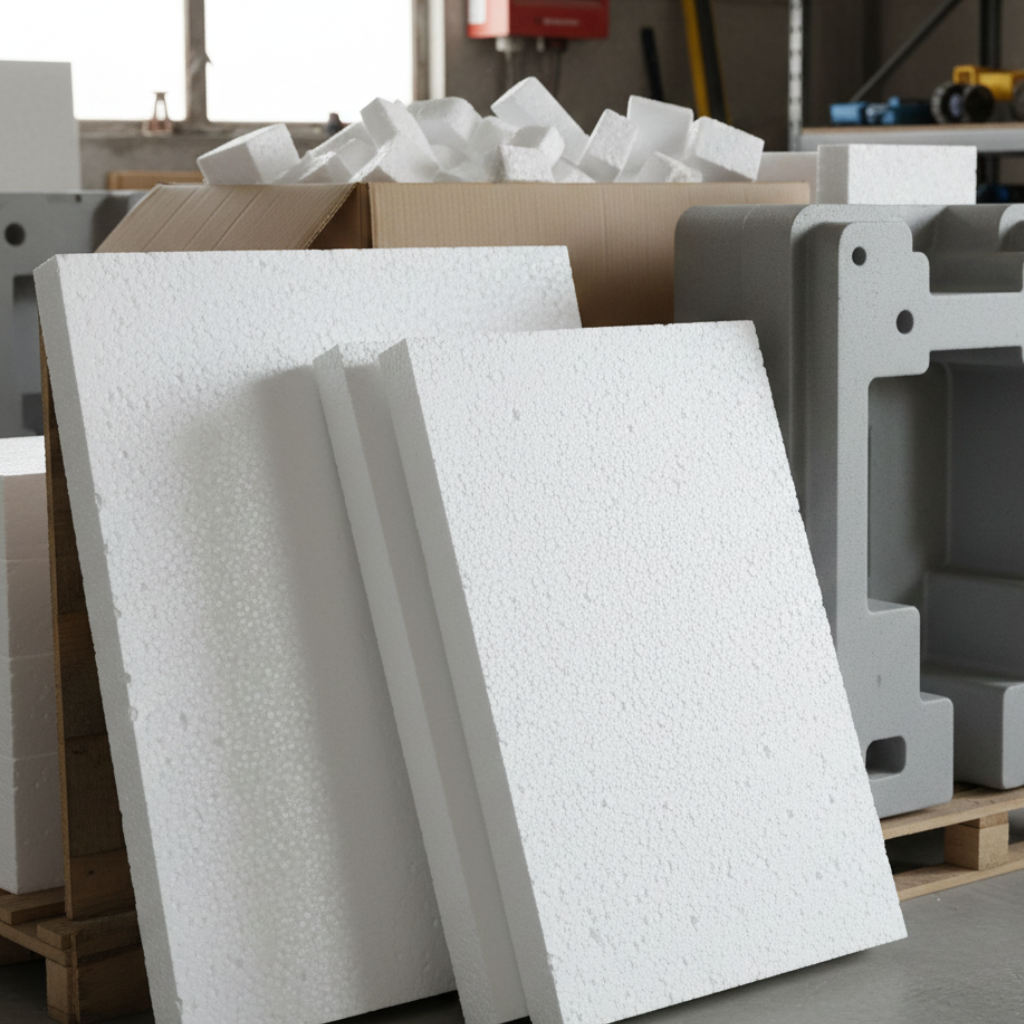
    Expanded Polystyrene (EPS) sheets, sometimes colloquially referred to as Thermopore or Thermocol, are made by expanding polystyrene beads with steam, fusing them into a solid block, and then cutting the block into sheets.

    Key Advantage: It is highly cost-effective and lightweight.

    Structure: Closed-cell, but the cells are not completely interconnected; there are tiny voids between the fused beads.

    Performance Comparison: Jumbolon vs. EPS Sheet

    XPS Sheet Vs EPS Sheet

    The performance of an insulating material is measured by several key criteria, including thermal efficiency, resistance to moisture, and long-term durability.

    1. Thermal Insulation (R-Value)

    The R-value measures a material’s resistance to heat flow. A higher R-value indicates better thermal resistance and insulating capability.

    FeatureJumbolon (XPS)EPS Sheet (Expanded Polystyrene)Verdict
    R-Value per InchGenerally $\approx 5$Generally $\approx 3.6 – 4.2$Jumbolon (XPS) offers a significantly higher R-value per inch, providing superior thermal performance in thinner applications.
    Long-Term PerformanceMaintains R-value exceptionally well over time.Can see a slight drop in R-value if exposed to moisture over the long term.Jumbolon (XPS) maintains efficiency better.

    2. Moisture Resistance and Water Absorption

    Water absorption is critical, as a wet insulator loses its R-value rapidly.

    • Jumbolon (XPS): Due to its fine, uniform closed-cell structure, it is highly hydrophobic. It has very low water absorption (often $< 0.3\%$ by volume, even when submerged) and is an excellent water-resistant insulation choice, making it ideal for below-grade applications and areas prone to dampness.
    • EPS Sheet: While largely closed-cell, the spaces between the fused beads can allow water vapor to permeate and, in prolonged exposure to moisture, it can absorb more water (up to $2-3\%$ by volume).

    Verdict: Jumbolon (XPS) is the clear winner for moisture resistance, ensuring stable performance in humid or wet environments.

    3. Compressive Strength

    Compressive strength is the material’s ability to withstand loads without deforming or failing.

    • Jumbolon (XPS): Features a high compressive strength (often $250 – 350$ KPa or more). Its dense, uniform structure makes it ideal for bearing heavy loads.
    • EPS Sheet: Compressive strength is good but varies significantly with the density grade. It typically performs well but is generally less robust than XPS at comparable densities.

    Verdict: Jumbolon (XPS) is better suited for applications under high load or pressure, such as floor insulation and roof insulation.

    Common Applications of Jumbolon Vs EPS Sheet

    The best choice often depends on the specific job.

    ApplicationJumbolon (XPS) RecommendationEPS Sheet Recommendation
    Below-Grade Insulation (Foundations, Slabs)Strongly Recommended (Due to high moisture resistance and compressive strength).Not ideal for long-term below-grade use where persistent moisture is a factor.
    Wall Insulation (Cavity or Exterior)Excellent choice (High R-value, durability).Good choice (Cost-effective and lightweight for above-grade walls).
    Roof Insulation (Flat or Pitched)Recommended (Withstands environmental stress and traffic loads better).Suitable for light-load roof systems where cost is the primary factor.
    General Packaging/Void FillOverkill, generally too expensive.Highly Recommended (Most cost-effective foam for non-structural, protective use).

    Cost-Effectiveness and Durability

    While Jumbolon provides better performance, the final decision often comes down to budget and long-term value.

    • Initial Cost: The Expanded Polystyrene (EPS sheet) typically has a lower insulation material cost per square foot than Jumbolon (XPS). It is the more budget-friendly option upfront.
    • Long-Term Value: Jumbolon’s long-lasting insulation properties—its superior moisture resistance and higher R-value retention—mean it can offer better lifetime value and greater energy efficiency over the decades, leading to lower utility bills. Its durability also reduces the risk of material replacement.

    Conclusion: Which Is Better Jumbolon Vs EPS Sheet?

    There is no single “better” material; there is only the right material for the job.

    • Choose Jumbolon (XPS) when:
      • You need the highest possible thermal resistance in a limited thickness.
      • The application involves persistent moisture, such as a basement, foundation, or water tank insulation.
      • The material will be subject to heavy loads, such as in floor insulation or a trafficable roof.
    • Choose EPS Sheet when:
      • The budget is the primary constraint.
      • The application is for above-grade walls where it will be protected from direct water exposure.
      • The material is for lightweight use like packaging or a quick, non-structural heat proofing solution.

    In the final analysis, for applications requiring long-lasting insulation and maximum thermal performance under challenging conditions, the superior compressive strength and moisture-resistant foam properties of Jumbolon (XPS) make it the clear technical winner, justifying its higher insulation material cost.

    FAQ’S

    The main difference lies in how they are manufactured. Jumbolon (XPS) is made through an extrusion process, resulting in a closed-cell, highly uniform structure with no internal voids. This structure gives it superior moisture resistance and high compressive strength. EPS sheets are made by expanding and fusing beads, resulting in a closed-cell structure but with tiny air voids between the fused beads, which allows for slightly higher water vapor permeability and absorption over time.

    Yes, Jumbolon (XPS) is highly recommended for basement, foundation, and other below-grade insulation applications. This is because these areas are prone to constant moisture exposure. Jumbolon’s extremely low water absorption and high moisture-resistant foam properties ensure its R-value remains stable and its performance is not compromised by groundwater or damp soil, unlike EPS, which can absorb more water over the long term.

    Jumbolon (XPS) generally offers better long-term performance and R-value retention. While both materials have high initial R-values, Jumbolon’s robust, closed-cell structure is inherently resistant to moisture ingress. Since water infiltration is the primary cause of R-value degradation in foam insulation, the superior water resistance of Jumbolon ensures it maintains its specified thermal resistance over the lifespan of the building more reliably than standard EPS sheets.

    An EPS sheet is the most cost-effective foam option when the application is above-grade and not exposed to constant moisture or high structural loads. It is a great budget-friendly choice for non-structural applications like general wall insulation, temporary heat proofing, or protective packaging where its slightly lower R-value per inch and higher permeability are acceptable trade-offs for a lower insulation material cost.

  • EPS Sheet for Industrial Machinery Packaging

    EPS Sheet for Industrial Machinery Packaging

    The Challenge: Protecting Assets Worth Millions in Transit

    Moving industrial equipment—be it specialized robotics, delicate electronic control units, or large engine components—is an exercise in high-stakes logistics. These assets represent significant capital investment, and the journey from the factory floor to the installation site is fraught with risks: rough handling, sudden impacts, temperature extremes, and moisture exposure. Moreover, a failure in packaging can lead to catastrophic transit damage, resulting in costly delays, repairs, and reputational harm.

    Furthermore, this is where EPS sheet for industrial machinery packaging steps in as the most reliable, practical, and cost-effective solution. Known globally as Expanded Polystyrene Foam, Moreover, EPS offers a unique suite of properties that make it ideally suited for the rigorous demands of industrial shipping.

    The Science of Protection – Shock and Vibration Control

    The primary function of industrial packaging is to neutralize the kinetic energy generated during transport. EPS excels at this job due to its intrinsic cellular structure.

    Superior Shock Absorption

    Expanded Polystyrene Foam is composed of millions of tiny, closed cells filled with air. When subjected to sudden force or impact, these air pockets compress and deform, distributing the load over a larger area and absorbing the energy. This remarkable shock absorption capability is essential for safeguarding sensitive components within heavy machinery from drops, jolts, and collisions. The material effectively acts as a crumple zone, dissipating impact energy before it reaches the delicate equipment.

    Unmatched Vibration Dampening

    Beyond single impacts, machinery is constantly subjected to sustained, low-level vibration from truck engines, rail lines, or ship movement. This continuous shaking can loosen fasteners, damage soldered joints, and cause electronic components to fail. Moreover, the viscoelastic properties of EPS provide excellent vibration dampening, isolating the machinery from these harmful frequencies. By reducing resonant vibrations, the lifespan of the packaged asset is preserved, ensuring it arrives ready for immediate operation and reducing the likelihood of hidden transit damage.

    Precision Engineering and Load Management

    Generic packaging cannot protect complex industrial equipment. The effectiveness of EPS is maximized through engineering precise, functional designs.

    Custom-Fit Packaging Solutions

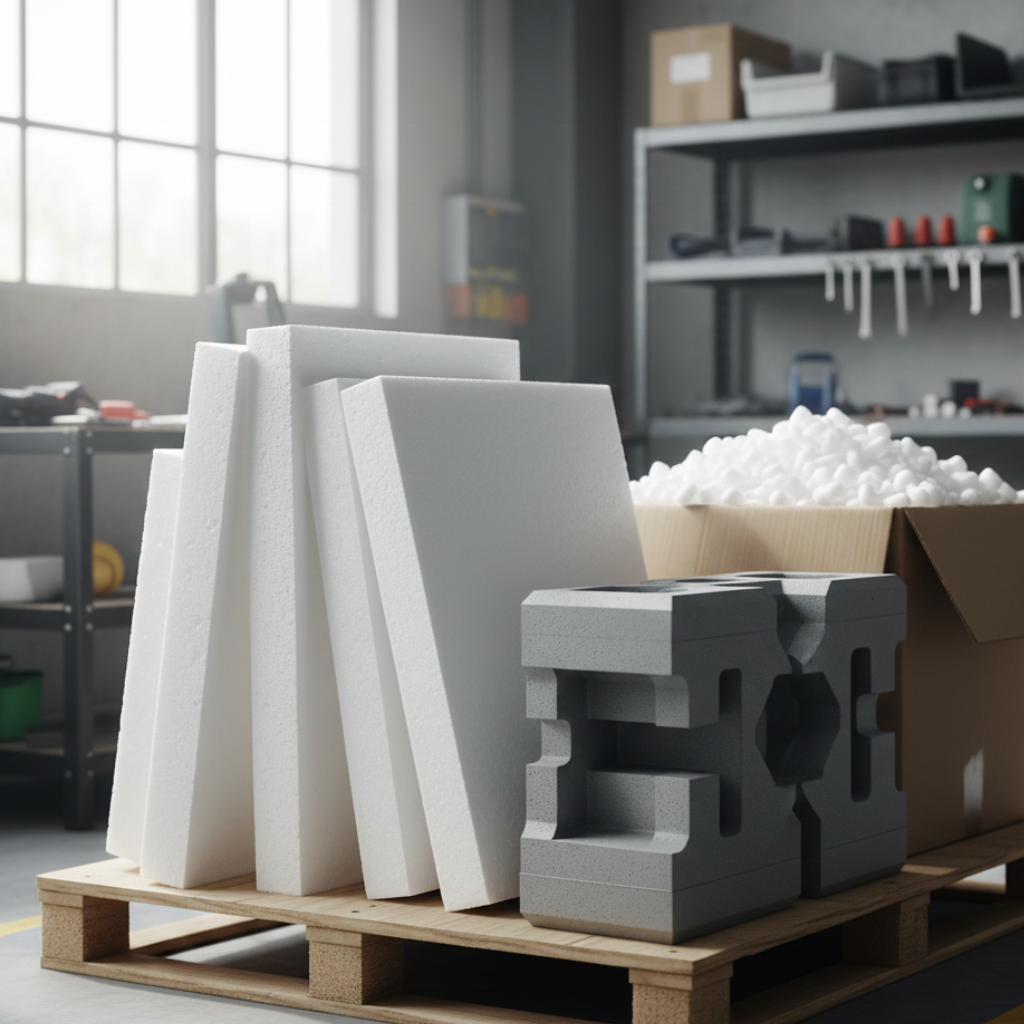
    Industrial assets rarely come in standard shapes. The beauty of EPS sheet is its versatility and manufacturability. It can be easily cut, routed, molded, and laminated to create custom-fit packaging solutions that cradle the exact contours of the machinery. Moreover, this precision fit ensures that the product is held securely, preventing shifting, rubbing, and localized stress points. A custom design is critical for achieving optimal shock absorption and eliminating empty space within the crate.

    Strategic Load Distribution

    Protecting heavy machinery requires more than just filling gaps, it requires strategically managing its immense weight. High-density Expanded Polystyrene Foam can be engineered to support substantial weight, ensuring proper load distribution across the package base and minimizing pressure points that could damage the machine’s casing or frame. However, by spreading the weight evenly, EPS prevents deformation of the corrugated box or wooden crate, maintaining the integrity of the entire shipping container. This strategic use of EPS is vital for safely stacking and handling large packages.

    Environmental and Durability Benefits of EPS

    The advantages of EPS sheet for industrial machinery packaging extend to environmental protection and material endurance in harsh shipping conditions.

    Moisture Resistance for Global Shipping

    Industrial goods often travel across continents, enduring drastic changes in climate, humidity, and often, sea spray. The moisture resistance of EPS is paramount here. Since the material is comprised of non-interconnected, closed cells, it does not absorb water. However, this ensures that the cushioning material maintains its integrity and vital cushioning properties even in damp environments, preventing water damage and corrosion to the packaged metal or electronic components.

    Maintaining Thermal Stability

    For certain sensitive components or chemical products shipped alongside the machinery, maintaining a consistent temperature is essential. Moreover, EPS provides exceptional thermal stability, acting as an insulator to shield the contents from external heat spikes or freezing temperatures. While not a replacement for refrigerated containers, this thermal barrier adds a vital layer of protection against rapid environmental shifts during loading and unloading, contributing to the overall quality control of the shipment.

    A Recyclable Material

    In an era of increased corporate responsibility, using a recyclable material is an important consideration. Expanded Polystyrene Foam is $100%$ recyclable. Forward-thinking companies are increasingly establishing reverse logistics to collect and recycle used EPS packaging. Moreover, it often densifying it before shipment to recycling centers. Choosing EPS demonstrates a commitment to sustainable practices. While still benefiting from its superior performance as a cost-effective solution to packaging.

    Conclusion: EPS as the Standard for Industrial Integrity

    The use of EPS sheet for industrial machinery packaging is no longer a luxury. It is the industry standard for robust protection. From its excellent shock absorption and vibration dampening capabilities to its essential moisture resistance and thermal stability. Moreover, EPS provides a multilayered defense against the stresses of global logistics.

    Furthermore, by utilizing custom-fit packaging and ensuring proper load distribution, manufacturers guarantee the safe arrival of their heavy machinery. The fact that EPS is a recyclable material and a genuinely cost-effective solution further solidifies its position. As the indispensable material for maintaining asset integrity and minimizing expensive transit damage throughout the supply chain. The superior cushioning properties of EPS ensure that protection never comes second to profit.

    FAQ’S

    Expanded Polystyrene Foam (EPS) has a unique closed-cell structure where $98\%$ of its volume is trapped air. When the packaging experiences an impact or shock, the individual EPS beads and their internal air pockets compress momentarily. This compression action absorbs and disperses the kinetic energy across the entire sheet, preventing concentrated force from reaching the heavy machinery. This reliable shock absorption mechanism is essential for mitigating costly transit damage.

    Vibration dampening refers to the ability of the EPS sheet to isolate the packaged machinery from continuous, low-level shaking (vibration) generated by truck engines, trains, or ships. These sustained vibrations can cause internal damage, loosen components, and lead to premature failure. The inherent viscoelastic properties of the Expanded Polystyrene Foam cushion and absorb these frequencies, ensuring the long-term thermal performance of the equipment isn’t compromised by unnecessary movement. This proactive vibration dampening ensures the machinery arrives in optimal working condition.

    EPS sheet is highly versatile and can be processed using heat-cutting, CNC milling, or molding techniques to create precise, custom-fit packaging inserts. These inserts are engineered to match the exact contours and stress points of the machinery. By distributing the weight evenly across the entire packaged item, the foam ensures efficient load distribution. This prevents concentrated pressure from building up on sensitive points, maximizing the effectiveness of the cushioning properties and significantly reducing the risk of structural failure or transit damage.

    Yes. While the upfront cost of Expanded Polystyrene Foam may be slightly higher than simple cardboard or basic wrapping, it provides exceptional value as a cost-effective solution due to its prevention of loss. Its superior moisture resistance protects valuable heavy machinery from corrosion and water damage encountered during global shipping, maintaining the integrity of the package even in humid conditions. This durability ensures the packaging doesn’t degrade, thereby guaranteeing reliable shock absorption and eliminating the far greater costs associated with machinery replacement, repairs, and logistical delays caused by transit damage.

  • EPS Foam Sheet

    EPS Foam Sheet

    EPS Foam (Expanded Polystyrene) has become one of the most versatile and widely used insulation materials in Pakistan. Known for its lightweight structure, thermal insulation properties, and cost-effectiveness, EPS foam sheets are used in construction, cold storage, packaging, and industrial applications. Whether you are a homeowner, contractor, or industrial buyer, EPS foam provides long-term energy savings and durability, making it a reliable choice for multiple applications.

    In addition, this comprehensive guide covers everything about EPS foam sheets — from types, manufacturing process, benefits, applications, price trends, and comparisons with other insulation materials.

    Introduction

    EPS foam are lightweight insulation boards made from expanded polystyrene beads, which are fused together to create a solid, durable sheet. They are widely used for roof insulation sheets, wall insulation panels, cold storage insulation, and packaging EPS sheets. The material is known for its excellent thermal resistance, moisture protection, and long lifespan, making it an ideal insulation solution for both residential and commercial projects in Pakistan.

    EPS foam are among the most popular insulation solutions in Pakistan due to their lightweight structure, durability, and excellent thermal performance. Known as a polystyrene insulation sheet, they are widely used for roof insulation, wall panels, and cold storage projects. Builders and homeowners prefer an insulation foam sheet because it effectively reduces heat transfer, improves energy efficiency, and provides long-term protection against moisture. As a versatile thermal insulation board, EPS sheets are suitable for both residential and commercial applications, offering reliable performance across different climates. High-quality EPS sheet Pakistan products ensure consistency, durability, and cost-effective insulation for a wide range of construction and industrial projects.

    EPS Foam Manufacturing Process

    Thermocol Sheet Supplier in Pakistan

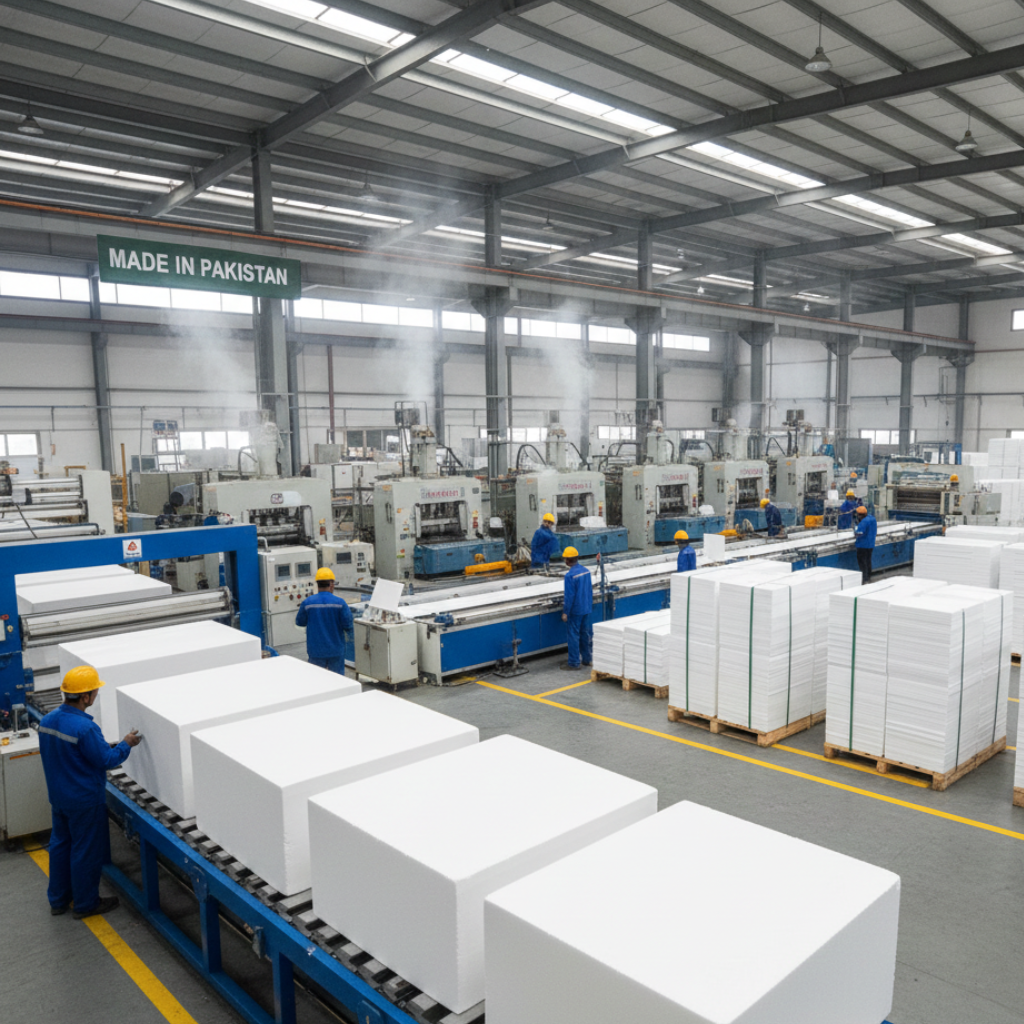
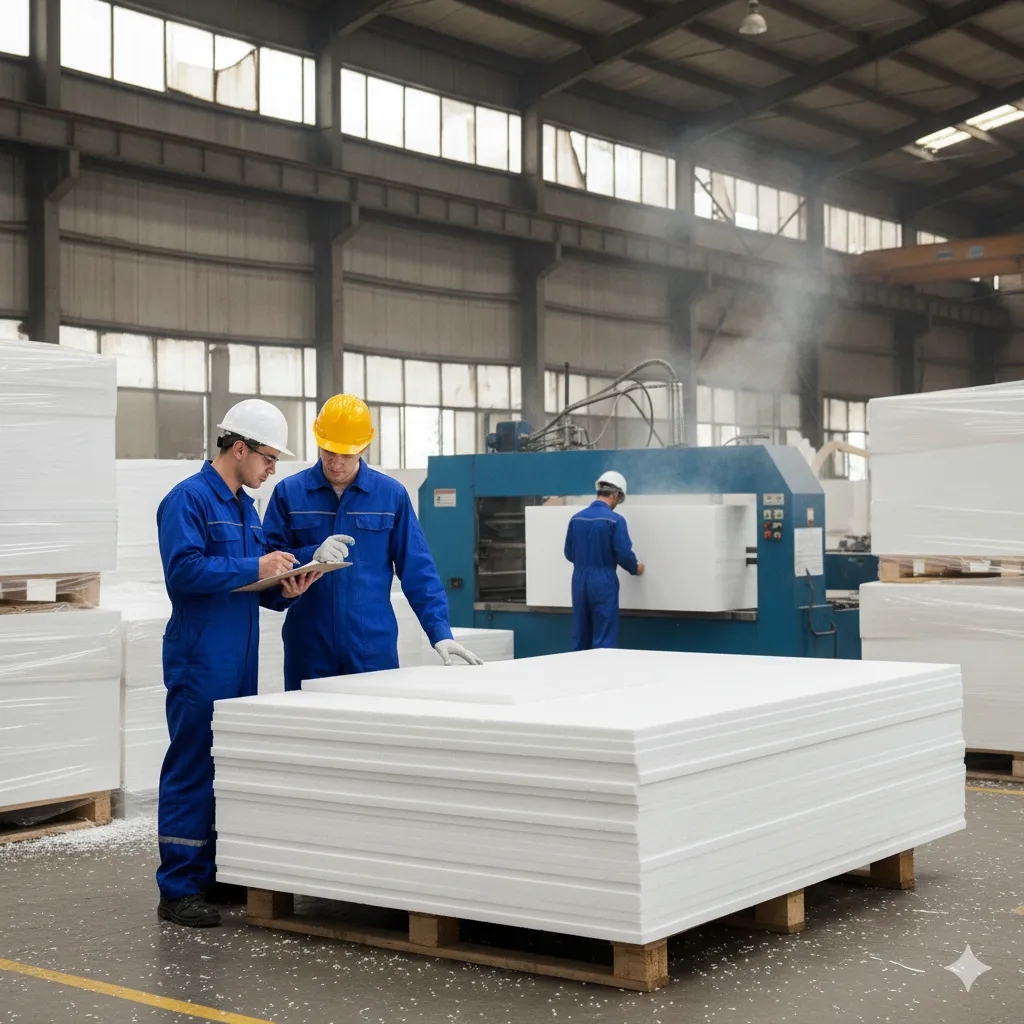
    EPS foam is manufactured using advanced EPS technology, where polystyrene beads are expanded with steam and molded into sheets. These sheets can be produced in various thicknesses and densities, depending on their intended application. High-density EPS sheets are often used in roof insulation, cold storage, and industrial applications, while low-density sheets are used for packaging and light insulation.

    Types of Expanded Polystyrene Foam Sheets

    When it’s come in multiple types to suit different applications:

    • Standard Expanded Polystyrene Foam Sheets: Lightweight sheets for general insulation and packaging.
    • High-Density EPS Sheets: Strong, durable sheets for roof insulation boards, wall insulation panels, and industrial use.
    • Thermal Insulation Boards: Designed for cold rooms, warehouses, and HVAC insulation.
    • Expanded Polystyrene Packaging Sheets: Ideal for fragile item protection and industrial packaging.

    Benefits of Using EPS Foam

    Eco-Friendly Options

    However, modern expanded polystyrene sheets production focuses on recyclable materials, reducing environmental impact. Bulk orders from trusted EPS Foam suppliers often include recyclable and sustainable sheets.

    Thermal Insulation

    Expanded Polystyrene Foam is renowned for its energy-efficient insulation capabilities. It reduces heat transfer, helping maintain indoor temperatures and cutting down on energy bills.

    Soundproofing

    Apart from thermal protection, Expanded Polystuyrene Foam also offers effective soundproofing, making it suitable for commercial and residential buildings.

    High-Density EPS Sheets

    Furthermore, for projects requiring load-bearing capacity or structural reinforcement, high-density EPS sheets provide superior strength. These are often used in roof and wall insulation panels, shed insulation sheets, and industrial flooring.

    Moisture and Chemical Resistance

    In addition, Expanded Polystyrene Foam does not absorb water, resists mold, and withstands most chemicals. This durability extends its use to cold room insulation, packaging for perishable goods, and long-term storage.

    Common Applications of Expanded Polystyrene Foam

    thermocol sheet price in pakistan
    • Roof Insulation Sheets: Maintains indoor temperatures and prevents energy loss.
    • Wall Insulation Panels: Provides soundproofing and thermal protection.
    • Cold Room Insulation: Keeps perishable goods at the desired temperature.
    • Shed Insulation Sheets: Protects against moisture, heat, and cold.
    • Packaging EPS Sheets: Secures fragile items during shipping and handling.

    EPS Foam Price in Pakistan

    However, its prices vary depending on density, thickness, and size.

    • Low-Density EPS Sheet: PKR 150 – PKR 250
    • Medium-Density Sheets: PKR 250 – PKR 450
    • High-Density EPS Sheets: PKR 500 – PKR 900+

    Buying in bulk or through wholesale EPS suppliers can reduce costs significantly for contractors and industrial buyers.

    How to Choose the Right EPS Foam

    EPS Foam

    When selecting sheets:

    • Check Density: Higher density for structural or roof applications.
    • Consider Thickness: 1”–2” for walls, 2”–3” for roofs, 3”–4” for cold rooms.
    • Manufacturer Reliability: Choose certified EPS manufacturers in Pakistan for quality assurance.
    • Installation Tips: Ensure proper handling to maximize lifespan and insulation performance.

    EPS Foam vs Other Insulation Materials

    While comparing expanded polystyrene with other materials

    • EPS vs XPS Insulation: EPS is cost-effective and breathable, XPS is stronger and more water-resistant.
    • Thermopore vs Foam Sheets: It offers better thermal performance and durability.
    • EPS vs Jumbolon: EPS sheets provide rigidity and higher compressive strength compared to flexible EPE Jumbolon.

    Best EPS Foam Sheet Manufacturers & Suppliers in Pakistan

    When sourcing thermocol sheet:

    • Choose a certified Thermopore/EPS supplier Pakistan for reliable products.
    • Moreover, work with reputable EPS manufacturers in Pakistan for quality assurance.
    • However, bulk orders can be sourced through experienced insulation sheet distributors and bulk insulation suppliers.
    • Look for proper delivery, installation guidance, and factory-direct pricing.

    Choosing the Right Supplier

    When selecting a reliable EPS Foam manufacturer and supplier is crucial for quality and cost efficiency. Furhermore, consider suppliers who offer:

    • Bulk EPS Sheets for large-scale projects
    • High-density EPS sheets for structural applications
    • Wholesale EPS Foam for cost savings
    • Energy-efficient and eco-friendly materials

    EPS Foam in Pakistan

    EPS Foam is increasingly popular in Pakistan for both industrial and residential use. The availability of affordable EPS sheets, combined with energy-efficient insulation properties, makes it a preferred choice among architects, builders, and manufacturers.

    In Pakistan, EPS Foam is a preferred material for builders, manufacturers, and industrial users due to its affordable price and versatile applications. Reputable suppliers ensure high-quality EPS sheets, including high-density options, to meet diverse requirements in roof insulation, wall panels, cold rooms, and packaging solutions.

    Conclusion

    From high-density EPS sheets to energy-saving insulation solutions, It is versatile, durable, and cost-effective. However, its wide-ranging applications in construction, packaging, and cold storage make it a material that cannot be overlooked. Choose a trusted supplier to ensure quality, performance, and compliance with industry standards.

    Moreover, It stands out as a versatile, durable, and cost-effective solution for insulation and packaging needs. Its applications in roof insulation sheets, wall insulation panels, shed insulation, cold rooms, and packaging EPS sheets make it indispensable. Partnering with a trusted EPS Foam supplier ensures quality, sustainability, and long-term performance.

    FAQ’S

    EPS Foam, or Expanded Polystyrene Foam, is a lightweight, durable material widely used for insulation, packaging, and construction applications. It provides excellent thermal insulation, soundproofing, and moisture resistance, making it suitable for roof insulation sheets, wall insulation panels, shed insulation sheets, and cold room insulation.

    High-density EPS sheets are a stronger, more rigid version of standard EPS Foam. They are ideal for applications that require load-bearing capacity such as roofing panels, wall insulation, and industrial flooring, while still providing energy-efficient insulation and durability.

    Yes! EPS Foam is extensively used in packaging EPS sheets to protect fragile and sensitive items during transport. Its lightweight and shock-absorbing properties make it perfect for shipping electronics, glassware, and other delicate goods.

    Choose a supplier who offers high-quality, bulk EPS sheets, including high-density options. Look for companies providing energy-efficient, affordable, and eco-friendly EPS Foam, with nationwide delivery if needed. Trusted suppliers ensure long-term durability and performance for both residential and commercial applications.