
Choosing the right insulation material is a critical decision for homes, commercial buildings, and industrial projects. Among the most commonly used insulation materials, glasswool and rockwool stand out for their thermal and acoustic performance. However, many buyers remain confused when comparing these two options.
This detailed guide on Glasswool vs Rockwool – Key Differences will help you understand their composition, performance, safety, cost, and best use cases—especially if you are seeking professional insulation services in Pakistan.
What Is Glasswool Insulation?

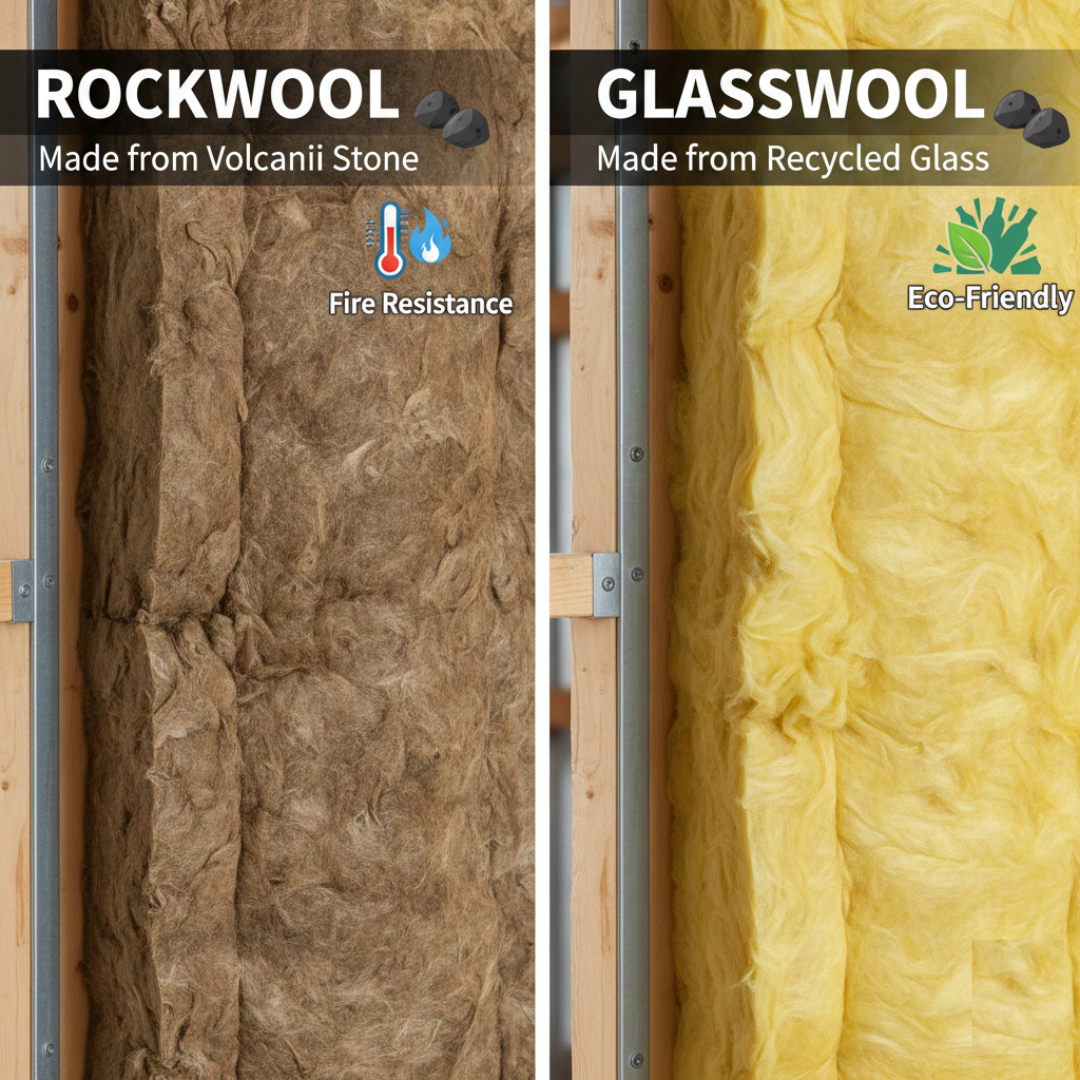
Glasswool insulation is a fibrous material manufactured by melting recycled glass and spinning it into fine fibers. These fibers trap air pockets, making glasswool highly effective for thermal insulation and moderate sound absorption.
It is lightweight, flexible, and commonly supplied in rolls, slabs, or blankets, making it easy to install in walls, ceilings, and HVAC systems.
What Is Rockwool Insulation?

Rockwool insulation, also known as stone wool, is produced by melting natural volcanic rock and forming it into dense fibers. Due to its structure, rockwool provides superior fire resistance, excellent sound absorption, and high durability.
Many people compare rockwool vs mineral wool, but technically, rockwool is a type of mineral wool specifically derived from stone rather than glass.
Glasswool vs Rockwool – Core Material Differences
| Feature | Glasswool | Rockwool |
|---|---|---|
| Raw Material | Recycled glass | Volcanic rock |
| Density | Low | High |
| Weight | Lightweight | Heavier |
| Flexibility | Very flexible | Rigid |
| Fire Resistance | Moderate | Excellent |
| Moisture Resistance | Moderate | High |
These material differences significantly influence performance and application areas.
Glasswool vs Rockwool for Soundproofing
When evaluating glasswool vs rockwool for soundproofing, density plays a crucial role.
- Glasswool absorbs airborne noise effectively but performs best in low-to-medium sound control applications.
- Rockwool’s dense structure makes it superior for blocking impact noise and high-decibel environments such as factories, studios, and generator rooms.
For professional acoustic solutions, most insulation services in Pakistan recommend rockwool for demanding soundproofing requirements.
Thermal Insulation Performance Comparison
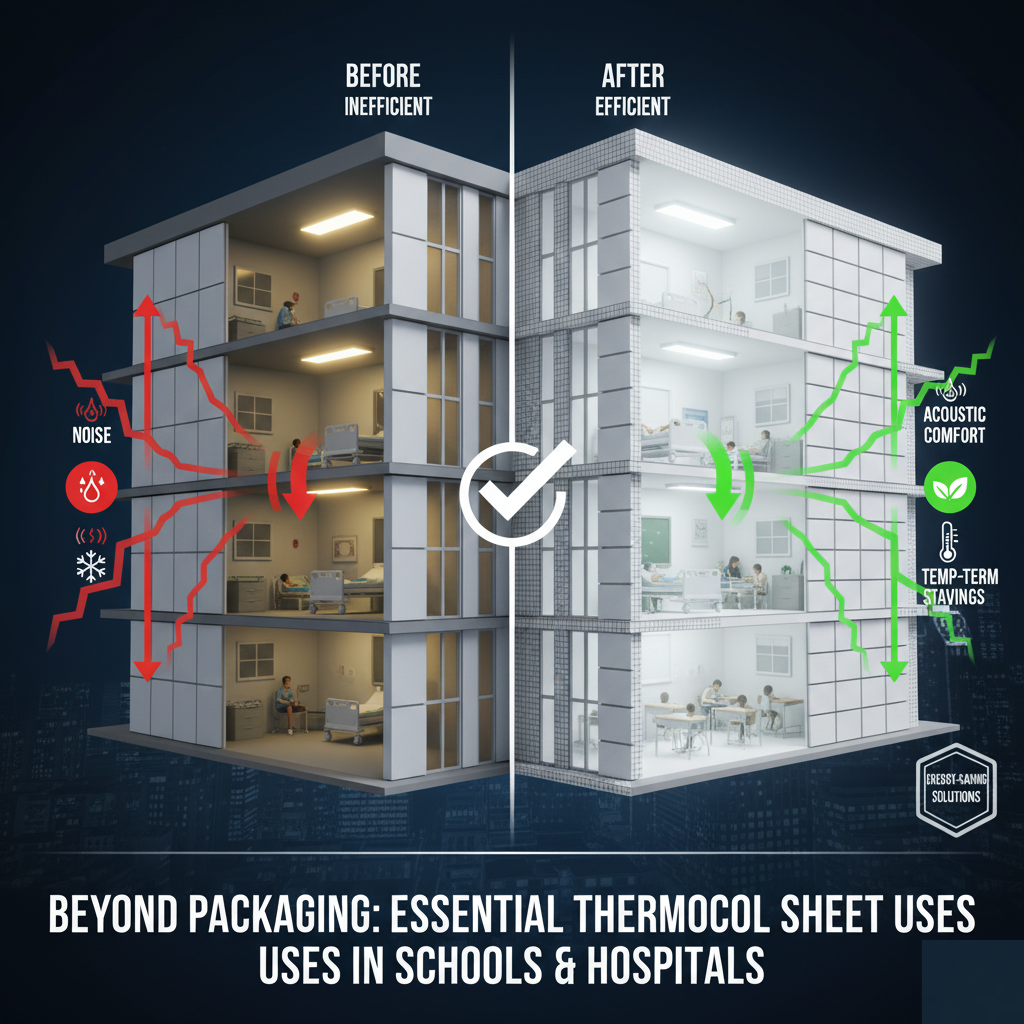
Both materials provide excellent thermal resistance, but usage conditions matter:
- Glasswool is ideal for residential ceilings, HVAC ducts, and lightweight partitions.
- Rockwool performs better in extreme heat environments, industrial walls, and fire-rated constructions.
If long-term thermal stability is your priority, rockwool has a performance edge.
Rockwool vs Fibreglass – Are They the Same?
Many users compare rockwool vs fibreglass, assuming they are similar. While fibreglass is closely related to glasswool, rockwool differs significantly in composition and performance.
- Fibreglass (glasswool) focuses on lightweight insulation
- Rockwool offers superior fire resistance, rigidity, and acoustic insulation
The choice depends on safety requirements and application type.
Health & Safety Considerations
One of the most discussed topics is rockwool vs glasswool health concerns.
- Modern glasswool products are engineered to be safe when installed with protective gear.
- Rockwool fibers are thicker and less likely to become airborne, making them safer for long-term exposure.
Regardless of the material, professional installation and protective equipment are essential.
Rockwool Price vs Glasswool Price
Cost is often a deciding factor when choosing insulation.
- Glasswool price is generally lower due to its lightweight composition and mass production.
- Rockwool price is higher because of its density, fire resistance, and durability.
Rockwool Price in Pakistan & Glasswool Price in Pakistan
In the local market:
- Glasswool price in Pakistan is more affordable and commonly used for residential projects.
- Rockwool price in Pakistan is higher but justified for industrial, acoustic, and fire-rated applications.
Prices vary depending on thickness, density, brand, and project scale.
Applications: Which One Should You Choose?
Choose glasswool insulation if you need:
- Budget-friendly thermal insulation
- Lightweight ceiling or duct insulation
- Residential and commercial buildings
Choose rockwool insulation if you need:
- High fire resistance
- Superior soundproofing
- Industrial or high-temperature environments
Most professional insulation services in Pakistan assess project requirements before recommending the right material.
Final Verdict: Glasswool vs Rockwool
The debate of Glasswool vs Rockwool does not have a one-size-fits-all answer. Glasswool excels in affordability and flexibility, while rockwool dominates in fire safety, soundproofing, and durability. The right choice depends on your building type, budget, and performance expectations.
Consult experienced insulation professionals to ensure maximum efficiency and long-term value.
FAQ’S
For residential buildings, glasswool insulation is usually preferred due to its affordability and lightweight nature. However, in areas where fire resistance or higher sound insulation is required, rockwool insulation becomes a better option. The final choice depends on climate, budget, and building design.
When comparing rockwool vs glasswool health aspects, both materials are safe if installed correctly. Rockwool fibers are heavier and less likely to become airborne, while modern glasswool products are designed to meet international safety standards. Professional installation is always recommended.
In the comparison of glasswool vs rockwool for soundproofing, rockwool performs better due to its higher density and structure. It is commonly used in studios, industrial spaces, and commercial buildings where noise control is critical.
Yes, both rockwool price in Pakistan and glasswool price in Pakistan can vary by city depending on availability, transportation costs, thickness, and project size. Major cities usually offer more competitive rates due to higher demand and supplier presence.