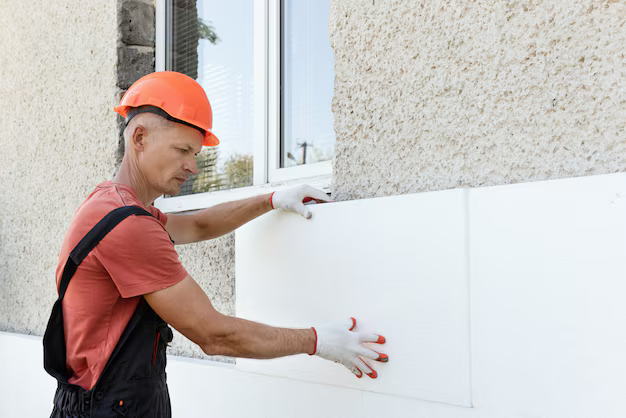

thermocol sheet price in pakistan

Tag: insulation materials Rawalpindi

  • Best Budget Insulation Materials

    Best Budget Insulation Materials

    With rising electricity bills and extreme weather conditions, insulation has become a necessity rather than a luxury. However, many homeowners and builders hesitate due to cost concerns. This is where understanding the best budget insulation materials becomes essential—materials that balance affordability, performance, and durability.

    This guide explains the most economical insulation options available today, focusing on usage in homes, walls, and roofs across Pakistan.

    Why Budget Insulation Matters in Pakistan

    eps xps glasswool for homes

    Pakistan experiences long summers, heat waves, and increasing energy costs. Without insulation, buildings absorb excessive heat, leading to higher cooling expenses. Investing in thermal insulation in Pakistan helps reduce indoor temperature fluctuations while lowering long-term energy bills.

    Budget insulation is not about choosing the cheapest material—it is about choosing the most cost-efficient option over time.

    Understanding Insulation Materials in Pakistan

    The construction market offers several insulation materials in Pakistan, including EPS, XPS, glass wool, mineral wool, foam sheets, and composite panels. Each material differs in cost, insulation performance, and application.

    Budget-friendly insulation materials are those that:

    • Offer acceptable thermal resistance
    • Are easily available locally
    • Require minimal maintenance

    Best Budget Insulation Materials in Pakistan (Overview)

    When comparing options, EPS-based materials, insulation sheets, and lightweight composite solutions are often categorized as best budget insulation materials in Pakistan due to their affordability and wide availability.

    They are commonly used in:

    • Residential houses
    • Warehouses
    • Shops and extensions

    These materials help achieve thermal comfort without high upfront investment.

    Best Budget Insulation Materials for House Construction

    For residential buildings, insulation must be cost-effective, safe, and easy to install. The best budget insulation materials for house projects typically include:

    • Insulation sheets for roofs
    • Lightweight wall insulation systems
    • Basic thermal barriers for ceilings

    These solutions improve indoor comfort and reduce dependency on air conditioners.

    Wall Insulation in Pakistan – Budget-Friendly Options
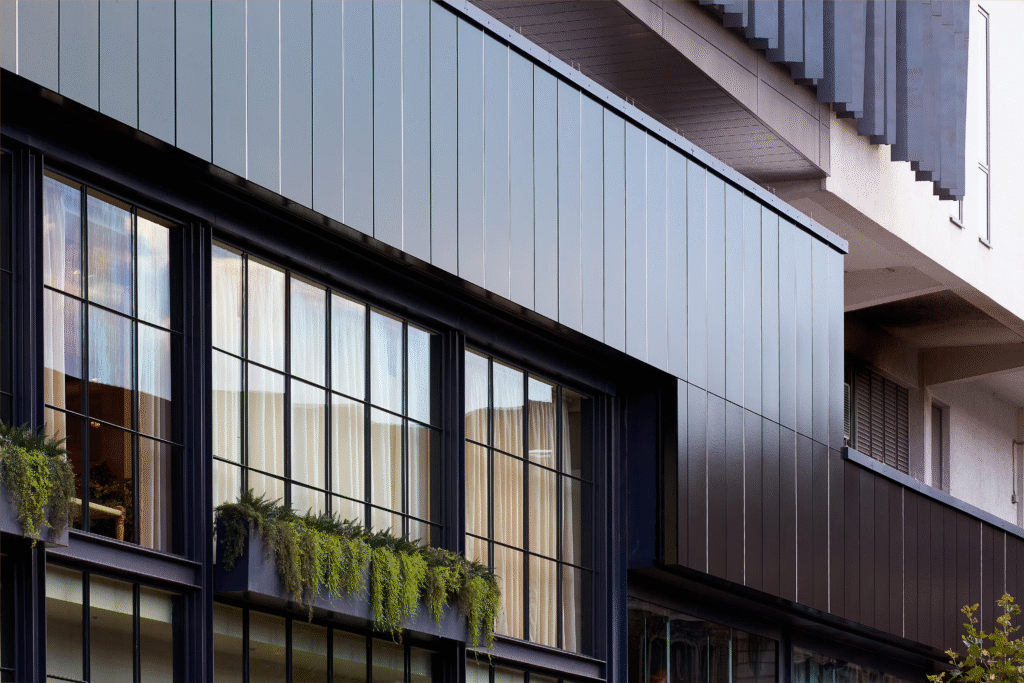
    sandwich panels installation

    Wall insulation in Pakistan plays a major role in blocking external heat. Budget wall insulation materials are preferred because they:

    • Reduce heat transfer through exterior walls
    • Improve indoor temperature stability
    • Are compatible with new and existing buildings

    Lightweight insulation boards and sheet-based systems are commonly selected for cost control.

    Roof Insulation Price in Pakistan – What to Expect

    Roofs receive the most direct sunlight, making insulation essential. The roof insulation price in Pakistan depends on material type, thickness, and coverage area.

    Budget roof insulation solutions are designed to:

    • Reflect or resist heat
    • Lower indoor temperature
    • Reduce cooling costs

    Choosing the right roof insulation material can significantly improve energy efficiency.

    Thermal Insulation Sheet Price in Pakistan vs Performance
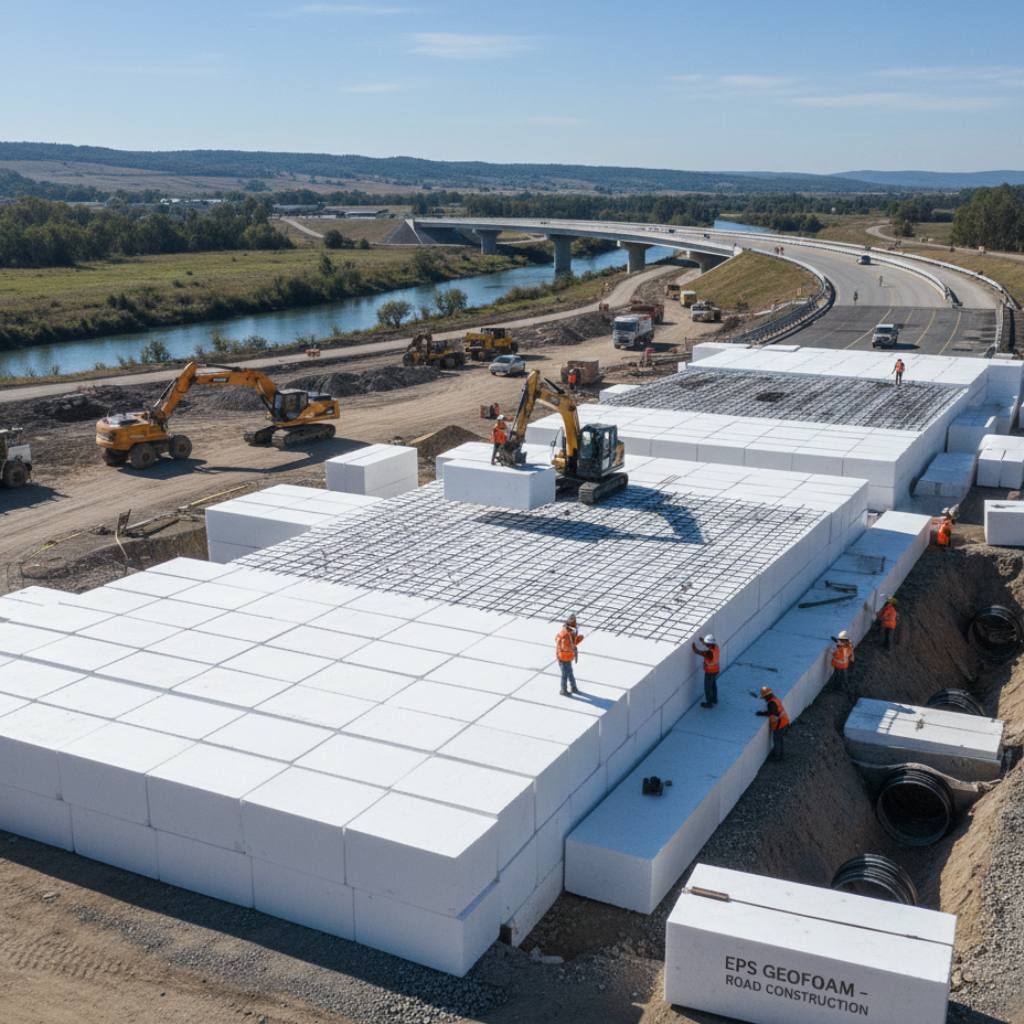
    EPS Geofoam For Road Construction

    When evaluating thermal insulation sheet price in Pakistan, buyers should consider performance rather than just per-unit cost. Insulation sheets are popular because they:

    • Are easy to install
    • Require less labor
    • Offer consistent insulation

    Their affordability makes them suitable for both residential and commercial use.

    Best Budget Insulation Materials in Karachi

    Due to high humidity and coastal heat, Karachi requires insulation that performs reliably in harsh conditions. Best budget insulation materials in Karachi are those that:

    • Resist moisture
    • Handle high temperatures
    • Remain stable over time

    Sheet-based insulation and EPS solutions are commonly used for roofs and walls in the city.

    Thermal Insulation in Pakistan: Long-Term Savings

    Although insulation requires an initial investment, thermal insulation in Pakistan offers long-term financial benefits by:

    • Reducing electricity consumption
    • Lowering cooling system load
    • Increasing building lifespan

    Budget insulation materials deliver these benefits without placing heavy strain on construction budgets.

    Common Mistakes When Choosing Budget Insulation

    Many buyers make avoidable errors such as:

    • Choosing materials only by price
    • Ignoring thickness requirements
    • Overlooking climate conditions

    Understanding available insulation materials in Pakistan helps avoid these mistakes and ensures better results.

    How to Choose the Right Budget Insulation Material

    Before selecting insulation, consider:

    • Building type (house, warehouse, shop)
    • Wall or roof application
    • Local climate
    • Long-term energy savings

    A balanced approach always outperforms the cheapest option.

    Final Thoughts

    Choosing the best budget insulation materials is about maximizing value, not minimizing cost. With the right selection, homeowners and builders can achieve effective insulation, lower energy bills, and improved comfort without exceeding their budget.

    From wall insulation to roof insulation, Pakistan’s market offers affordable solutions that meet both performance and cost expectations.

    FAQ’S

    The best budget insulation materials in Pakistan include EPS sheets, glass wool, and lightweight insulation boards. These materials offer good thermal performance at a lower cost and are widely used in residential and commercial buildings.

    For homes, EPS insulation and glass wool are considered the best budget insulation materials for house construction, especially for roofs and walls where heat gain is highest.

    Roof insulation cost varies by material and thickness, but many budget-friendly options are available. Investing in insulation often reduces long-term electricity expenses.

    Due to heat and humidity, EPS sheets and moisture-resistant insulation boards are among the best budget insulation materials in Karachi.

    Insulation slows heat transfer, keeping indoor temperatures stable. This reduces the need for air conditioning and lowers monthly energy bills.

    Yes, wall insulation plays an important role in thermal comfort. Proper wall insulation helps maintain indoor temperatures and improves overall building efficiency.

    When installed correctly, budget insulation materials can last 15–25 years with minimal maintenance, depending on environmental conditions.

    Yes, affordable insulation materials can deliver effective thermal resistance when selected according to climate, application area, and thickness.

  • Jumbolon vs. EPS Sheet: Which Is the Better Insulation Choice?

    Jumbolon vs. EPS Sheet: Which Is the Better Insulation Choice?

    Choosing the right insulation material is a critical decision for any construction project. It impacts everything from long-term energy costs to the structural integrity and comfort of the building. Two common choices in the rigid foam insulation market are Jumbolon sheets vs EPS (Expanded Polystyrene) sheets. While both are lightweight, foam-based materials, they are fundamentally different in composition, properties, and overall performance.

    This comprehensive guide breaks down the key differences to help you determine which material—Jumbolon or EPS sheet—is the superior option for your specific application.

    Understanding the Materials: Jumbolon vs EPS Sheet

    XPS Vs EPS Sheet

    The core difference lies in their manufacturing process and material classification.

    1. Jumbolon (Extruded Polystyrene – XPS)

    Jumbolon is a popular brand name for Extruded Polystyrene (XPS) foam insulation. It is manufactured through a continuous extrusion process that results in a unique structure.

    • Structure: Closed-cell, homogenous, and uniform. This tight, non-interconnected cell structure is key to its superior properties.
    • Key Advantage: The closed-cell structure makes it an extremely effective moisture-resistant foam and accounts for its high compressive strength.

    2. EPS Sheet (Expanded Polystyrene)

    Expanded Polystyrene (EPS) sheets, sometimes colloquially referred to as Thermopore or Thermocol, are made by expanding polystyrene beads with steam, fusing them into a solid block, and then cutting the block into sheets.

    Key Advantage: It is highly cost-effective and lightweight.

    Structure: Closed-cell, but the cells are not completely interconnected; there are tiny voids between the fused beads.

    Performance Comparison: Jumbolon vs. EPS Sheet

    XPS Sheet Vs EPS Sheet

    The performance of an insulating material is measured by several key criteria, including thermal efficiency, resistance to moisture, and long-term durability.

    1. Thermal Insulation (R-Value)

    The R-value measures a material’s resistance to heat flow. A higher R-value indicates better thermal resistance and insulating capability.

    FeatureJumbolon (XPS)EPS Sheet (Expanded Polystyrene)Verdict
    R-Value per InchGenerally $\approx 5$Generally $\approx 3.6 – 4.2$Jumbolon (XPS) offers a significantly higher R-value per inch, providing superior thermal performance in thinner applications.
    Long-Term PerformanceMaintains R-value exceptionally well over time.Can see a slight drop in R-value if exposed to moisture over the long term.Jumbolon (XPS) maintains efficiency better.

    2. Moisture Resistance and Water Absorption

    Water absorption is critical, as a wet insulator loses its R-value rapidly.

    • Jumbolon (XPS): Due to its fine, uniform closed-cell structure, it is highly hydrophobic. It has very low water absorption (often $< 0.3\%$ by volume, even when submerged) and is an excellent water-resistant insulation choice, making it ideal for below-grade applications and areas prone to dampness.
    • EPS Sheet: While largely closed-cell, the spaces between the fused beads can allow water vapor to permeate and, in prolonged exposure to moisture, it can absorb more water (up to $2-3\%$ by volume).

    Verdict: Jumbolon (XPS) is the clear winner for moisture resistance, ensuring stable performance in humid or wet environments.

    3. Compressive Strength

    Compressive strength is the material’s ability to withstand loads without deforming or failing.

    • Jumbolon (XPS): Features a high compressive strength (often $250 – 350$ KPa or more). Its dense, uniform structure makes it ideal for bearing heavy loads.
    • EPS Sheet: Compressive strength is good but varies significantly with the density grade. It typically performs well but is generally less robust than XPS at comparable densities.

    Verdict: Jumbolon (XPS) is better suited for applications under high load or pressure, such as floor insulation and roof insulation.

    Common Applications of Jumbolon Vs EPS Sheet

    The best choice often depends on the specific job.

    ApplicationJumbolon (XPS) RecommendationEPS Sheet Recommendation
    Below-Grade Insulation (Foundations, Slabs)Strongly Recommended (Due to high moisture resistance and compressive strength).Not ideal for long-term below-grade use where persistent moisture is a factor.
    Wall Insulation (Cavity or Exterior)Excellent choice (High R-value, durability).Good choice (Cost-effective and lightweight for above-grade walls).
    Roof Insulation (Flat or Pitched)Recommended (Withstands environmental stress and traffic loads better).Suitable for light-load roof systems where cost is the primary factor.
    General Packaging/Void FillOverkill, generally too expensive.Highly Recommended (Most cost-effective foam for non-structural, protective use).

    Cost-Effectiveness and Durability

    While Jumbolon provides better performance, the final decision often comes down to budget and long-term value.

    • Initial Cost: The Expanded Polystyrene (EPS sheet) typically has a lower insulation material cost per square foot than Jumbolon (XPS). It is the more budget-friendly option upfront.
    • Long-Term Value: Jumbolon’s long-lasting insulation properties—its superior moisture resistance and higher R-value retention—mean it can offer better lifetime value and greater energy efficiency over the decades, leading to lower utility bills. Its durability also reduces the risk of material replacement.

    Conclusion: Which Is Better Jumbolon Vs EPS Sheet?

    There is no single “better” material; there is only the right material for the job.

    • Choose Jumbolon (XPS) when:
      • You need the highest possible thermal resistance in a limited thickness.
      • The application involves persistent moisture, such as a basement, foundation, or water tank insulation.
      • The material will be subject to heavy loads, such as in floor insulation or a trafficable roof.
    • Choose EPS Sheet when:
      • The budget is the primary constraint.
      • The application is for above-grade walls where it will be protected from direct water exposure.
      • The material is for lightweight use like packaging or a quick, non-structural heat proofing solution.

    In the final analysis, for applications requiring long-lasting insulation and maximum thermal performance under challenging conditions, the superior compressive strength and moisture-resistant foam properties of Jumbolon (XPS) make it the clear technical winner, justifying its higher insulation material cost.

    FAQ’S

    The main difference lies in how they are manufactured. Jumbolon (XPS) is made through an extrusion process, resulting in a closed-cell, highly uniform structure with no internal voids. This structure gives it superior moisture resistance and high compressive strength. EPS sheets are made by expanding and fusing beads, resulting in a closed-cell structure but with tiny air voids between the fused beads, which allows for slightly higher water vapor permeability and absorption over time.

    Yes, Jumbolon (XPS) is highly recommended for basement, foundation, and other below-grade insulation applications. This is because these areas are prone to constant moisture exposure. Jumbolon’s extremely low water absorption and high moisture-resistant foam properties ensure its R-value remains stable and its performance is not compromised by groundwater or damp soil, unlike EPS, which can absorb more water over the long term.

    Jumbolon (XPS) generally offers better long-term performance and R-value retention. While both materials have high initial R-values, Jumbolon’s robust, closed-cell structure is inherently resistant to moisture ingress. Since water infiltration is the primary cause of R-value degradation in foam insulation, the superior water resistance of Jumbolon ensures it maintains its specified thermal resistance over the lifespan of the building more reliably than standard EPS sheets.

    An EPS sheet is the most cost-effective foam option when the application is above-grade and not exposed to constant moisture or high structural loads. It is a great budget-friendly choice for non-structural applications like general wall insulation, temporary heat proofing, or protective packaging where its slightly lower R-value per inch and higher permeability are acceptable trade-offs for a lower insulation material cost.